
A new and smarter role for neighbourhood centres
SORPA's and the municipalities of the capital region's kerbside collection points will take on a new and smarter role in the coming weeks. Sensors will be installed in all kerbside bins to ensure timely collection, and metal packaging and glass will be collected at all kerbside collection points. In Hafnarfjörður, the implementation will take place from 11th to 17th February. The changes ensure that residents of the capital region can dispose of the main types of waste in their own neighbourhood and local area.

Two small and four large neighbourhood stations in Hafnarfjörður
In the coming weeks, the collection points of SORPA and the municipalities of the capital region will take on a new and smarter role. Sensors will be installed in all collection containers to ensure timely emptying, and metal packaging and glass will be collected at all collection points. The rollout of smart bins at the neighbourhood stations is scheduled to begin on 30 January and will continue for the coming weeks. In Hafnarfjörður, the rollout will take place from 11th to 17th February. The changes ensure that residents of the capital region can dispose of the main types of waste in their local area.
Click here to see which collection point is nearest to you and what categories it accepts.
Small and large local stations
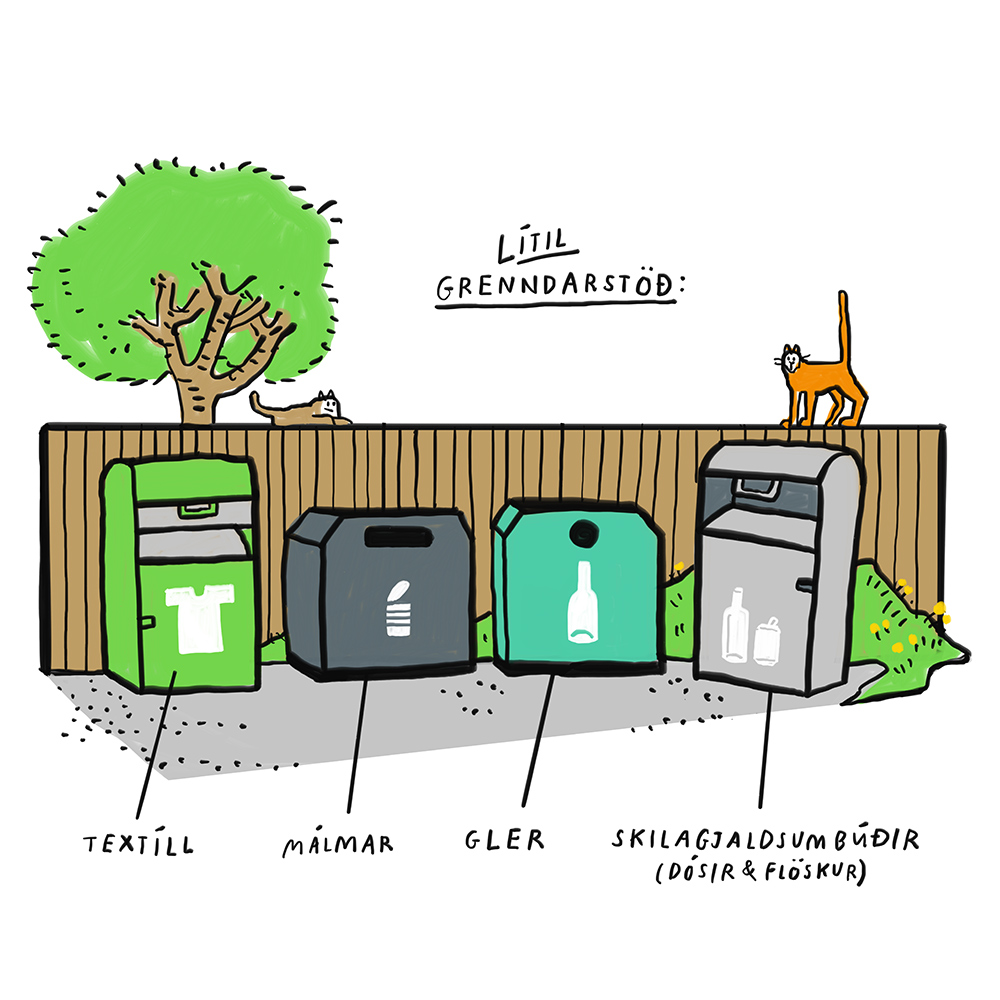
At homes, there are already bins for food waste, mixed waste, plastic, and paper/cardboard. Containers for glass, metal packaging, and bottles and cans will be at all neighbourhood collection points located in areas close to homes. These collection points are called small local stations and there will be around 50 in the capital region. In Hafnarfjörður, there are two at present, at Fjarðarkaup and Staðarberg. With the change, containers for glass, metal and textiles will be placed at all of them. In summer 2024, three further new small neighbourhood stations are set to be installed in Hafnarfjörður, namely in Skarðshlíð, Ásland 3 and on Holtinu.
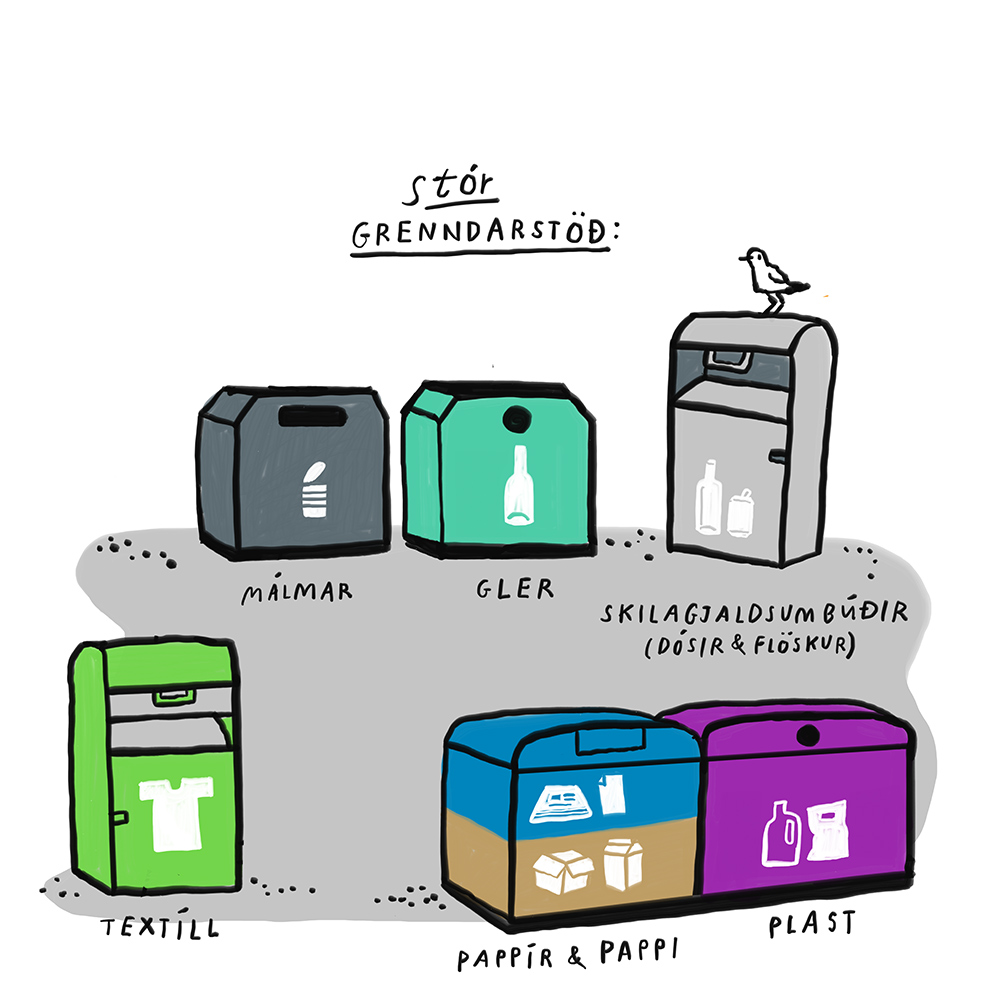
Containers for glass, metal packaging, bottles and cans, textiles, paper and cardboard, and plastic will be at large neighbourhood centres in all neighbourhoods of the capital region. Large local stations will be around 40 in the capital region, of which four are in Hafnarfjörður or at the Fjörður shopping centre, the Nettó on Miðvangur, Tjarnarvellir and Sólvangsvegur. Currently, all residents are supposed to have their plastic and paper sorted at the kerbside, and these four sites are intended only for the surplus from that collection. Furthermore, it is always possible to take sorted materials directly to Sópra's recycling centres. In addition, textiles will be collected at all neighbourhood collection points in the coming months. Currently, textile collection is managed by the Red Cross and varies between collection points.
All categories – including residents of annexes
All residents of the City of Hafnarfjörður must separate their household waste into four streams in the appropriate bins and take other waste to local or recycling centres. Residents of annexes, which do not have their own property reference number, must also separate their household waste into four streams. It is a matter for agreement between landlord and tenant whether the tenant has access to the landlord's bins or has their own. For smaller households in annexes with two or fewer residents who do not have access to the landlord's bins, it is advisable to have two 240L dual-compartment bins: one for food waste and mixed waste, and one for plastic and paper. However, households with more than two residents in granny flats are advised to have a minimum of a 240L bin for food scraps and mixed waste, a 240L bin for plastics, and a 240L bin for paper.
General information about the four-party system on household waste
Neighbourhood stations in Hafnarfjörður
Thank you for sorting!