
When words open the way to mathematics
In the country's primary schools, teachers are increasingly facing a more diverse group of pupils. Alongside the growing discussion about literacy and reading comprehension, many teachers have considered how to improve pupils' vocabulary and understanding in mathematics, as well as in Icelandic.
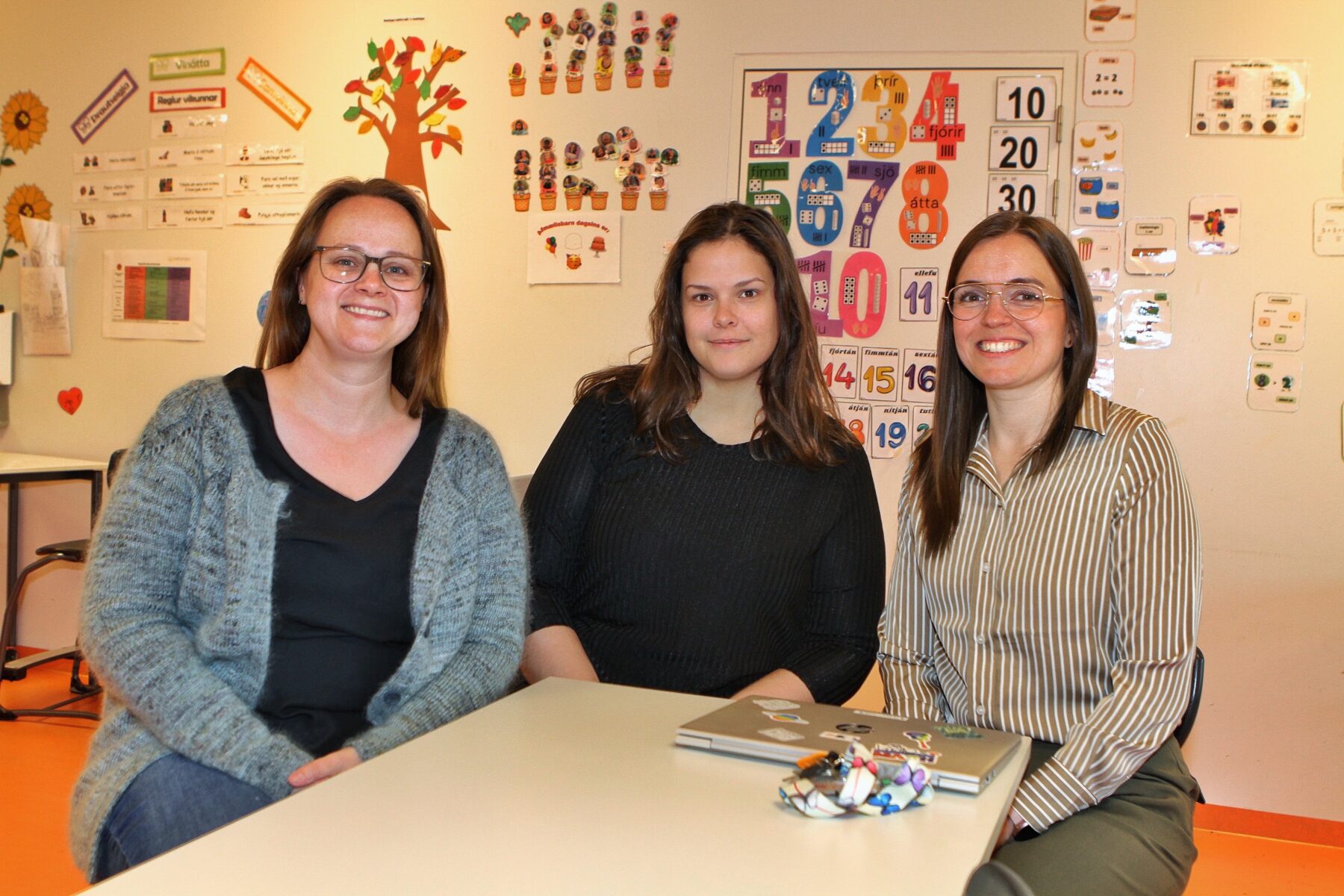
„We need a common language in mathematics.“
In the country's primary schools, teachers are increasingly facing a more diverse group of pupils. Alongside the growing discussion about literacy and reading comprehension, many teachers have considered how to improve pupils' vocabulary and understanding in mathematics, no less than in Icelandic. Three teachers at Skarðshlíðarskóli are developing a new project on vocabulary, comprehension and accessible maths teaching.
Specific vocabulary teaching at all primary school levels
Nína Guðrúnardóttir, Hildur Arna Håkansson and Hildur Sonja Guðmundsdóttir, teachers at Skarðshlíðarskóli, are currently working on a development project entitled 'Calculated with Words'. The project is about building a targeted vocabulary teaching approach in mathematics from the youngest year groups, and creating a consistent way of thinking throughout the entire primary school. They say the idea originated from their own experiences in the classroom, both with pupils who struggle with learning difficulties and with teachers who feel insecure about certain mathematical concepts. „We've actually been chatting about this together ever since the New Year.“ says Nína, who teaches in the early years.
„We found that vocabulary teaching needs to be much more targeted right from the start. Pupils need to learn certain key terms at the earliest stage, and then this needs to be built upon so that when they reach secondary school, this foundation is in place.“ adds Hildur Sonja. She is a specialist teacher in the maths department for secondary school pupils. She also says it is important that there is continuity in teaching between school stages. „There needs to be a common language. That we are all using the same terms and the same words. Then it will be easier for students to connect new knowledge to what they already know.“
Some teachers themselves faltered in their words.
The other Hildur is a maths and science teacher for secondary school pupils, as well as being a Year 8 form tutor. She says a particular incident actually became a turning point in the discussion. „I ran a course for teachers where they were supposed to work on tasks just as students would. It turned out that, for example, many teachers didn't know what the factors in a multiplication problem are, or what a quotient is in a division problem.“ She says that the teachers actually hesitated in their own explanations because the terms were not sufficiently clear. „Then we started to consider how we could expand vocabulary, not just for the students but for the teachers as well. We need to understand the concepts ourselves in order to be able to teach them effectively.“
Developments in schools call for more diverse teaching methods.
Hildur, Hildur Sonja and Nína agree that the developments in schools call for more varied teaching methods than before. „We are teaching an incredibly diverse group.“ says Hildur. „More students are being diagnosed with dyslexia and various reading difficulties. There are also students who are, for example, colour-blind or who need more visual material.“ They say it is important that maths is not just confined to workbooks but is connected to the real world. „It needs to be more than just: “Measure how long the pencil in the book is?'. Why not just measure things around us? How high are the windows? Are they all the same size? How long are the tables?“
The aim is for students to experience mathematics as a living and practical subject.
Many ways to the same goal
According to the female colleagues, insecurity about the profession can affect teaching. „I think many teachers are a bit scared of maths.“ says Hildur Sonja. „If they found it difficult themselves, they often just stick to one approach or one book.“ They therefore want to develop projects that show that there are many ways to the same goal. „We want to create projects where both students and teachers see that there isn't just one right way to understand maths. People think in different ways and use different approaches.“
One of the major challenges they have seen in the teaching materials is that they are not well suited to older students who need a simpler foundation. „If you have a secondary school pupil who needs material from the primary school level, it is often very childish.“ says Hildur. „It can be very humiliating for students.“ They therefore want to develop material that is simple and clear without being childish in its presentation. „We want this to benefit both the youngest children and also older pupils who need to strengthen their foundations.“
Want to build a database for teachers
The teachers envisage the project becoming an accessible database that they can use in their daily work. „There's a bit of a lack of continuity in this.“ says Nína. „Teachers are often reinventing the wheel over and over again.“ The idea is that a teacher can go into the material and follow a progressive structure. „That you can just start with a merger and then carry on step by step without always having to wonder: what comes next?“
They also want to develop visual support materials for classrooms. „We want to create content for maths walls.“ says Hildur. „Not just words on a page, but living and visual material.“ The idea is that teachers can print out materials, use pictures from their surroundings and connect the maths to the students' daily lives. „We're so often the ones creating things ourselves. We'd like more people to be able to just make use of what's already been prepared.“
Concept work through the autumn
Although the project has not formally begun, they have already started to gather ideas and shape a vision. „Formally, the project doesn't start until the end of August,“ says Hildur. „But now we're just in a flow of ideas.“ Next winter will be spent developing the material, testing it and seeing what works best in the classroom.
In recent weeks and in the coming weeks, interviews with grantee from the Hafnarfjörður Education Fund be published on the media channels of the City of Hafnarfjörður. This gives residents and other interested parties the opportunity to gain a deeper insight into the excellent projects and creative school and leisure activities.