
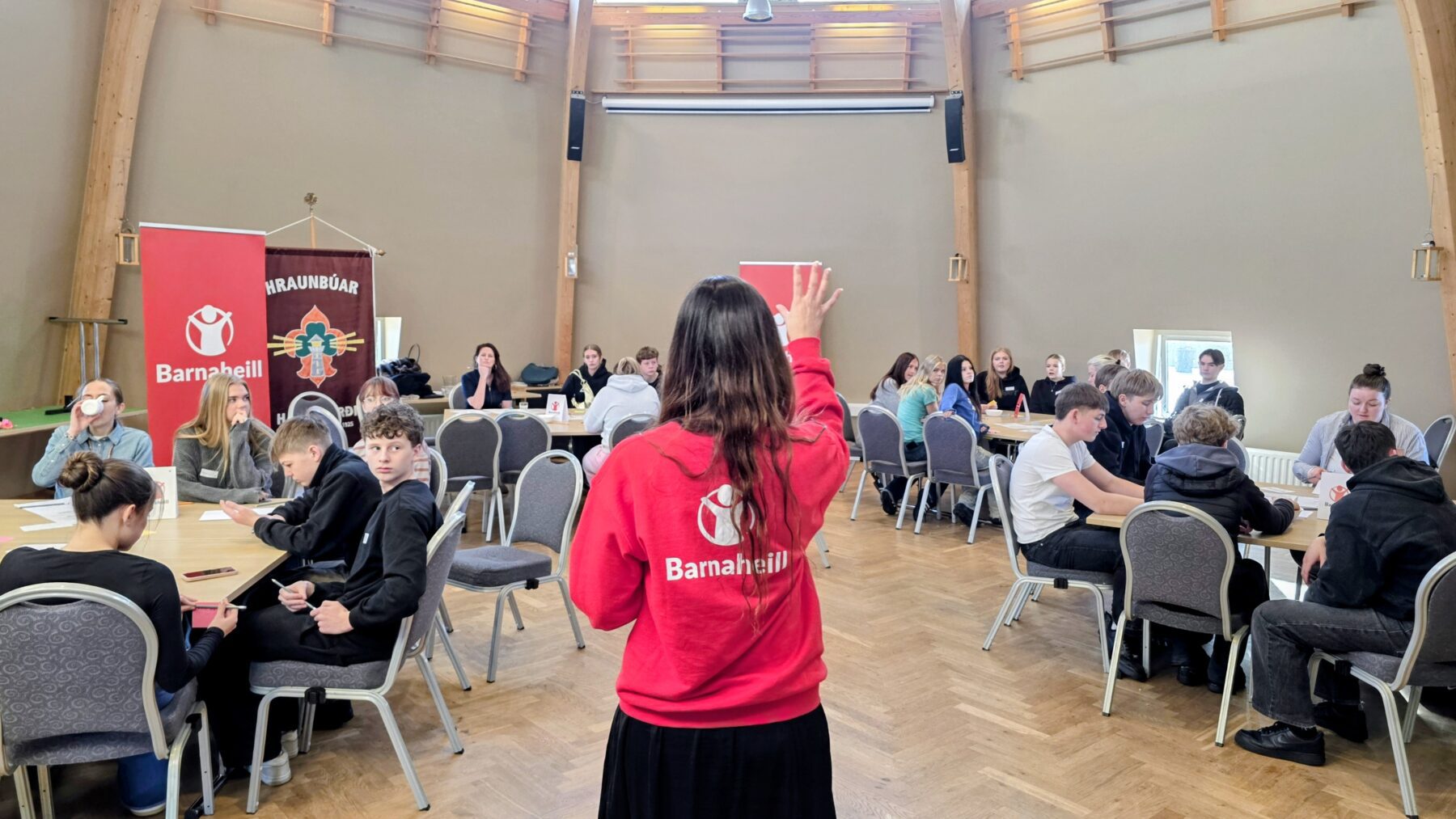
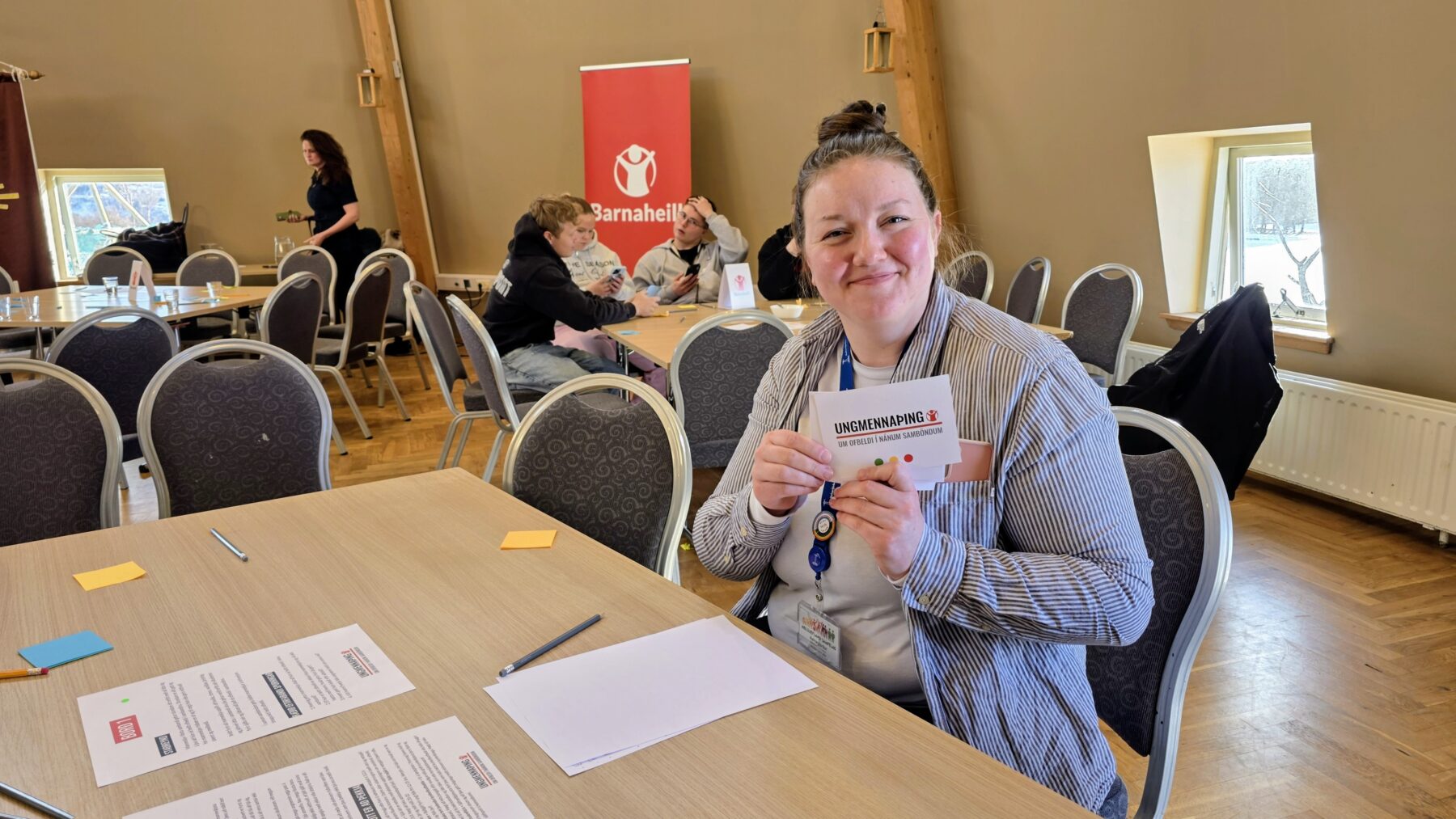
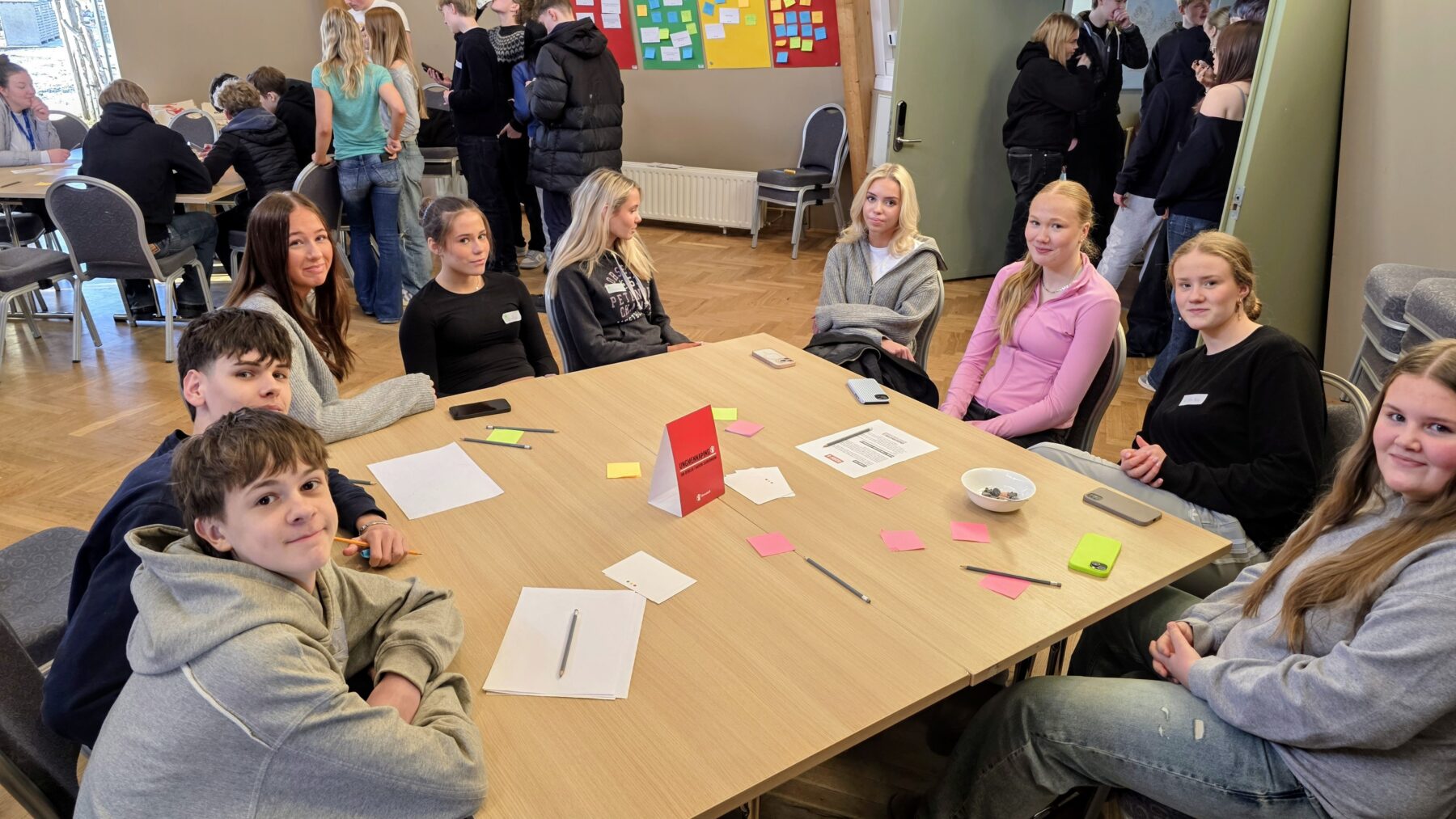
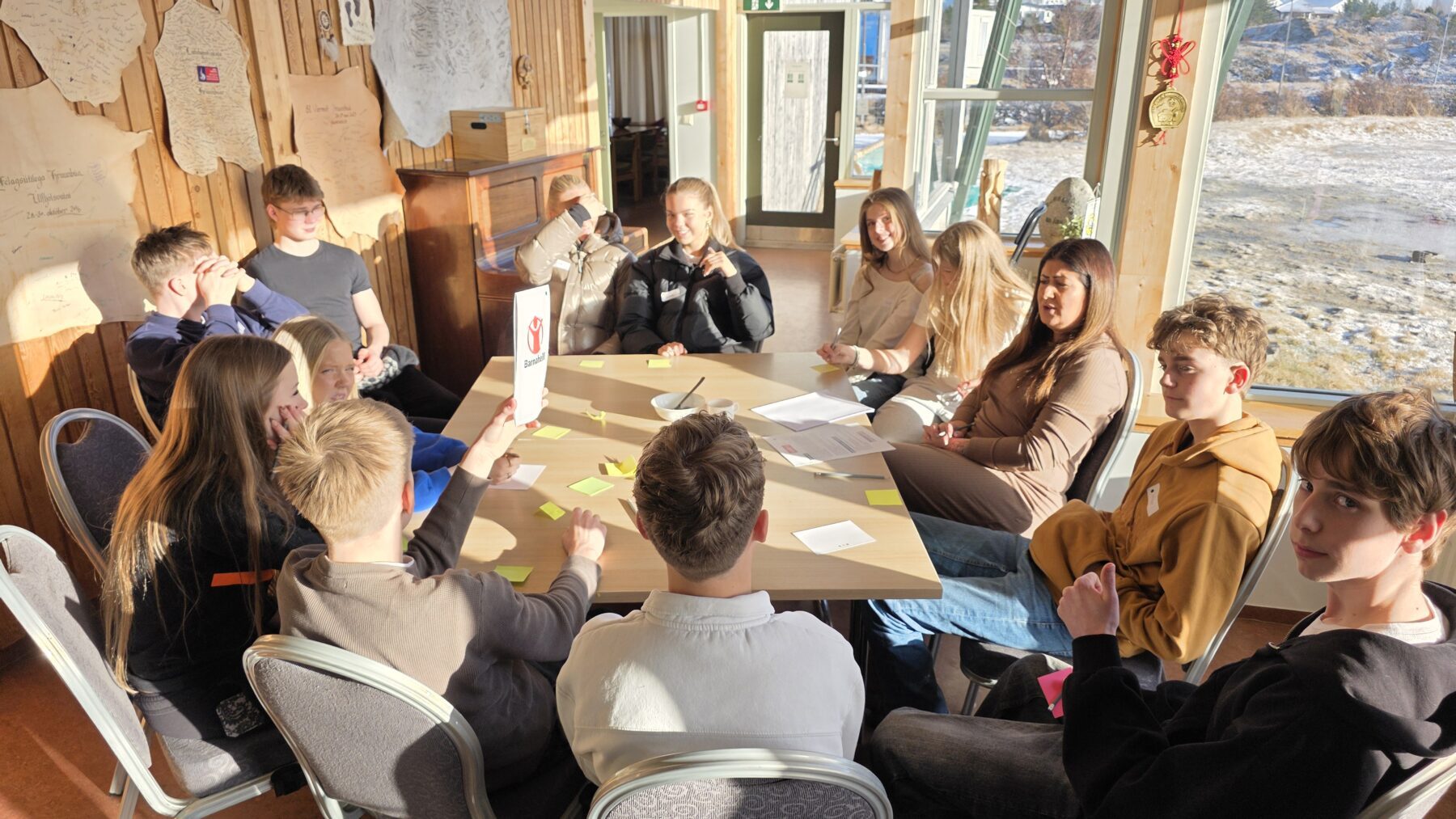
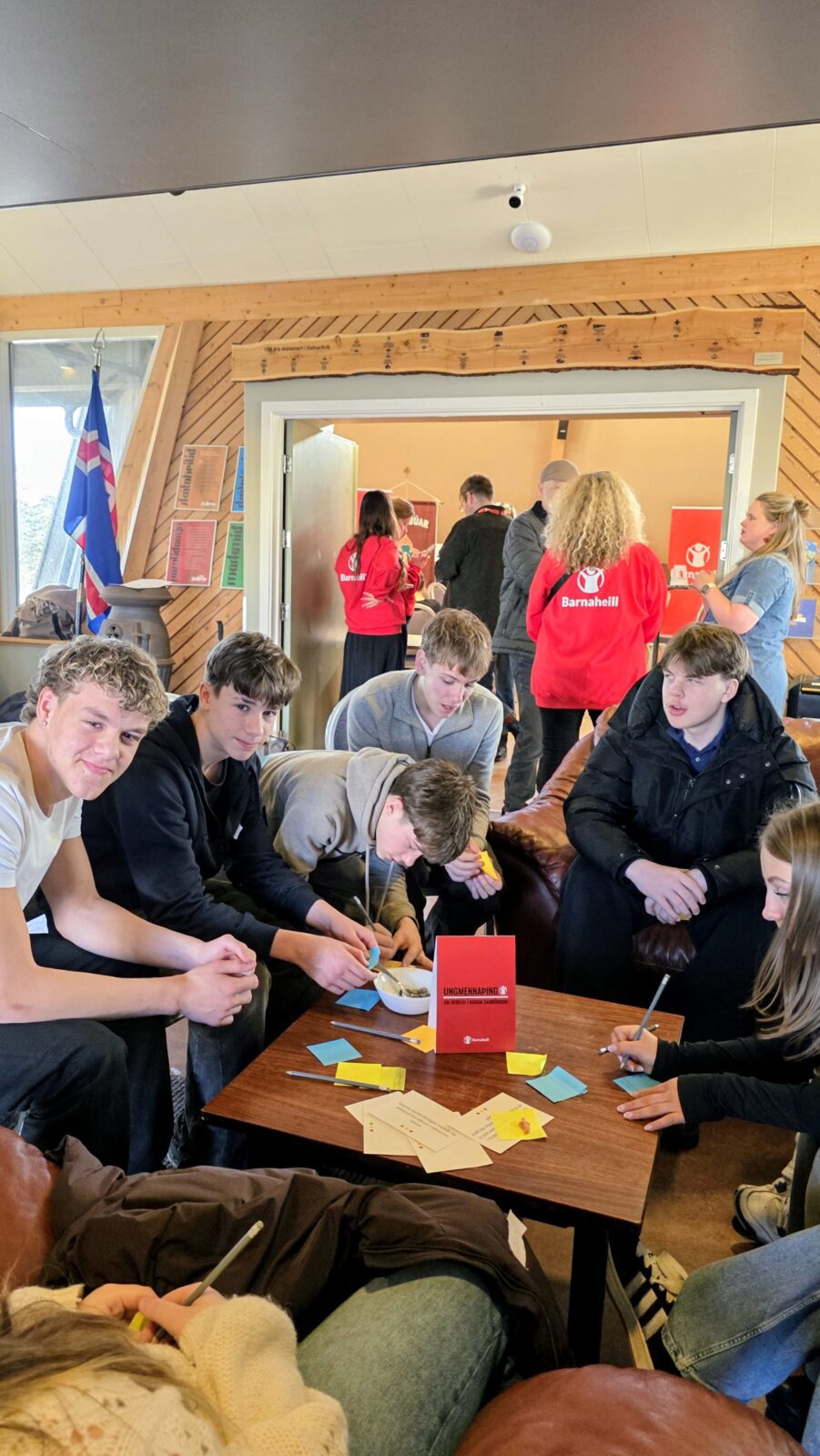
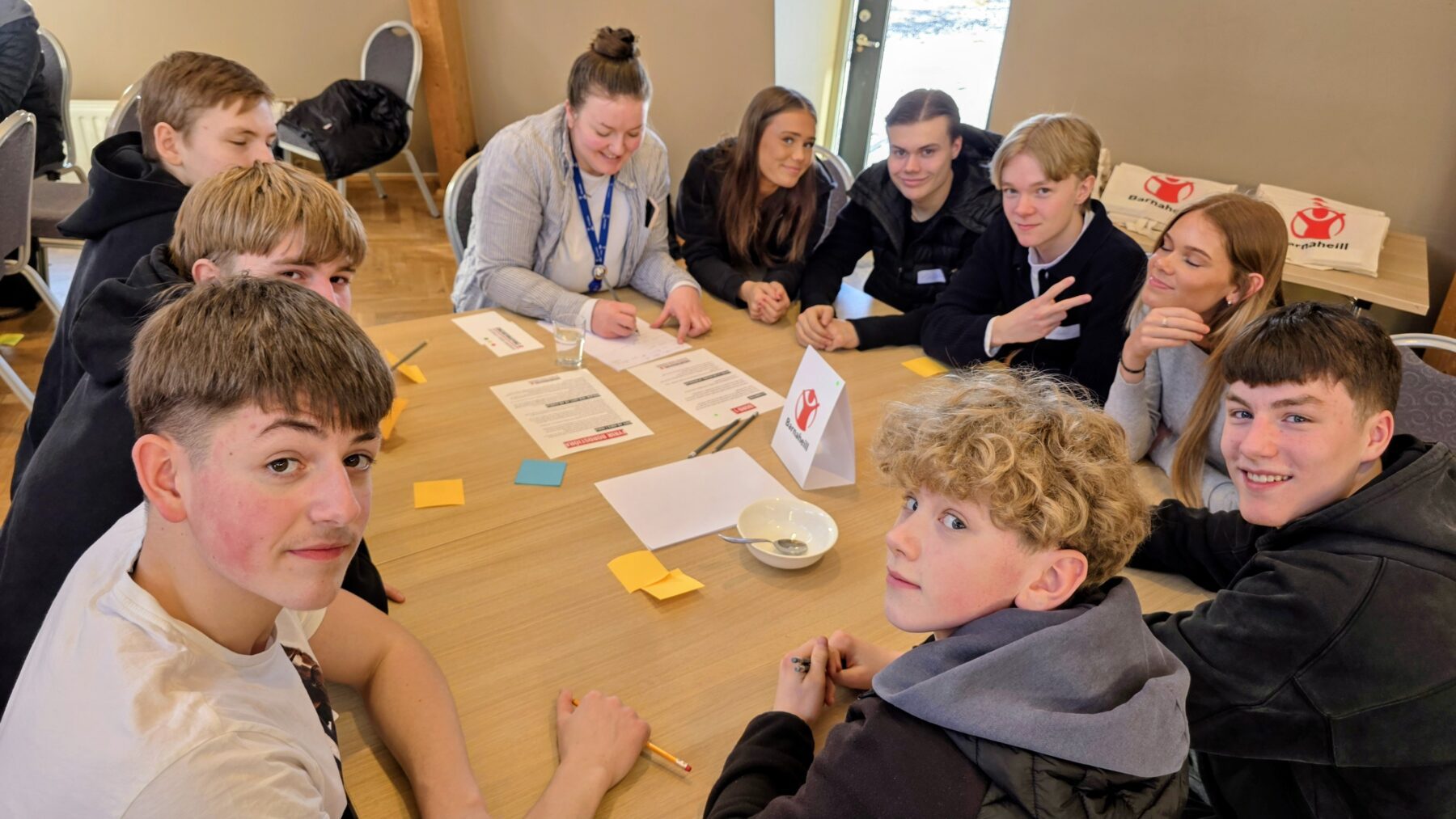
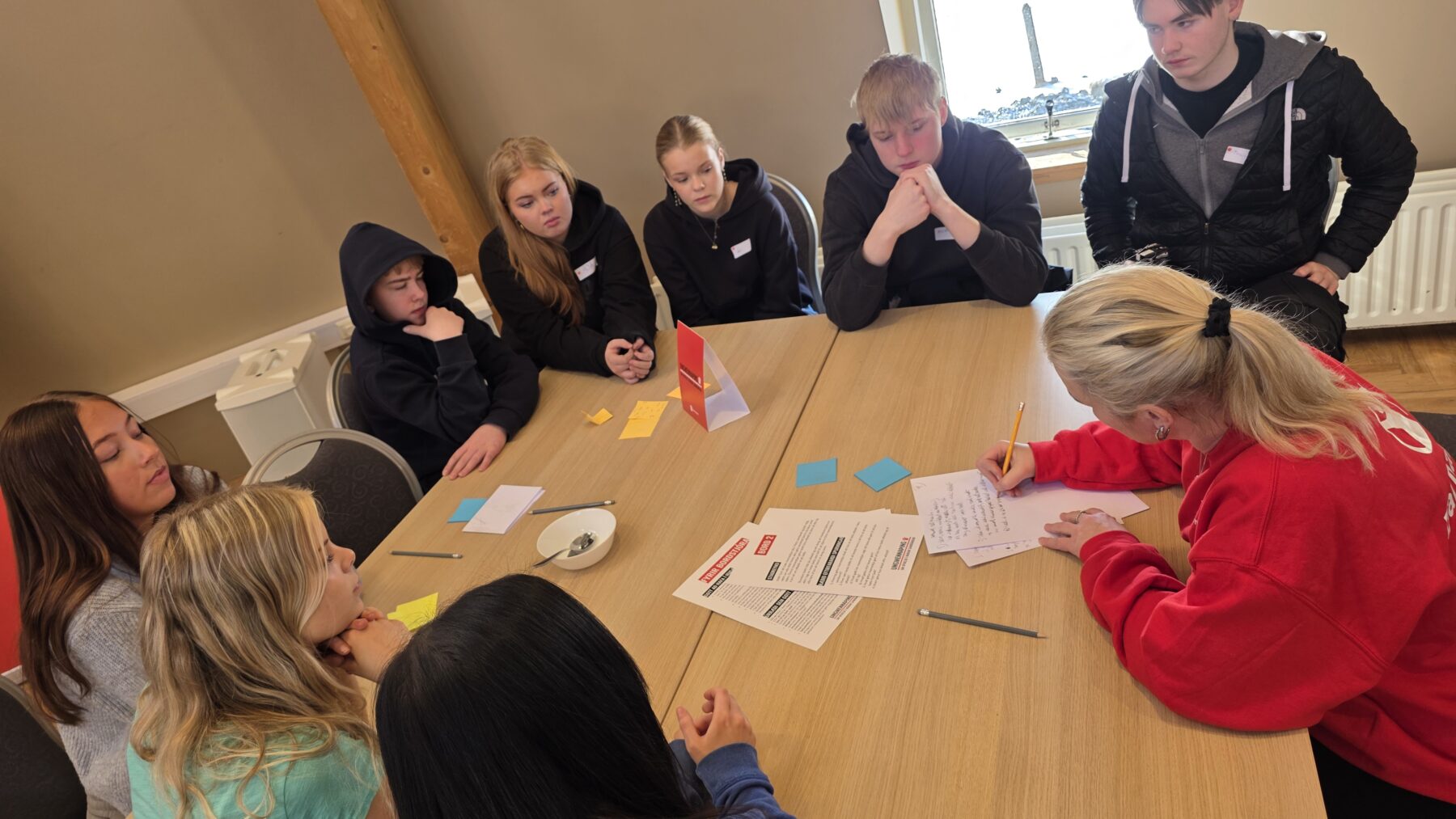
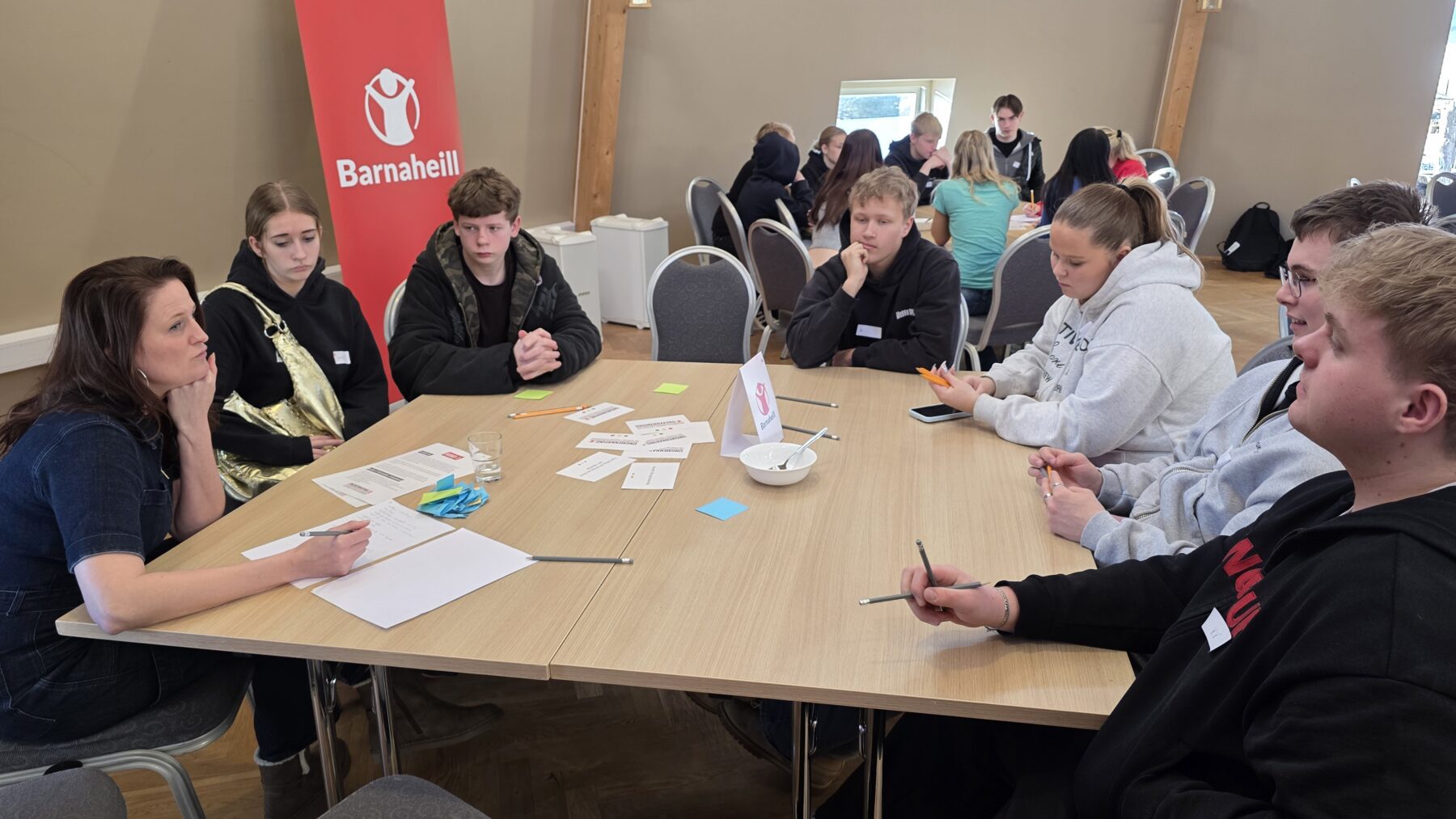
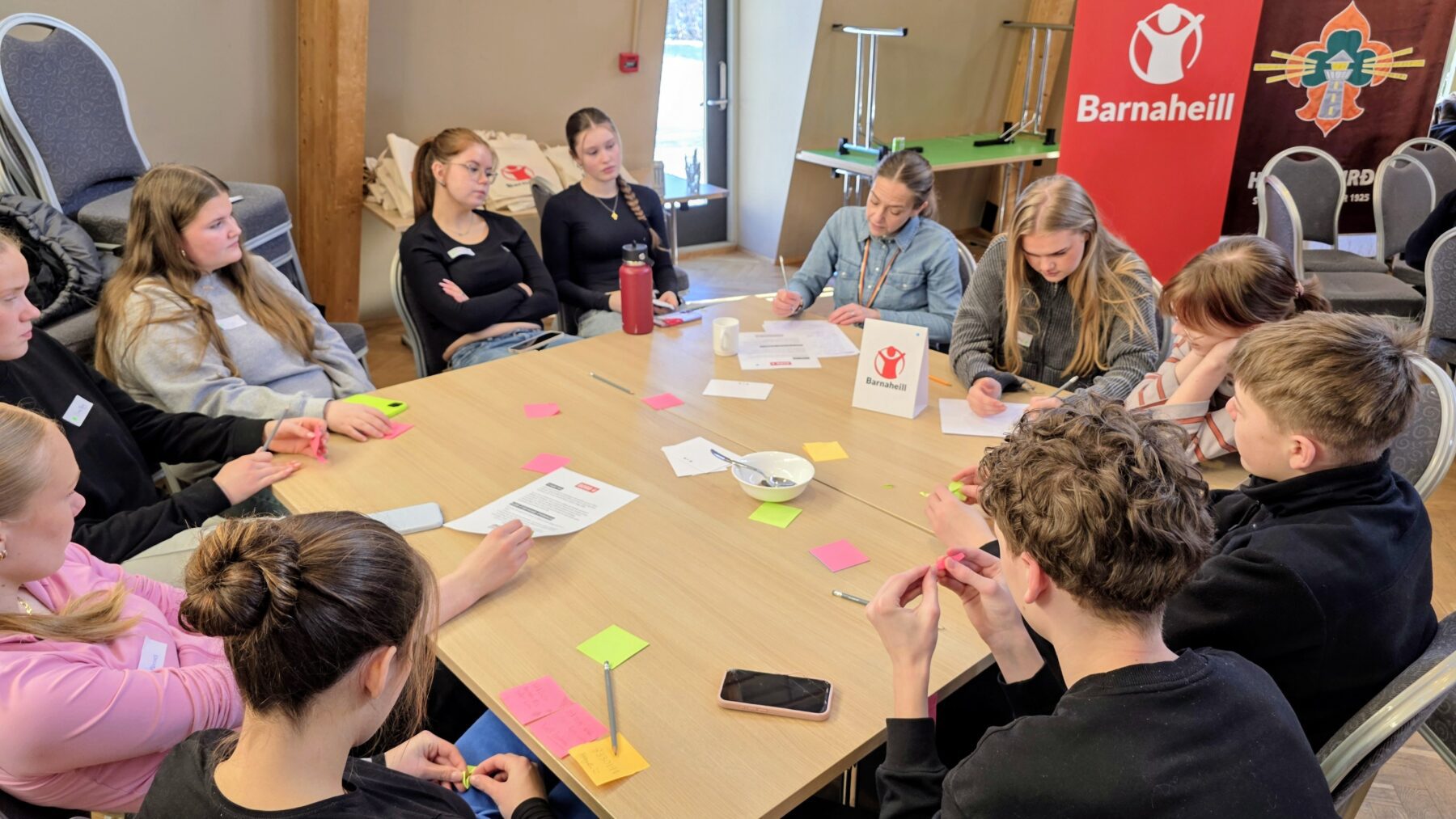
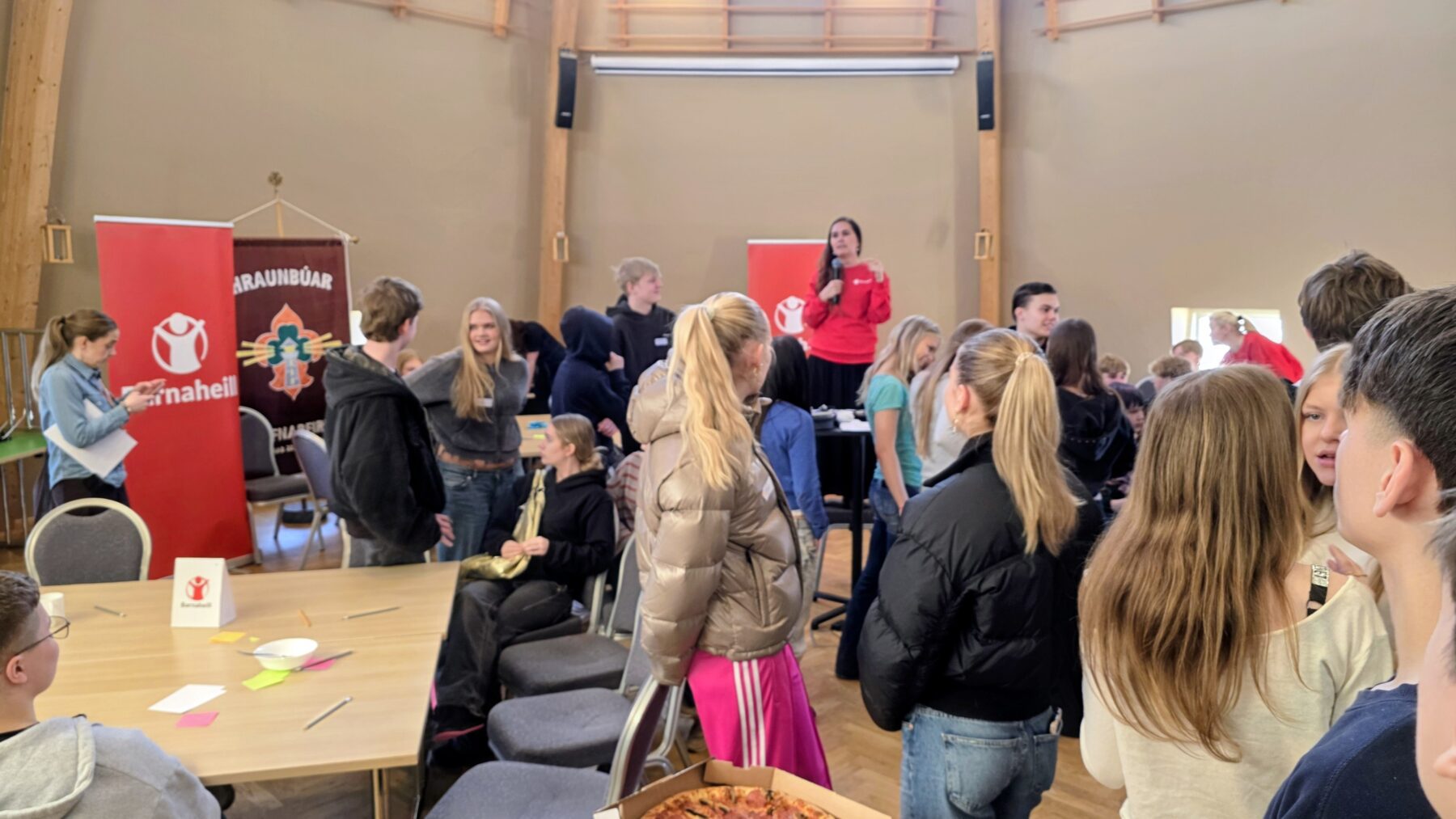
Dozens of young people from Hafnarfjörður came together earlier today to discuss sexual violence in teenage intimate relationships. The conference was one of six held nationwide by Barnahjálpin on the subject.
„Just over 600 13-15-year-olds say that another teenager has performed oral sex or intercourse on them against their will. Here we are not talking about sexual harassment but the most serious form of sexual violence, rape. These are all far too high figures,“ says Kolbrún Hrund Sigurgeirsdóttir, project manager for violence and sexual health at Barnaheill. She chaired the Barnaheill Youth Forum on sexual violence in intimate relationships at the Scout Hall on Hjallabraut this morning.
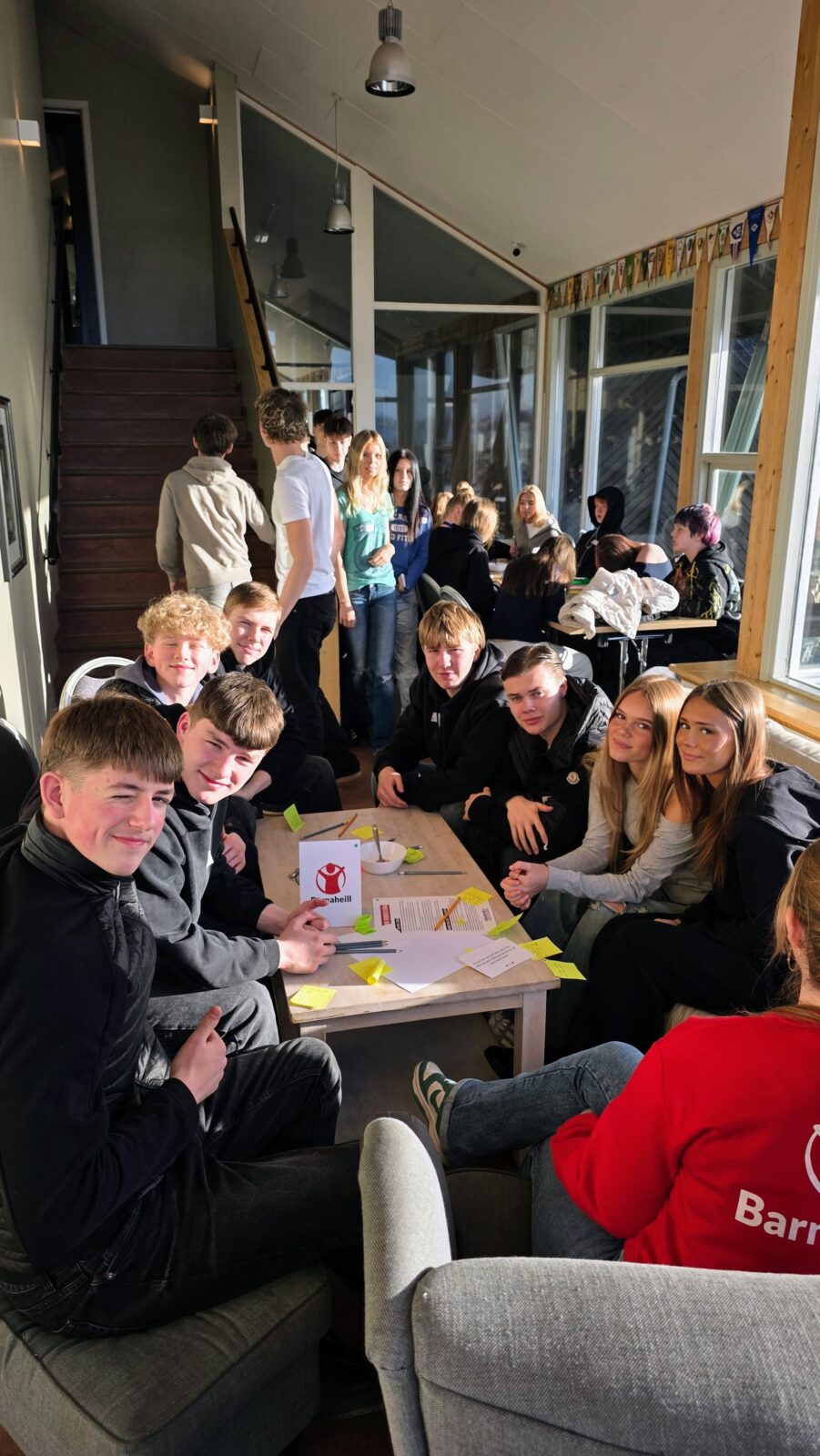
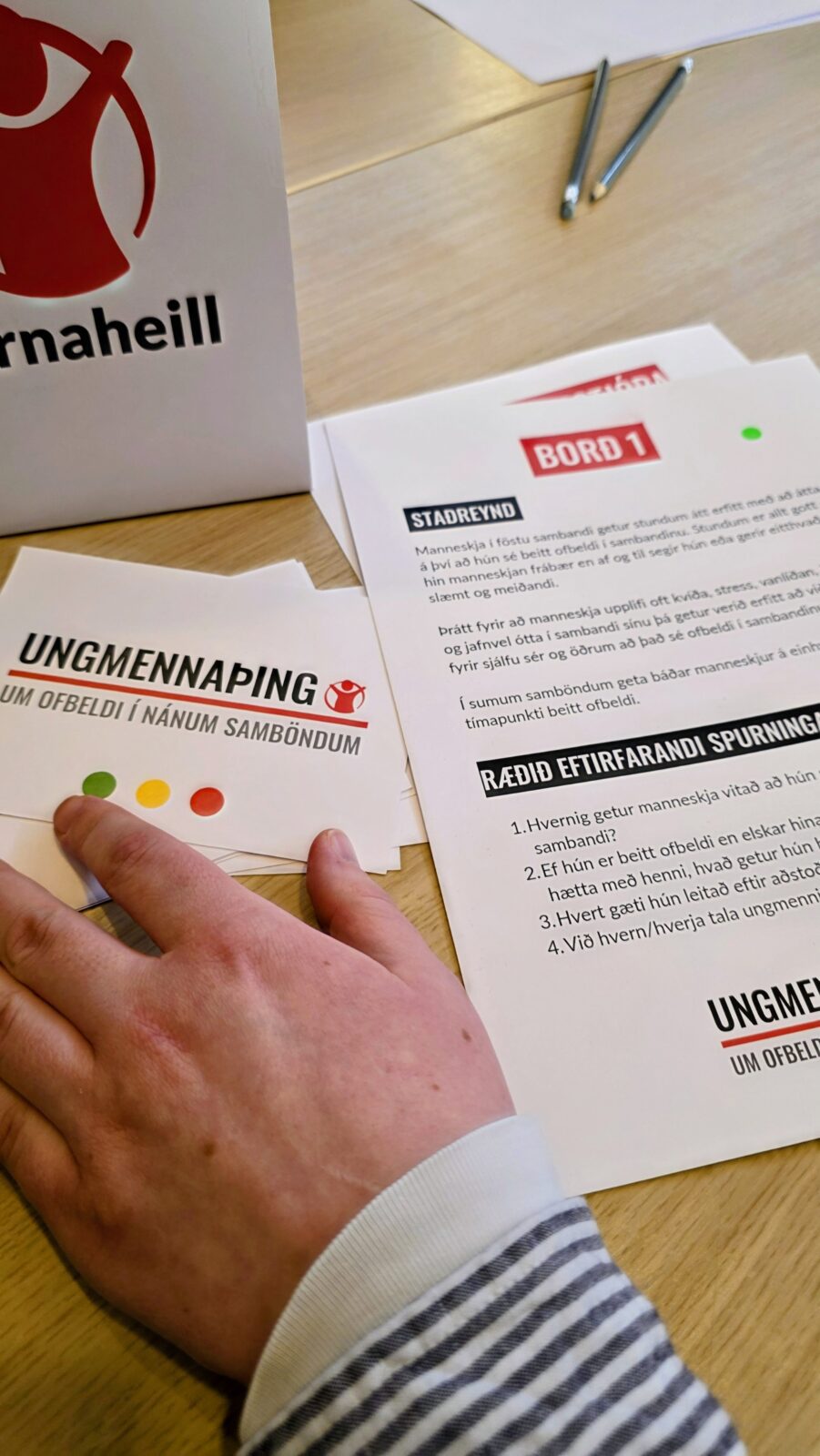
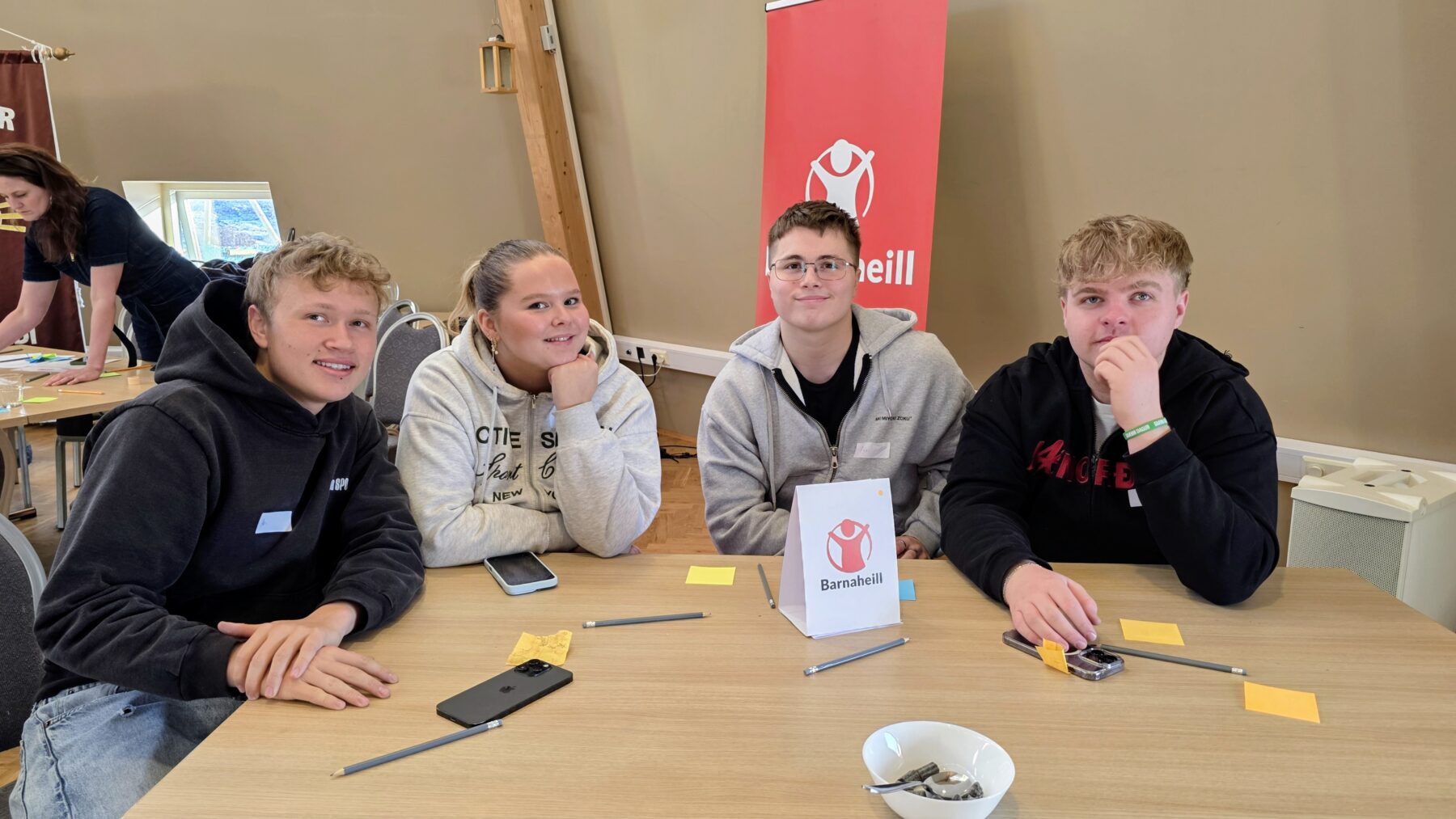
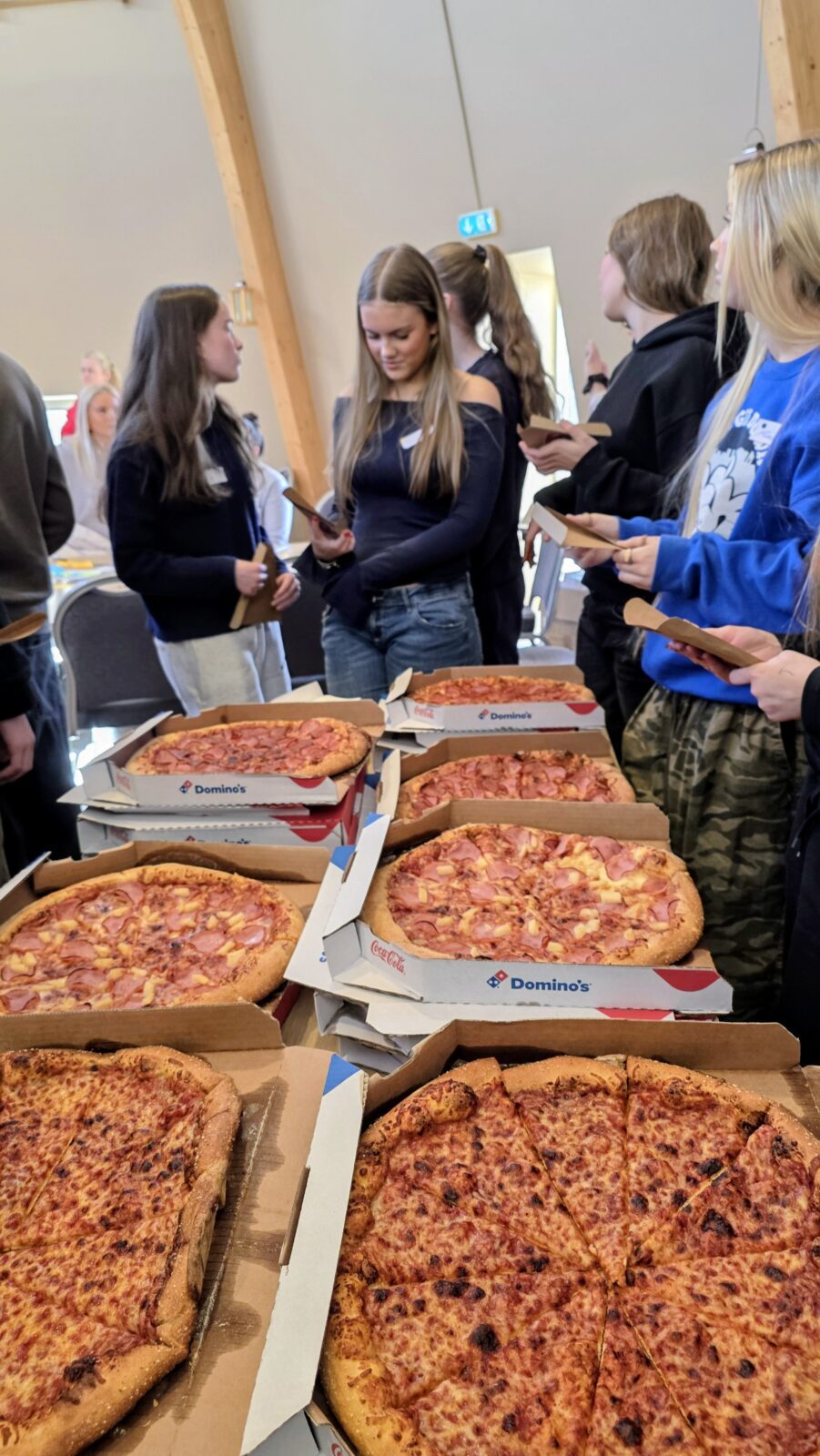
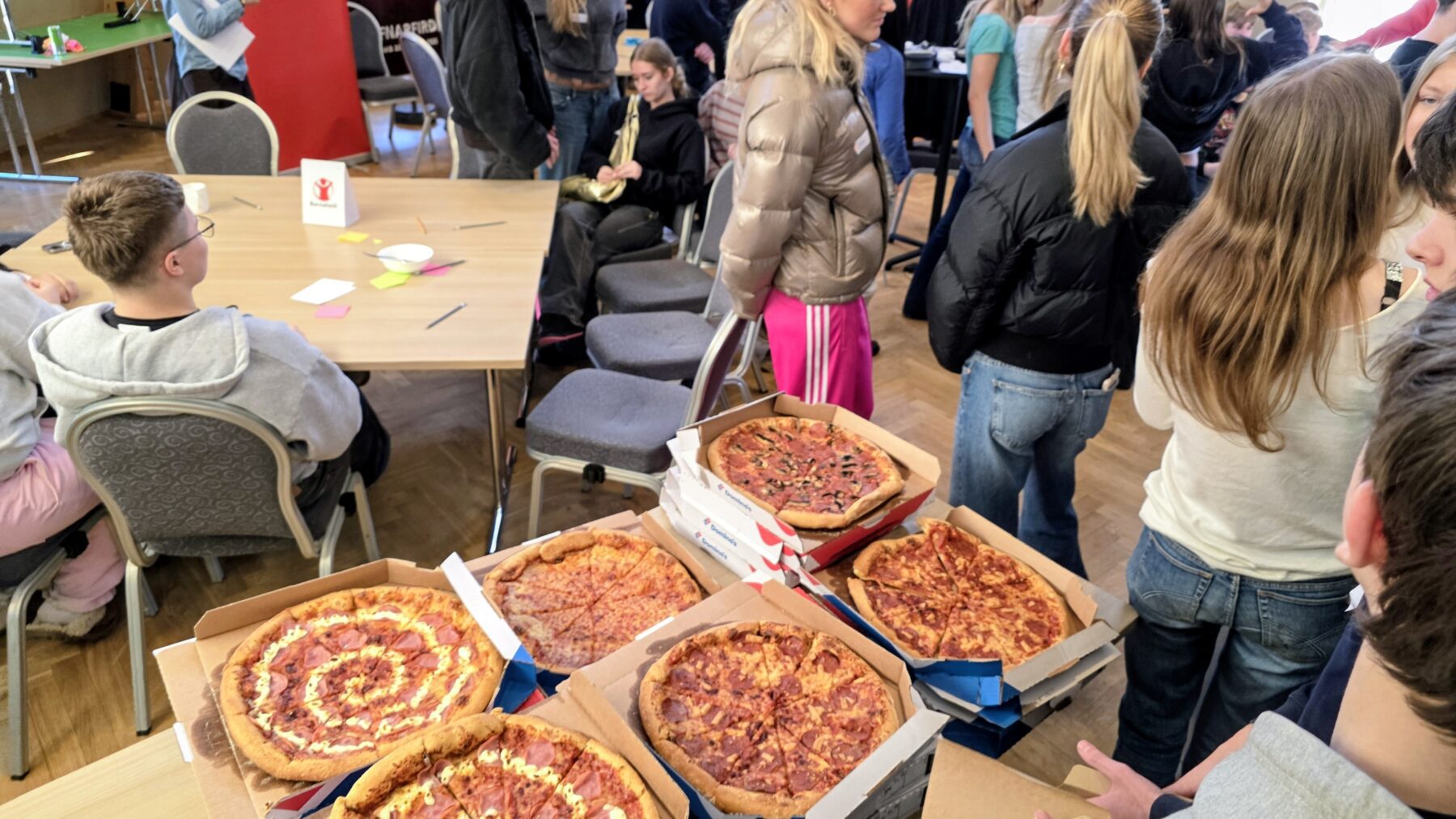
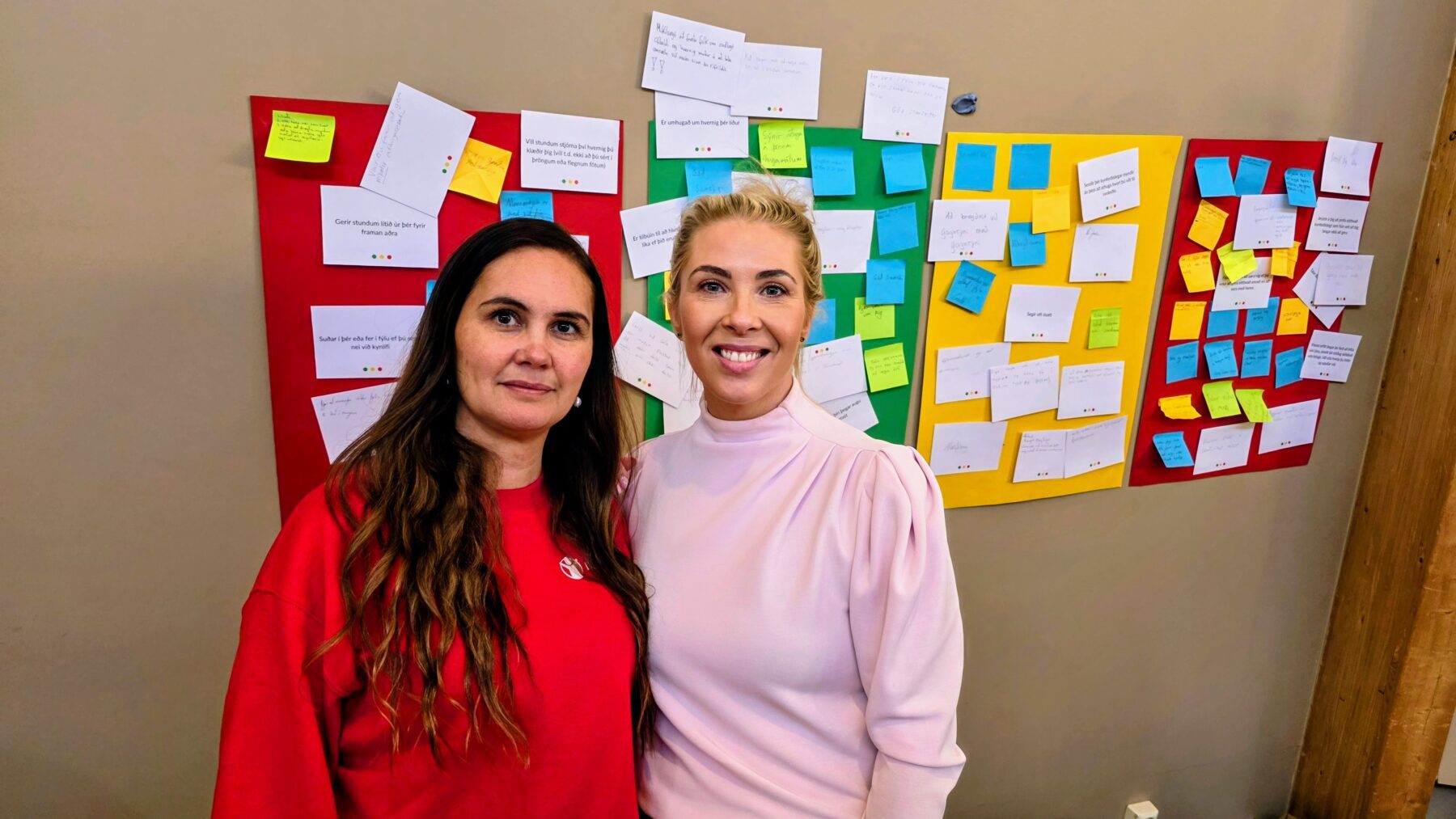
The aim of the conferences is to gain insight into the experiences and attitudes of young people and what they want to convey regarding intimate partner violence. Work was carried out in groups at tables of six, facilitated by experts, with a pizza party at the end of the session. The participants this morning came from the upper years of Hafnarfjörður's comprehensive school and the first year of FG.
„This is an issue we need to talk about,“ says Rakel Sunna Magnúsdóttir from Víðistaðaskóli. „This is our voice and what we're dealing with. So it's good to get an opportunity like this.“ Rakel Sunna says she was most surprised by how much everyone agreed.
„We were all thinking about it together and working on the issue.“ But what needs to be done? „We in my group want to improve the education and would really like to get more education about psychological abuse.“
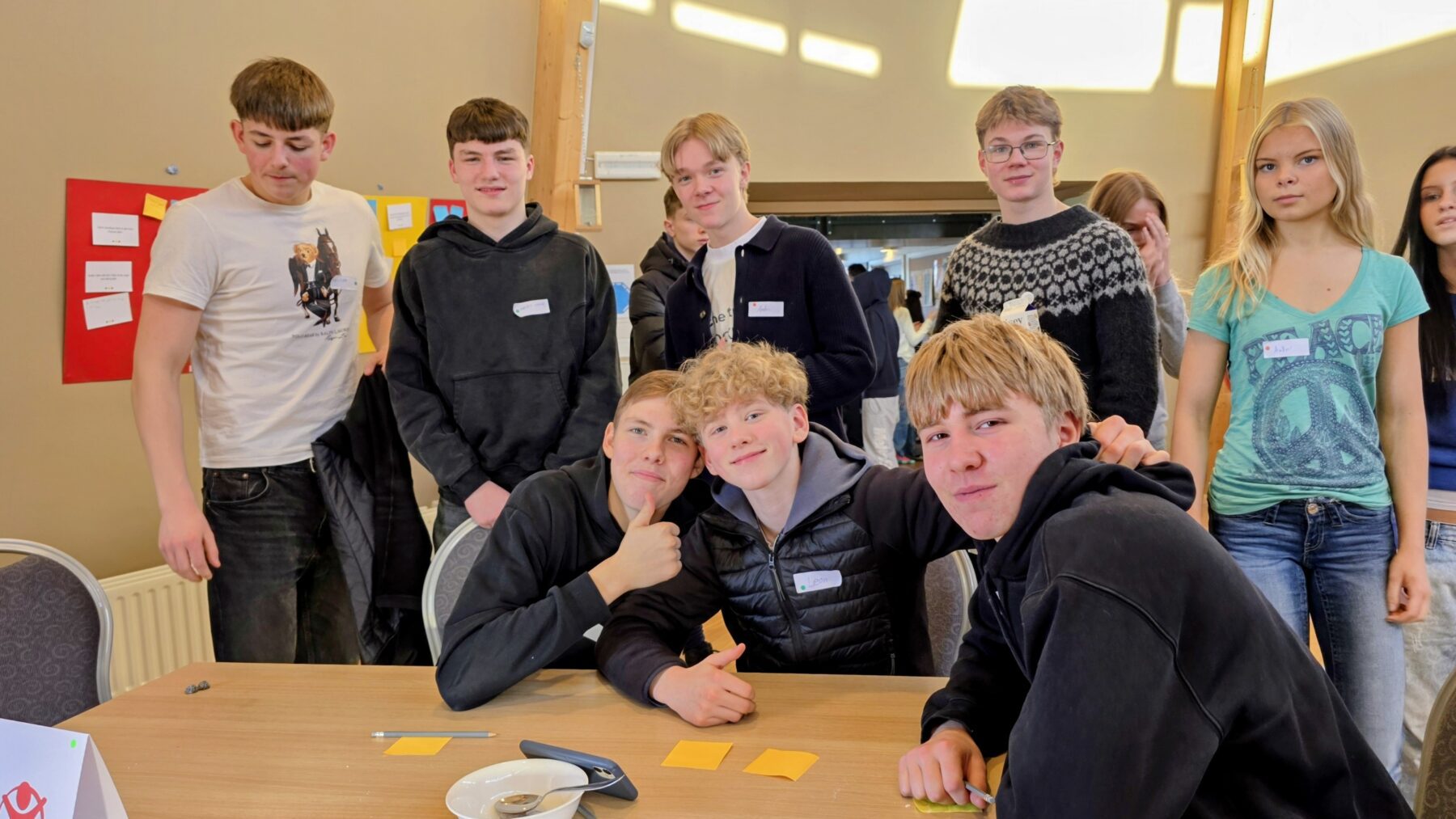
Jón Gísli Eðvaldsson from Áslandsskóli said the day had been good. „It was helpful discussions and it's very nice that there is such an association to help children and assist them, to show them what can be done to find help.“ Leon Freyr Stefánsson from the same school agrees. „Yes, this helps children get support and understand a bit better what violence is.“ He lists resources such as 1717, Bergið headspace.
Kolbrún Hrund from Save the Children says there is a clear need for such a discussion. „The fact that year after year we see that well over half of those who come to Stígamót are dealing with violence they experienced before they turned 18 shows that. We have to change this, get the numbers down. We have to talk to young people to find out how we are going to do this. What are they dealing with? What are the challenges? What solutions do they think are suitable? The government must listen.“
But how did the young people from Hafnarfjörður get on? „Brilliantly,“ she says. „After all, fewer people got in than wanted to, and we knew we were getting enthusiastic kids.“
Kristín Blöndal Ragnarsdóttir, a sex education and science teacher at Lækjarskóli and human rights teaching officer for the City of Hafnarfjörður, says that today's discussions were in keeping with what young people were discussing in the primary schools in Week 6.
„Unfortunately, far too many of the young people have experienced violence or will go on to experience it. So, it's empowering for them to take part in a discussion like this, and it's incredibly informative to hear what others have to say about it,“ says Kristín. „They all need this education and they all need to be aware of the issue. They need to learn the difference between right and wrong.“
Hrafnkatla Örk Gunnarsdóttir, Salka Guðrún Andrésdóttir and Elfu Íris Einarsdóttir from Öldutúnsskóli say that the day was educational and important.
„We think it's important for adults to understand how serious this is and how widespread it is among teenagers,“ says Salka. They agree that the internet, and social media in particular, have a significant influence on this. „There's such a grey area when it comes to where the line is drawn between what is and isn't violence. Especially psychological violence,“ says Salka. Hrafnkatla says psychological violence is the root of all other violence.
„Sexual and physical abuse often starts with the mental, and I don't think it's talked about enough. Children and people often don't know that they are experiencing or inflicting mental abuse. This has such a long-lasting effect on people,“ says Hrafnkatla. „People even think it's normal, but it isn't.“
They felt that the perspectives of the young and the adults in parliament were different. „Yes, we were surprised by how little they knew about it, because the issue isn't talked about enough.“
But what happens to the discussions then? „We compile all the findings,“ says Kolbrún. „We visit six locations across the country. We look at the areas individually and see if any of them stand out, whether they have little or a lot of education, and whether they engage the children or not. We will give the local councils in the areas the results, but we will also present the overall findings at a workshop we are holding on 29th April. There, we will hand the findings over to the government, the police and the education system.“
But he will listen. „I have to believe it. You can't help it.“