
The friendly town
Hafnarfjörður has twin towns all over the world.

Friends of Hafnarfjörður
Many Icelanders and foreigners have become special Friends of Hafnarfjörður, becoming ambassadors for all that the town stands for. Hafnarfjörður's twin towns can be found all over the world. Would you like to become a friend of Hafnarfjörður?
The Nordic Friendship League
The Nordic Friendship Association was founded in 1947, but at that time there were only two twin towns: Uppsala in Sweden and Frederiksberg in Denmark. In 1949, Bærum in Norway and Hämeenlinna in Finland were added, and two years later the Municipality of Hafnarfjörður became a participant. The newest town in the chain is Tartu in Estonia, which was added in 1991.
The twin towns meet every two years at twinning events. The events feature activities by youth, sports and cultural groups from the towns, as well as conferences and seminars on various mutual issues. The twinning association also promotes visits by school groups and educational visits between the towns.
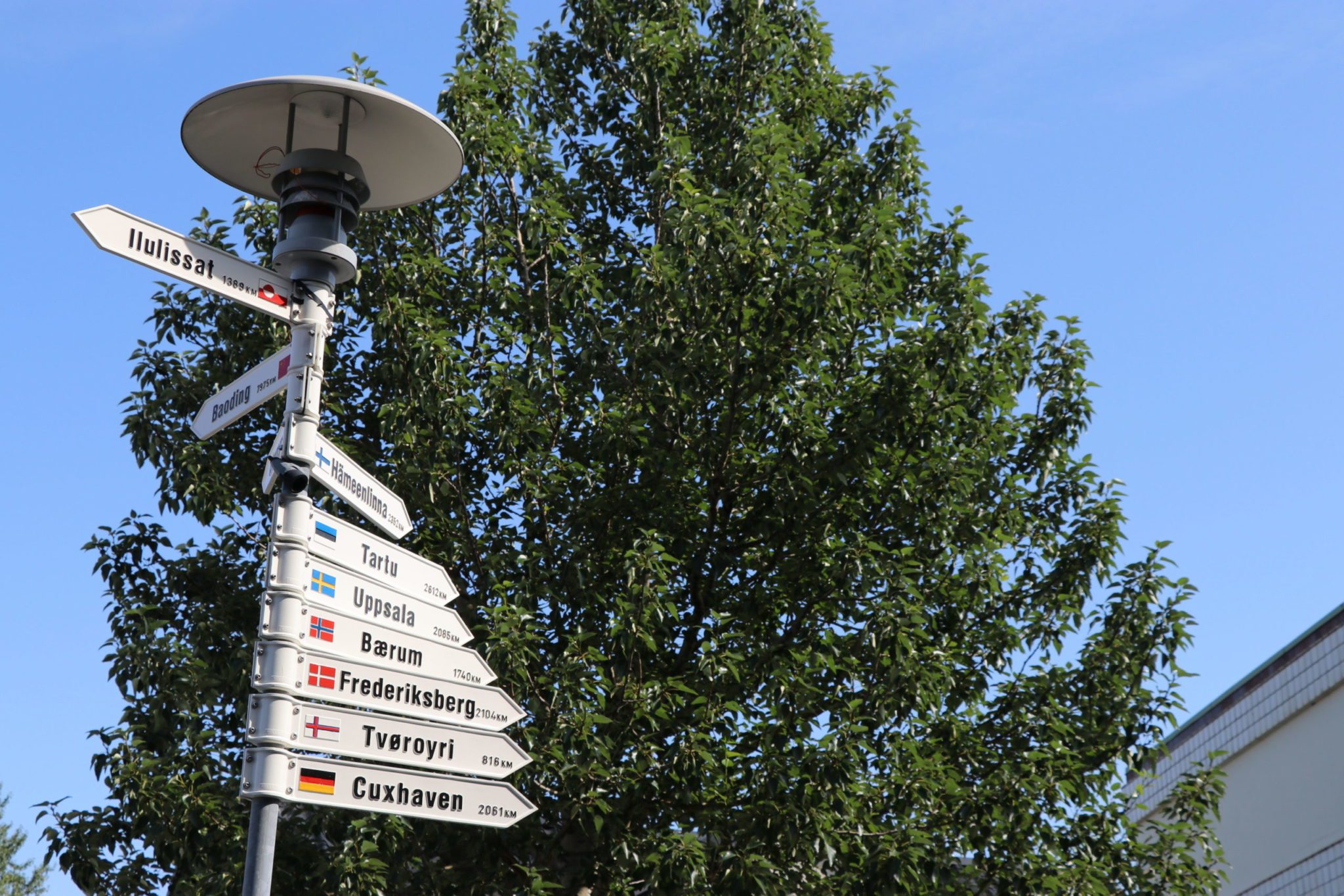
More twin towns
Hafnarfjörður also has other twin towns: Tvöroyri in the Faroe Islands and Baoding in China. There is also an active Cuxhaven Society in the town, which links the twin towns of Hafnarfjörður and Cuxhaven in Germany; this twinning was established in 1988.
The Director of Administration handles foreign relations on behalf of the City of Hafnarfjörður.
Twin towns of Hafnarfjörður
- Frederiksberg in Denmark.
- Tartu in Estonia.
- Hämeenlinna in Finland.
- Ilulissat in Greenland.
- Akureyri in Iceland.
- Goats in Norway.
- Uppsala in Sweden.
- Cuxhaven in Germany.
- Two pence in the Faroe Islands.
- Baoding in China.
The Twin Towns of Hafnarfjörður and Cuxhaven
The town of Cuxhaven, at the mouth of the River Elbe in Northern Germany, has historically been associated with Iceland, particularly owing to the sale of Icelandic seafood in the town's fish markets. Although Cuxhaven only gained official town status in 1907, its history can be traced back to the Middle Ages, when a harbour and fort were built in the area where the town stands today to protect the sailing route along the River Elbe to Hamburg. Cuxhaven and Hafnarfjörður were formally twinned in the autumn of 1988, and relations between the two towns have been very active in various ways ever since. One example of the successful links between the two towns is the inauguration in 1993 of a new “Hafnarfjörður Square” in the centre of Cuxhaven and a new “Cuxhaven Street” in the Óseyrarsvæði district of Hafnarfjörður. On the occasion of the 25th anniversary of the twinning, in 2013, Cuxhaven gifted Hafnarfjörður a 4-metre-high wooden replica of the Kugelbake beacon located on the coastal path by the harbour in Cuxhaven. The original is a 30-metre-high navigational aid built in 1703 on the northernmost coast of Lower Saxony, where the River Elbe flows into the North Sea. Kugelbake is the iconic symbol of the town of Cuxhaven, in the same way that the Vitinn lighthouse is for Hafnarfjörður.
There has also been extensive and rewarding co-operation in youth affairs and sport, education and culture, and politics – not to mention business and trade. Cuxhaven has been sending the people of Hafnarfjörður an annual Christmas tree, which has brightened up the dark winter nights for decades, initially in the southern harbour and more recently in the Christmas village in the town centre. Immediately after the twinning in 1988, the decision was taken to create the “Cuxhaven Wood” by Lake Hvaleyrarvatn. Since then, it has become something of a tradition that when delegations from Cuxhaven visit Hafnarfjörður, they plant trees whenever possible, as the wood has expanded and grown significantly in recent years. The Cuxhaven Wood is home to two memorial plaques – one commemorating Jónas Guðlaugsson and the other, Rolf Peters. These men were key players in the early activities between the twin towns and served for a number of years as chairmen of the associations in each country.