
Information and media literacy week in Iceland for the first time
A special week of education dedicated to information and media literacy will be held in Iceland for the first time, from 13-17 February. The aim is to make the week an annual event, where the emphasis will be on raising awareness of the importance of information and media literacy, as well as offering new educational material with different themes each year.
An educational campaign on social media use for the middle school level
A special educational week dedicated to information and media literacy will be held in Iceland for the first time, from 13-17 February. There are precedents for such weeks in other countries, and the working group behind the project has been in close collaboration with KAVI in Finland and Medietilsynet in Norway during the preparations. The aim is to make the week an annual event, with an emphasis on raising awareness of the importance of information and media literacy, as well as offering new educational material with different themes each year.
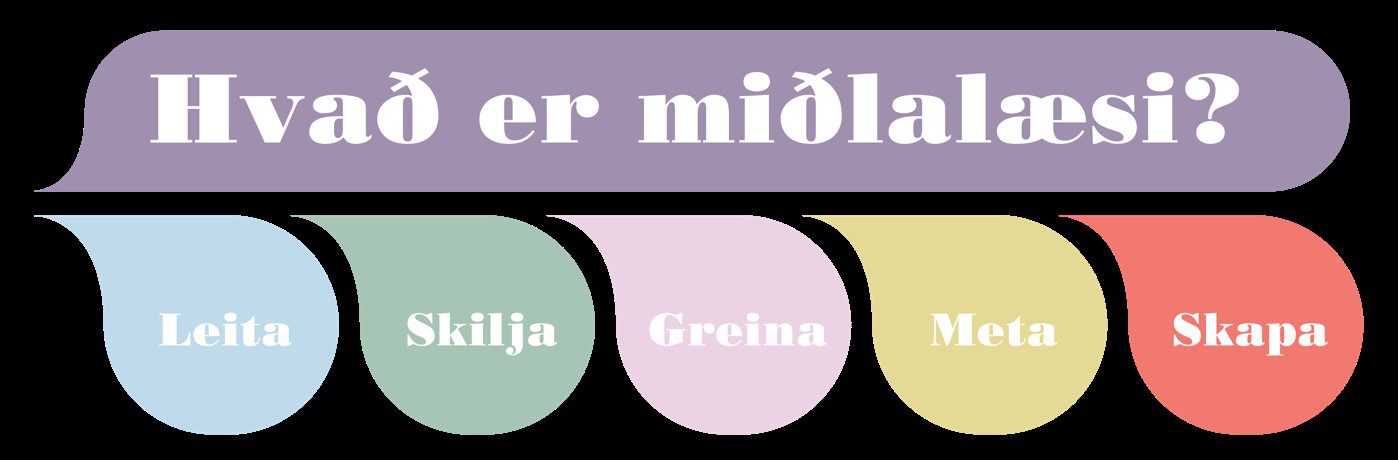
The ability to seek, understand, analyse, evaluate and create information in a safe and effective way.
Information and media literacy is the ability to seek, understand, analyse, evaluate and create information safely and effectively through various media and information sources. One of the biggest societal changes to have occurred is taking place now in the information age. It manifests itself in the challenges that technology presents to us, and as a society we need to learn to respond to them, constantly acquiring new knowledge and skills to behave responsibly and appropriately in the online world.
New educational material to help teachers have conversations with students about responsible phone and internet use.
This week, new media literacy educational material for the middle years of primary school (Years 5-7) will be launched and made available to all schools in the country.
Dialogue – Age verification – News & fake news – Hate & harassment – Pornography
There are 6 short educational videos with different themes related to media literacy. Each video is accompanied by discussion points and teaching guides to help teachers have conversations with students about responsible phone and online use.
- A conversation about social media
- Social media and age ratings
- News and fake news
- Hate and harassment online
- Watching online pornography
- Mental health and social media
After watching the videos and having a discussion about each one, each class creates its own charter in which the students themselves set rules and a framework for the use of phones and social media. The educational material is based on the findings of an extensive study by the Media Commission and the University of Iceland's Institute of Education on children and online media.
Seminar on information and media literacy at the Grand Hotel on 16 February
During Information and Media Literacy Week, a symposium will be held at the Grand Hotel on 16 February from 9:00 to 12:00. The programme will be announced later, but it will feature presentations from experts in different areas of media literacy (information, image, and media literacy), along with a guest speaker from Ireland. The symposium will be available to stream for those who cannot attend in person. Registration takes place here
A network on information and media literacy in Iceland
Network on Information and Media Literacy (TUMI) is supported by the Ministry of Higher Education, Industry and Innovation and Sóley, a grant fund run by the Association of Local Authorities in the Capital Region.
The following institutions, ministries, companies and organisations have representatives in the network:
The Media Commission, SAFT & Home and School, Education Department of Kópavogur Municipality, School and Leisure Services of Reykjavík City, Mixtúra, The Film Centre, National Library of Iceland, The Ministry of Culture and Commerce, Ministry of Education, Industry and Innovation, RÚV – The National Broadcasting Service of Iceland, The National Education Agency, Faculty of Education, University of Iceland, University of the Third Age, University of Iceland, University of Akureyri, Continuing Education at the University of Iceland, Lifelong Learning at the University of Akureyri, RANNUM – Research Centre for Information Technology and Media, Barnaheill, the National Commission for UNESCO, The Icelandic Data Protection Authority, Breiðholts Service Centre, the Working Group on Digital Citizenship, Upplýsing – the Association for Library and Information Science, Association of Secondary School Libraries, Association of Directors of Public Libraries, AwareGO and RIFF - Reykjavík International Film Festival.