
Want increased participation from residents of foreign origin
Around 13% of the residents of Hafnarfjörður are of foreign origin. In recent years, the City of Hafnarfjörður has been placing a growing emphasis on the affairs of immigrants, and an English version of the city's website is due to be launched. The 'Living in Hafnarfjörður' Facebook page was opened this spring.
Around 13% of the residents of Hafnarfjörður are of foreign origin, of whom Poles are the largest group, as is the case in most parts of the country. They are followed by Lithuanians, Latvians, Romanians and Portuguese. In 2019, 114 immigrants in Hafnarfjörður were aged 67 and over, a group that is often forgotten in the discussion. In recent years, the City of Hafnarfjörður has been placing a growing emphasis on the affairs of immigrants, and for one year now, Ólafía Björk Ívarsdóttir has been the city's project manager for multicultural affairs. This is a 50% position, a new post within the department for family and child welfare. The launch of an English version of the town's website is forthcoming, but The Facebook page Living in Hafnarfjörður was opened this spring.
The local paper Hafnfirðingur spoke with Ólafía.
The first few months after Ólafía took up the post, she says, were very eventful, and she set about getting a feel for everything. „I feel that people find this issue important and I have been very well received. Above all, we want people of foreign origin to be given a space as participants here in the community, whether that's at events, in information provision, as staff for the town, or in other ways. We have been increasing the translation of information and have focused on families with children, social services, and general information.“ There is also a multicultural council with five representatives. A new council was appointed this spring and meets monthly. The council is composed of one municipal employee of foreign origin, one representative from an organisation for women of foreign origin, one from the organisation Móðurmál, and two appointed by the Family Council. The Multicultural Council acts in an advisory capacity on the City of Hafnarfjörður's activities in this area.
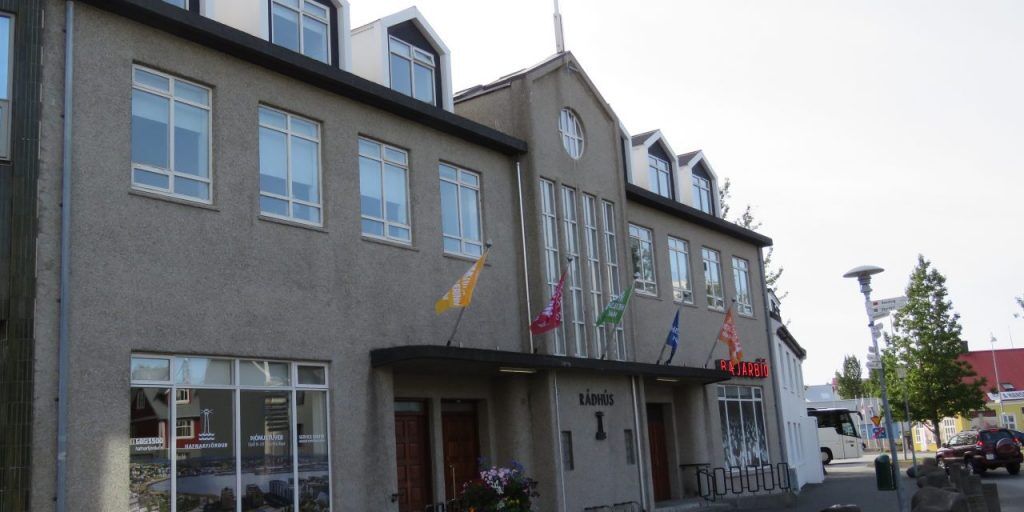
 There is a Polish-speaking member of staff in the reception of the town hall on Strandgata. Photo/OBÞ
Polish-speaking customer service officer at the Town Hall
Ólafía says that naturally, people of different ages come to the town, and the group is very diverse with varying needs. „A major advantage is that Hafnarfjörður is only a town of 30,000 people, which makes it possible to get a good overview. I work across all departments, and one of the main aims of my role is to create promotional and informational material for foreign residents, for example on Facebook and the website, in collaboration with others, particularly the service and development department. Then it will be developed further.“ Thirteen per cent of Hafnarfjörður's residents are of foreign origin, and a large proportion of them are families. Photo/OBÞ
Within the Education and Public Health Department, a teaching adviser works as the project manager for multiculturalism in the town's nursery and primary schools, and there is a lot of exciting work going on in the schools. The Town Hall's service desk on Strandgata has a Polish-speaking member of staff, and Ólafía says this has worked out very well. „It shortens all lines of communication and the service is very well received, both by staff and residents. People can also get services in English. As with other residents, people have various concerns and we try to meet them to the best of our ability.“ The Support Service for Refugees and Applicants for International Protection provides services to applicants under contract with the Immigration Directorate and offers services to refugees who have been granted protection.
 There is a strong desire for increased participation of foreign children in sports. Photo/OBÞ
A strong emphasis on multiculturalism in museums
Ólafía then says that there is a great desire to increase the participation of foreign children in sports and to increase the role of multiculturalism in the various activities in the town. The Hafnarfjörður Library is a great example of this. „A strong emphasis has been placed on multiculturalism there, e.g. with a project at the library called Anna, which is a platform for women, and we envisaged that they would meet, connect and develop the work further in the direction they want and are interested in. Artists of foreign origin have visited the library, formed connections, and at least one of them will lead an art workshop this winter. The meet-ups will continue throughout the winter and all women are welcome. In September, two events are planned: one is bingo and the other is a guided tour of the “Wildflowers' exhibition at Hafnarborg.“
 Hafnarfjörður Library has a good collection of books in foreign languages. Photo/OBÞ
The library also has a very diverse programme aimed at Polish-speaking residents, and a good collection of books in Polish. There is also a Polish-speaking member of staff. They have also recently purchased a selection of quality children's books in various languages, such as Polish, English, Spanish and Arabic. Modern libraries and museums have become community centres where everyone is welcome. There is also a dream of being able to support spontaneous gatherings that bring people together. For example, in Hafnarborg, the 'Tónagull' music course was held in Polish for young children on Sundays in March, and it is hoped that it will return in the autumn.
„Access to information enhances people's independence and sense of security, and we encourage everyone to get in touch. We also encourage residents of Hafnarfjörður to be vigilant towards neighbours of foreign origin and to ask if they are well-informed, and to point them towards these pages.“ says Ólafía in conclusion.
An interview with Ólafía was published in Hafnfirðinginn on 29 August 2020.