
Financial assistance in a new self-service process
A financial assistance application was recently launched with the City of Hafnarfjörður, which has a significant impact on the applicant's process and the work of staff towards greater automation and self-service.

Recently launched Application for financial assistance from the City of Hafnarfjörður which has a significant impact on the applicant's process and the work of staff towards greater automation and self-service. This project is the first step in a joint digital journey for municipalities, in collaboration with Digital Iceland, utilising the technological infrastructure developed by Ísland.is. The project is part of the action plan for the parliamentary resolution on a strategic plan for municipal affairs and received financial support of 100 million krónur in a supplementary budget in 2020 as part of the Covid response measures.
Collaboration between local authorities on the development of digital solutions
The solution is based on the City of Reykjavík's financial assistance application process, which was launched in 2019 and has received much praise and recognition. Financial assistance for people who cannot support themselves and their dependants without help is a statutory duty, and local authorities decided to work together on developing a digital solution for the central service portal, Ísland.is.
„The benefits of this project are significant for applicants and staff. The process will be shorter, with less paperwork, a reduced carbon footprint from fewer journeys between locations, fewer enquiries, minimal waiting for documents and, in general, faster processing. The applicant will immediately see where their application is in the process, and the process will become more accessible, efficient and cost-effective.“ says Rannveig Einarsdóttir, Head of the Family and Children's Services Department for the City of Hafnarfjörður.
The project is led by the Digital Transformation Team of the Association of Icelandic Municipalities, in collaboration with the municipal social services and the association's Legal and Welfare Division. The Municipality of Hafnarfjörður participated in the development phase and is the first to implement the solution. The software companies Kolibri and Andes were partners, along with the Ministry of the Interior.
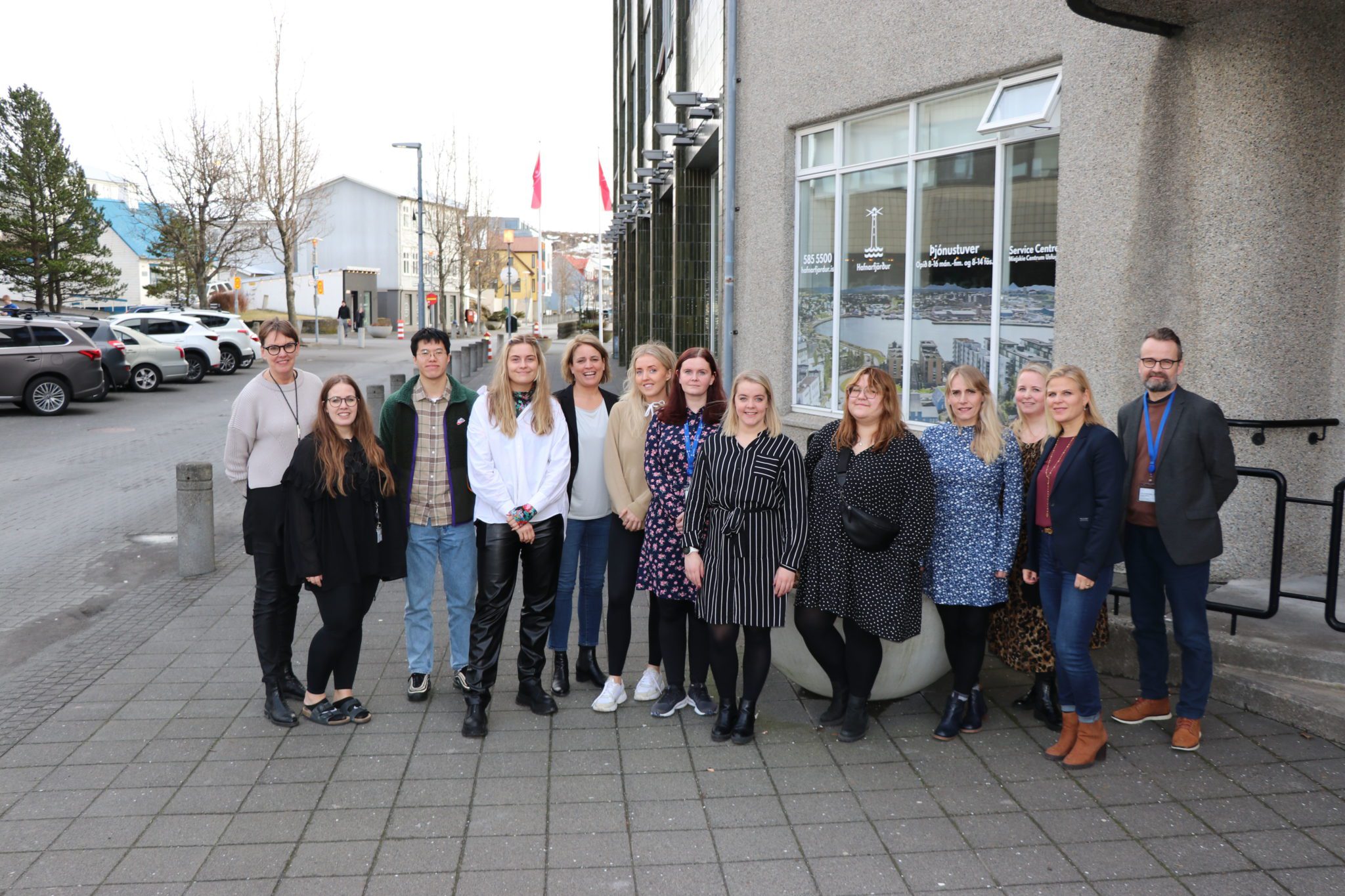
Representatives of the partners met at Hafnarfjörður Town Hall this week to celebrate the implementation of a new digital financial assistance solution, which other local authorities will be rolling out in the coming weeks and months.
Automatic data collection from the National Register and the Tax Office significantly simplifies the process.
The Municipality of Hafnarfjörður is a pilot municipality for this project, but implementation in many other municipalities is in preparation. The aim is to simplify and improve services for users, wherever they are in the country, reduce the number of steps and at the same time ensure security and stability in the administration of applications. The solution is hosted and maintained in a centralised location, utilising the technical infrastructure of Ísland.is. Automatic data retrieval from the National Registry and the Tax Administration greatly simplifies the process for the applicant and also offers significant benefits for staff.
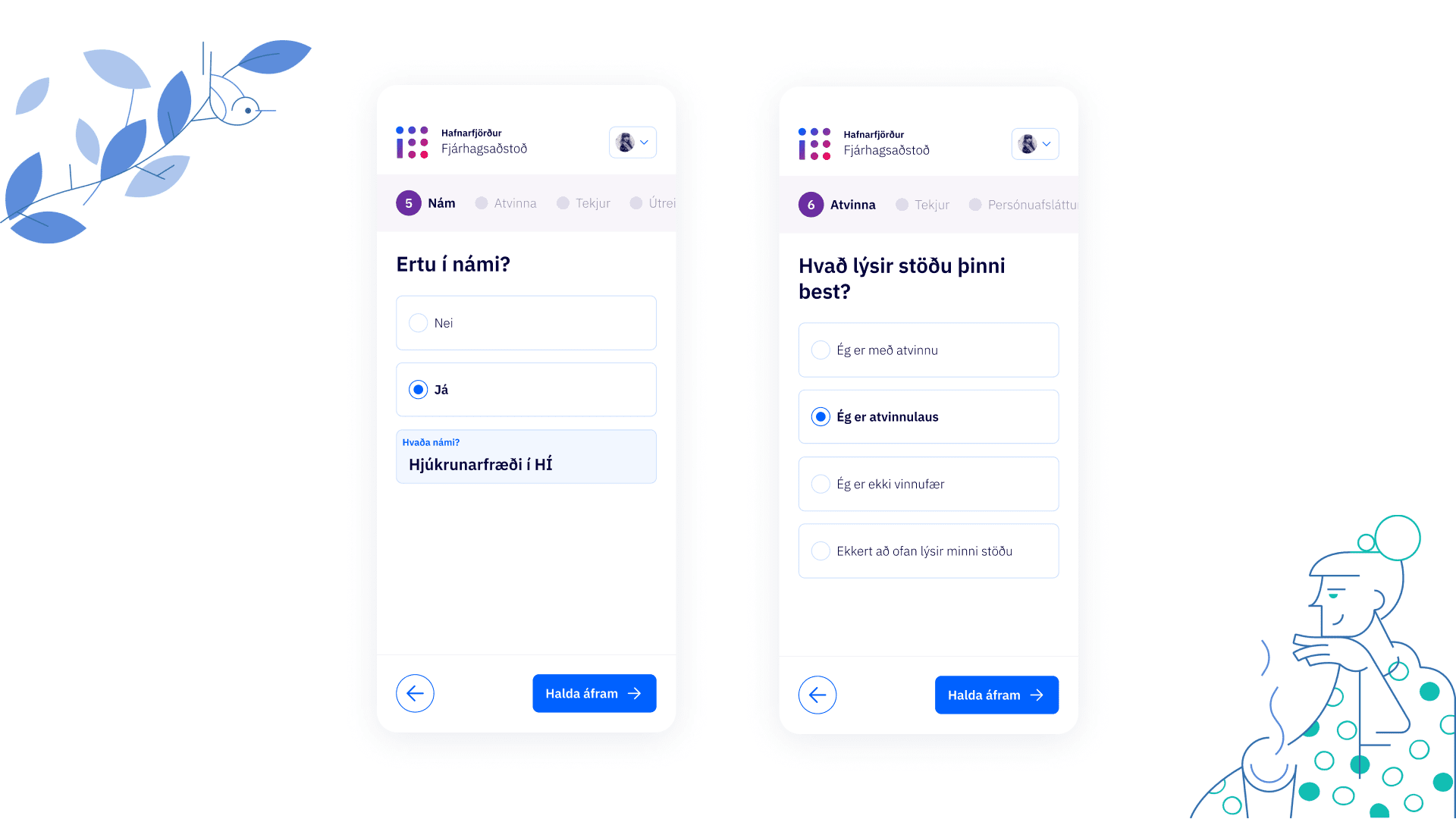
Designed with the user's needs in mind
A strong emphasis is placed on designing the process around the needs of the service's users. The applicant only needs to register with e-ID, answer a few questions, grant permission to retrieve data, and will subsequently receive a clear overview of the application's status and the next steps. Ongoing communication takes place through the application portal on Ísland.is, and the outcome of the application is published there. The revised process was implemented on the City of Hafnarfjörður's website at the turn of the year, and the first few weeks are promising. Counsellors at Hafnarfjörður Municipality see great opportunities to further improve services and communication with their clients. The time saved, which was previously spent on a great deal of manual work with documents and explaining a complex process, can be used to provide better welfare services and support applicants. The project is seen as a good omen for the next steps in the shared digital transformation journey of local authorities.