
Aurora Borealis – Release Party
On Saturday 19 September, from 3pm to 5pm, we will celebrate the launch of the book Bjarmaband: Frosti Fjalar at Hafnarborg. The book is published in connection with…
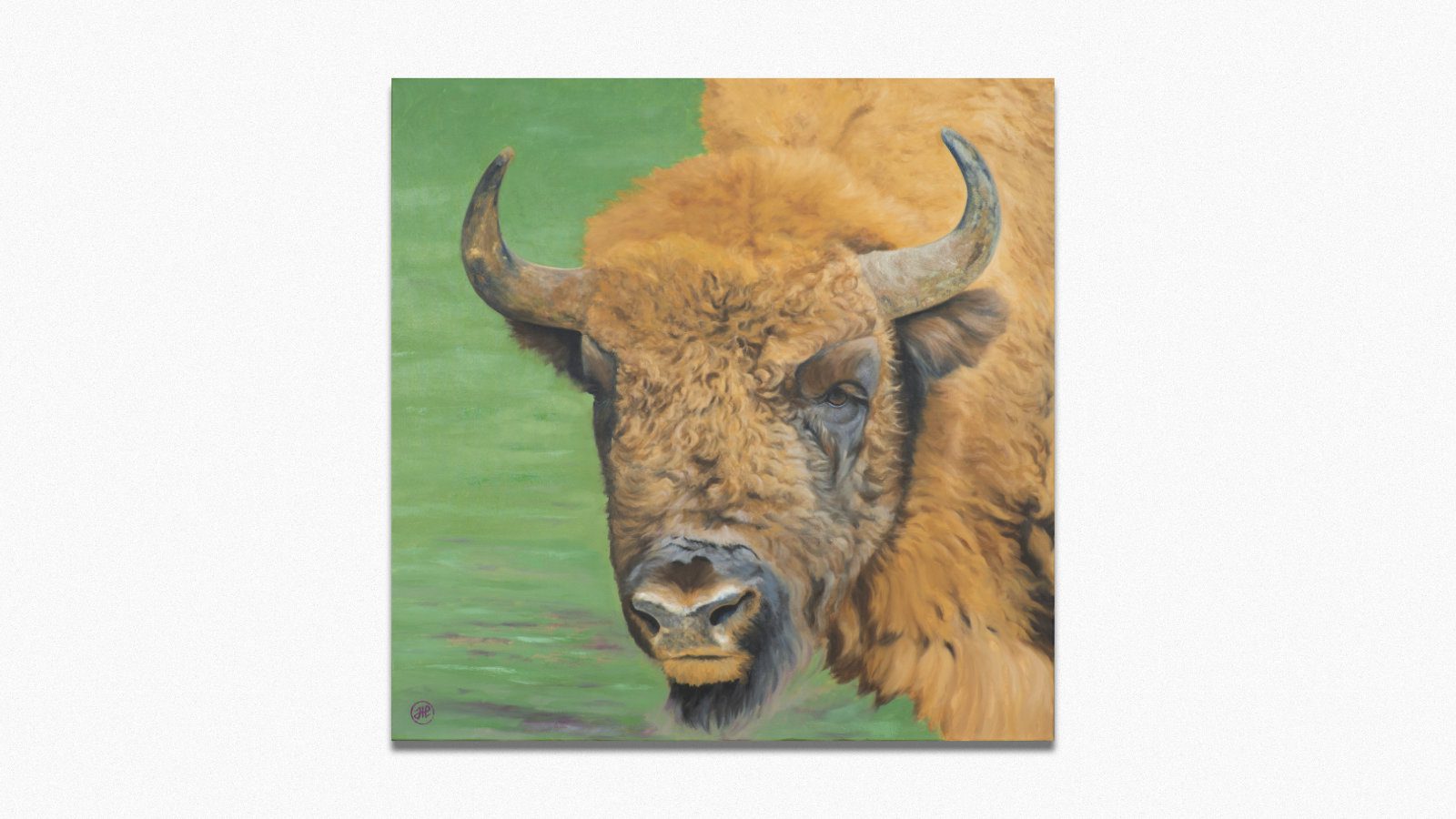
I have had one foot in Poland for the past six years and there I have come to know not only a nation that rose from the ashes of war, but also an animal that, alongside that nation, conquered death and was saved from extinction. For thousands of years, the European bison was allowed to live alongside humankind, though not without conflict.
Hunted and driven into exile, it witnessed the ancient Roman Empire, the rule of Genghis Khan, kingdoms rise and fall, revolution after revolution, war after war. Until the year 1921, when the last wild animal fell prey to hunters and the species was thus wiped out in the wild. Only twelve animals were alive in zoos across Europe.
The Poles took it upon themselves to gather these animals and place them in a protected area in Poland. There, the population was bred under intensive care and, despite a world war and decades under Soviet rule, they managed to slowly release them into the wild, back to their native land. And now, almost a century later, these last giants have spread widely and there are now between 11,000 and 12,000 animals in the world. Around 8,800 of them live in the wild, just as their ancestors did for centuries.
Stories like this captivate me, stories of perseverance, of victory over adversity, the impossible made possible by the power of will. I connect this to so much, not just in my own life, but to everything I see in the world. Stories are everywhere we look, and they speak to us in different ways. But sometimes we can learn so much just by looking into the eyes of a single animal. Because its story, its struggle and perseverance, becomes greater than the animal itself, for this story lives within us all.
———
Júlíus Hafsteinn (1994) is an Icelandic painter who works in both Iceland and Poland. He works in a realistic style that blends precision with bold brushwork. His subject matter draws inspiration from human history, nature, faith and traditions, with a focus on heroism, resilience and the strength inherent in overcoming adversity. His work includes a series of paintings of the European bison, as well as depictions of warriors, diverse cultures and landscapes, where beauty and strength
of nature are allowed to flourish. He paints mainly with oil paints on canvas and wooden panels, adapting his working methods to each subject, whether it is historical works that require research or freer and more intuitive animal and landscape paintings.
His work emphasises the exaltation of life, a connection to the spirit of the past, and creating images that are both beautiful and meaningful. Júlíus has a background in film studies, which has shaped his visual thinking, narrative ability, and professional approach. He has sold numerous works, runs his own studio in Hafnarfjörður, and has established a regular practice as a painter. He taught landscape painting in Akureyri for several years and has worked on art events in Reykjavík and Hafnarfjörður, in addition to developing his own projects and series.
There will be a special exhibition opening on Thursday, 17th September from 18:00-21:00 and you are welcome!
Curator: Elvar Gunnarsson
Other opening times:
Fri. 18 Sep 13:00 – 18:00
Sat. 19 Sep 13:00 - 17:00
Sun. 20 Sep 14:00 – 17:00
LG // Litla Gallerý is supported by the Culture and Tourism Committee.
Hafnarfjörður's due to the event
————————
For the past six years, I have had one foot in Poland. During that time, I have come to know not only a nation that rose from the ashes of war, but also an animal that, alongside that nation, survived against the odds and was brought back from the brink of extinction. For thousands of years, the European bison lived alongside humankind, though not without conflict. Hunted and driven from its territories, it witnessed the rise and fall of the Roman Empire, the conquests of Genghis Khan, kingdoms and monarchies rising and falling, revolution after revolution, war after war. Then, in 1921, the last wild European bison was killed by hunters, and the species became extinct in the wild.
Only twelve animals remained, scattered among zoos across Europe. The Polish people refused to let the story end there. These remaining animals were gathered together and placed under protection in Poland. Through careful breeding and dedicated conservation efforts, the population slowly began to recover. Despite the devastation of another world war and decades under Soviet rule, the bison were gradually reintroduced into the wild, returning them to the lands of their ancestors. Today, barely a century later, these last giants have spread across vast territories once again. Their numbers have grown to somewhere between 11,000 and 12,000 worldwide, with approximately 8,800 living in the wild, as their ancestors did for countless generations.
Stories like this have always fascinated me—stories of perseverance, of triumph over adversity, of the seemingly impossible being made possible through determination and will. I see connections to this everywhere, not only in my own life, but in the world around me. Stories exist everywhere we look, and each of us hears something different in them. Sometimes we can learn an extraordinary amount simply by looking into an animal's eyes. Its history, its struggle, and its survival become something larger than itself, because in some way, that story lives within us all.
———
Julius Hafsteinn (1994) is an Icelandic painter working between Iceland and Poland. His practice is rooted in realism, combining meticulous observation with bold and expressive brushwork. His subjects draw from human history, nature, faith, and tradition, with a recurring interest in heroism, resilience, and the strength required to endure adversity. His work includes a series devoted to the European bison, alongside paintings of warriors, cultures, and landscapes in which the beauty and power of the natural world take centre stage. He primarily works in oil on canvas and wooden panels, adapting his approach to each subject—whether historical works that demand extensive research or more intuitive and spontaneous depictions of animals and landscapes.
Across his work runs an emphasis on the celebration of life, a connection to the spirit of the past, and a desire to create images that are not only visually compelling, but carry a deeper sense of meaning. Júlíus has a background in film studies, which has profoundly shaped his visual thinking, sense of narrative, and professional approach to image-making. He has sold numerous works, maintains his own studio in Hafnarfjörður, and works professionally as a painter. He taught landscape painting in Akureyri for several years and has participated in and developed art events in Reykjavík and Hafnarfjörður, alongside pursuing his own independent projects and series.
There will be a special exhibition opening on Thursday, 17th September from 18:00-21:00 and you are welcome!
Curator: Elvar Gunnarsson
Other opening hours
Fri 18th Sep 13:00 – 18:00
Sat 19th Sep 12:00 – 17:00
Sun 20th Sep 14:00 – 17:00
LG // Litla Gallerý is sponsored by the Culture and Tourism Committee of Hafnarfjörður for this event.
On Saturday 19 September, from 3pm to 5pm, we will celebrate the launch of the book Bjarmaband: Frosti Fjalar at Hafnarborg. The book is published in connection with…

