
The Health Inspectorate warns of volcanic ash and gas pollution
The Health Inspectorate wishes to warn that volcanic ash and gas pollution is currently lying over the capital region, but the prevailing southerly wind is carrying the volcanic pollution northwards. This situation will last for the rest of the day, but with increasing precipitation and wind, air quality should improve as the day goes on.
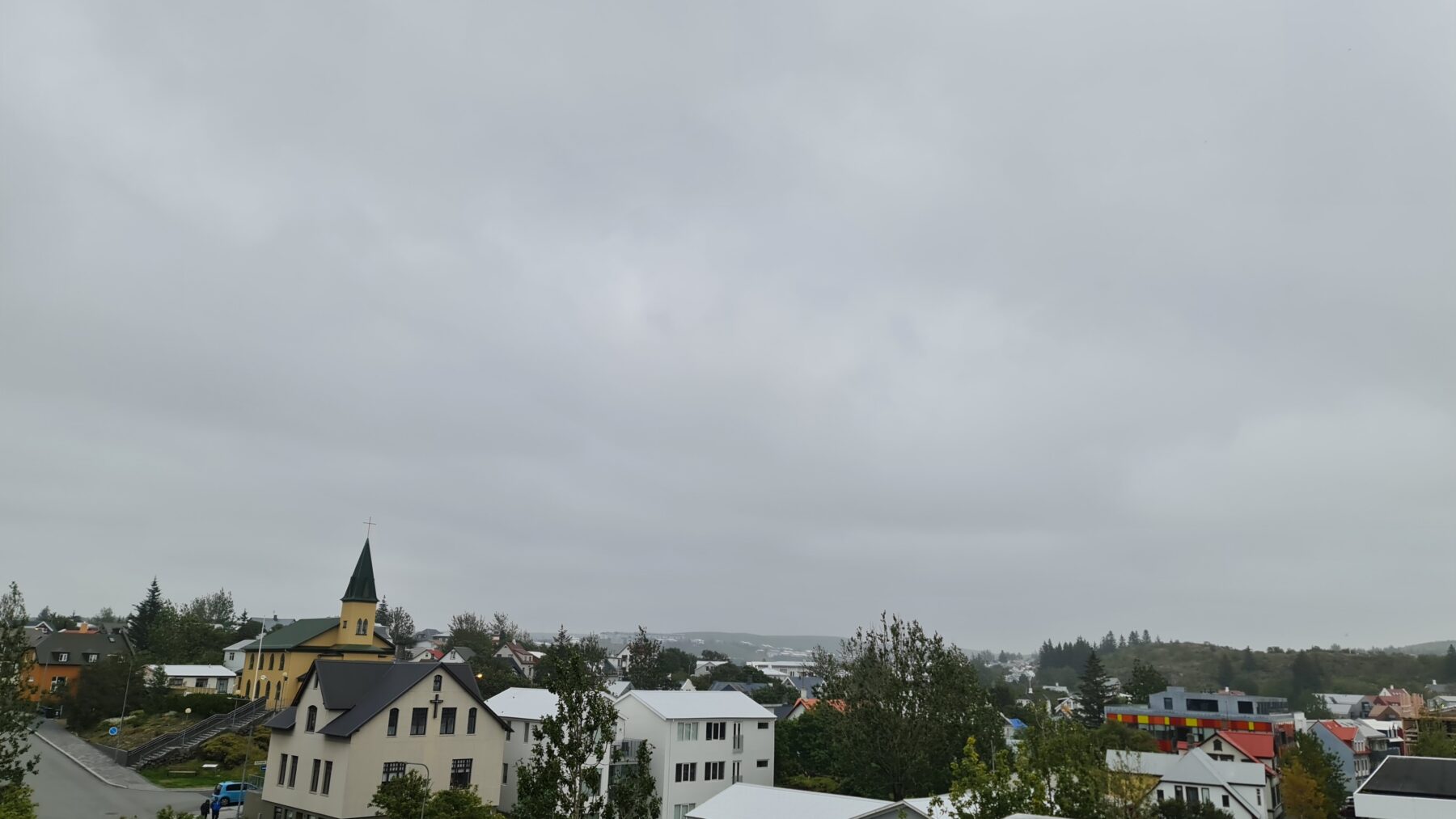
Haze over Hafnarfjörður
Notice from the Environmental Health Authority of Garðabær, Hafnarfjörður, Kópavogur, Mosfellsbær and Seltjarnarnes regarding volcanic haze and gas pollution from the eruption at the Sundhnúksgígaröð.
The Health Authority wishes to warn that volcanic ash and gas pollution is currently present over the capital region, but the prevailing southerly wind is carrying the volcanic pollution northwards. This situation will last for the rest of the day, but with increased rainfall and wind, air quality should improve as the day progresses. Volcanic fog contains pollutants that have converted into SO4 (sulphate), and therefore it is not detected by conventional measurements of sulphur dioxide (SO2). However, measurements of fine particulate matter indicate that this pollution is present. This morning, elevated levels of fine particulate matter and also of sulphur dioxide from the volcano are being measured.
Volcanic smog is an air pollutant that is formed when SO2, other gases and particles react with oxygen and moisture in the presence of sunlight. It has a characteristic bluish-grey colour, which is created as sunlight is refracted by the particles/aerosols. Volcanic smog can cause fatigue, headaches, irritation to the eyes and throat, as well as flu-like symptoms. Those with respiratory sensitivities, and children, should avoid prolonged outdoor activity and limit exertion. Less sensitive individuals may also experience symptoms and should also limit outdoor exertion. It is not recommended to let young children sleep outside in a pram under these conditions.
General recommendations regarding gas pollution are as follows:
- Patients with lung and heart conditions should have their medication readily available.
- Breathe as much as possible through your nose and avoid physical exertion outdoors in heavy pollution, as this reduces the concentration that reaches the lungs.
- Staying indoors with closed windows and the air conditioning switched off provides significant protection from the pollution.
- Please note that dust masks provide no protection against gas pollution.
- Measures to prevent SO2 and other volcanic gas indoor air pollution
- Close windows and minimise traffic at the front door.
- Turn up the heating
- Air out as soon as the air quality improves outdoors
In addition to the above information, advice on the health effects of air pollution can be found on the Chief Medical Officer's website: here. Air quality measurements are available on the Environmental Agency's website., here, Further guidance on how to respond to SO2 concentrations can be found by clicking on the link in the left-hand corner of the page. Forecasts for air pollution can be viewed on the Met Office website., here However, it should be noted that it does not include volcanic ash, but only direct pollution from the eruption.