
Arnarberg
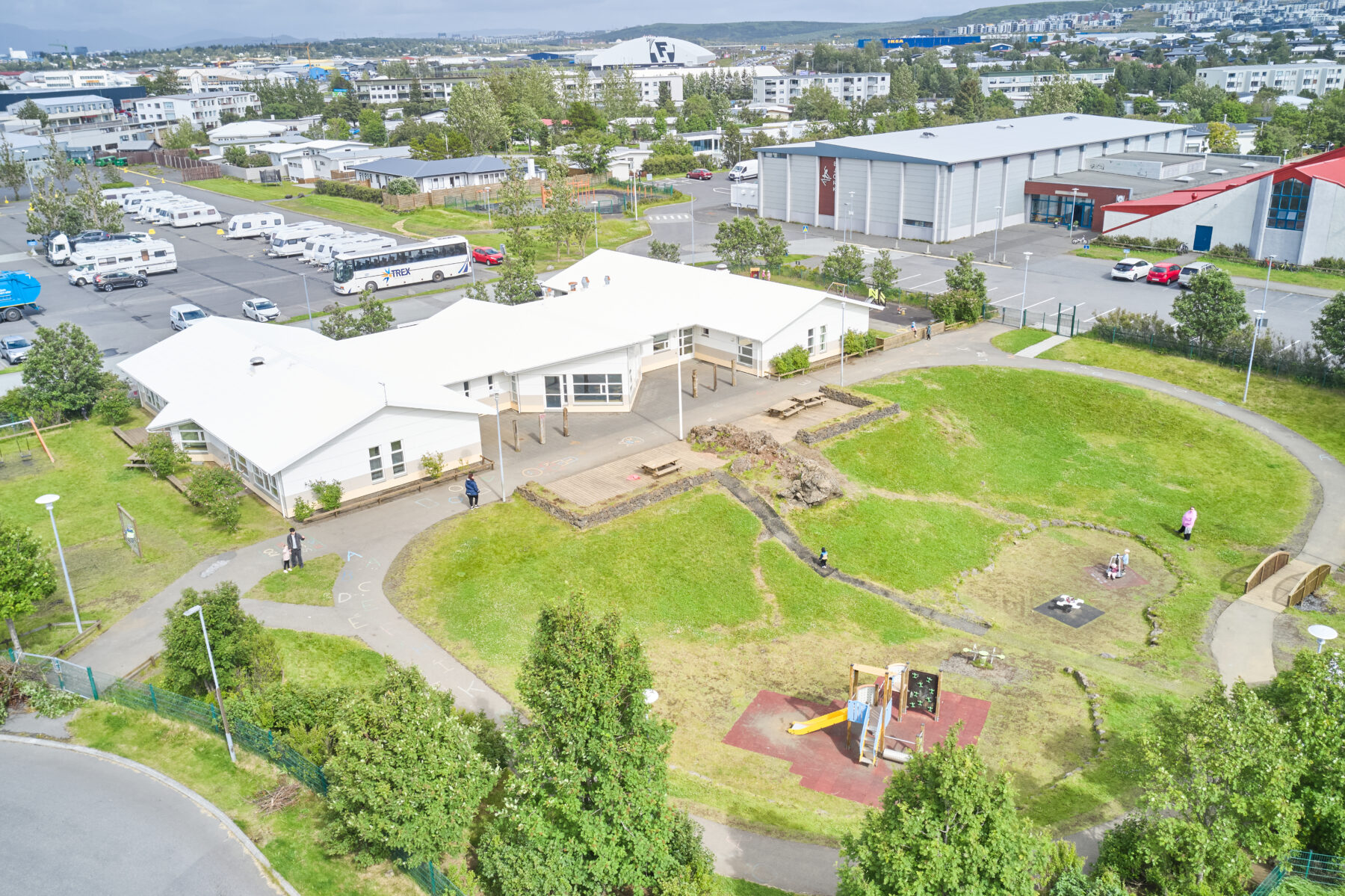
Leikskólinn Arnarberg tók til starfa í rólegu og friðsælu hverfi við Haukahraun 2 í ágúst 2003. Hjá okkur eru 80 börn á aldrinum 18 mánaða til 6 ára á fjórum deildum: Hamri, Kletti, Króki og Reit. Deildirnar eru aldursblandaðar nema yngstu börnin eru saman á einni deild.



Guiding principle

Respect

Cooperation

Traust
Ideology
Einkunnarorð Arnarbergs eru Læsi er leikur og segja má að þau séu meginþráður alls okkar starfs. Hér á læsi ekki einungis við lestur bóka, heldur líka að kunna að lesa í líðan og velferð einstaklingsins, hreysti og umhverfi. Leikurinn ýtir undir þroska á mörgum sviðum og það er í gegnum hann sem börnin læra mikilvæg atriði um hreyfingu, notkun tungumálsins, félagsleg samskipti, tilfinningatengsl og sköpunarkraft svo eitthvað sé nefnt.
Í öllu okkar starfi leggjum við áherslu á að við séum öll jöfn og eigum jafnan rétt. Með því viljum við stuðla að umburðarlyndi, samkennd og samvinnu einstaklinga á milli. Með þessa þætti að leiðarljósi erum við sannfærð um að við hjálpum börnunum okkar að verða sterkari og sjálfstæðari einstaklingar sem geta tekið á móti áskorunum lífsins með gleði og öryggi að vopni.

Managers

Berglind Kristín Long Bjarnadóttir
Special Education Manager - Wellbeing Coordinator
Children's well-being
All children have the right to receive the services they need when required. It can be complicated to get appropriate help and to know where to seek it. New Success Act They must ensure that children and parents receive the right support, at the right time, from the right people.
Services for children
Services for children are provided at three levels. It is important to remember that the service is tiered, not based on the child's individual case. This means that children can receive services at more than one level.
Tengiliður farsældar í Arnarbergi er Berglind Kristín L. Bjarnadóttir.
Parental cooperation
Við leggjum mikla áherslu á foreldrasamvinnu. Föst foreldraviðtöl eru boðuð einu sinni á ári en foreldrum stendur alltaf til boða að biðja um viðtal við kennara. Einnig eru fastir dagar þar sem foreldrum er boðið í morgunmat eða kaffi til að njóta þess að vera með börnum sínum og hitta aðra foreldra.
Parents' Association
Í foreldrafélagi Arnarbergs sitja 9 manns, þar af 7 foreldrar og 2 starfsmenn leikskólans. Foreldrafélagið stendur til dæmis fyrir sumarhátíð, sveitaferð, jólagjöfum og útskriftarferð elstu barnanna, auk þess sem það hefur stutt við leikskólann með fyrirlestrum. Á hverju hausti eru haldnir stærri foreldrafundir þar sem foreldrafélagið fer yfir starf síðasta árs og nýtt félag kosið.
Parent Council
Í foreldraráði leikskólans eru 3 foreldrar. Kosið er í foreldraráð á stórum foreldrafundi á haustin. Foreldraráð er vettvangur fyrir foreldra til að fylgjast með því starfi sem fram fer í leikskólanum, koma með hugmyndir og hafa áhrif. Ráðið gefur umsagnir um skólanámskrá og aðrar áætlanir varðandi starfsemi leikskólans, og hefur umsagnarrétt um allar meiri háttar breytingar á leikskólastarfinu.
The council members are:
- Hrönn G. Guðmundsdóttir
- Erna Eiríksdóttir
- Sigurður T. Björgvinsson

Practical information
The nursery school system Choice is an important part of the nursery's work in Hafnarfjörður. There you will receive notifications and news from the nursery about the schedule, sleep, meals and how the day has gone. You can easily report absences, send messages, view the menu and the nursery calendar. Applications for a nursery place, changes and transfers are also handled through Vala.
Vala is available in a browser and as an app on smart devices. The app is in Icelandic, English and Polish. You need e-identification to log in.
When a child starts at nursery, it is important that the settling-in process is gradual so that the child feels secure in their new environment and enjoys themselves as much as possible. During the settling-in period, the child gets to know the staff, the other children and the nursery. The settling-in period is also a time for parents and staff to get to know each other and strengthen the partnership between home and school.
The first day is usually short, but the time gradually increases to give the child time to get used to the new situation. This also helps to reduce tiredness and stress. How long parents stay with the child during the settling-in period depends on the nursery and the child's needs, but you can usually expect to be present for the first week.
It is advisable to allow for greater flexibility at work for the time being if possible, as the child sometimes needs to be collected at short notice. The settling-in process can take up to 4–6 weeks in total, but the process is always adapted to the needs of each individual child.
Illnesses should be reported to the nursery via Vala. It is a good rule of thumb to keep a child at home for one day after they have been ill, to ensure they are fever-free. It is common for children starting nursery school to catch numerous illnesses during their first six months.
Staff must be informed when dropping off and collecting a child from the nursery. This is an important safety measure. When applying for a nursery place, you will register who is authorised to collect your child. If this needs to be changed, you can speak to the group leader.
The children usually go outside every day. When a child starts at nursery school, it is a good idea to speak to the staff about what is necessary to bring to the school, for example a change of clothes, outdoor clothes and shoes suitable for the Icelandic weather, sun cream, nappies, wet wipes and so on.
Wet and dirty clothes should be taken home at the end of the day, but dry clothes can be kept at the nursery. On Fridays, everything belonging to the child should be taken home. It is important to label all clothes clearly.
Children receive breakfast, lunch and an afternoon snack at the nursery. Therefore, children do not normally need to bring a packed lunch. If a child is unable to eat any particular food due to an intolerance, allergy or for religious reasons, it is important to inform the nursery staff.
Normal nursery school days are 180 days a year. Other days when the nursery is open but may count as a holiday are called registration days. On these days, children must be specifically registered for the nursery; otherwise, they will be considered to be on holiday. Nurseries announce registration days well in advance and request registration.
View the 2024-2025 nursery calendar
- 2 days in October when there is a winter holiday in the primary schools of Hafnarfjörður.
- From 21st December to and including 2nd January.
- 2 days in February when there are half-term holidays in the primary schools of Hafnarfjörður.
- 3 days in Holy Week before Easter.
- From 10 June to 10 August.
- Children take a four-week continuous summer holiday over the summer.
Nursery schools in Hafnarfjörður are closed for 5 days a year for planning days, in addition, there are 4 half-days throughout the year for planning school activities. The nursery schools are always closed on public holidays. You can see the nursery's calendar in Vala.
Nursery schools in Hafnarfjörður are closed for 3 weeks in July, and children take a minimum of four consecutive weeks of summer holiday. There is no charge for nursery fees during the summer holiday or when the school is closed.
A flexible attendance schedule allows families to tailor their children's nursery care to their needs. Families only pay for the time used, which makes it possible to reduce nursery fees. The minimum attendance is 4 hours per day, for a minimum of 20 hours per week. The maximum is 42.5 hours per week (8.5 hours per day).
Registration for flexible accommodation is at the beginning of each term, or no later than:
- 15th August for the autumn term
- 15th December for the spring term
The nursery has a structured programme. It is good for the children to have a certain routine and to know what happens next; this is fundamental to their sense of security. With a familiar schedule, children know what to expect each day, and the structure prevents unnecessary waiting times and friction in interactions. In the autumn, parents receive a school calendar for the winter, which outlines the general structure for each month.
The nursery day is split into two.
- Targeted professional work is from 9 am to 3 pm every weekday.
- Free time and playtime are from 7:30–9 and after 3 p.m.
The Capital Region Fire and Rescue Service issues weather warnings when necessary, in consultation with the police and the education authorities.
It is important that parents and guardians closely monitor weather news, forecasts and other guidance from the authorities that could affect their children's schooling, and respond accordingly to the circumstances at any given time.