
When the curriculum meets the child
At Hraunvallaskóli, Hraunborg operates, a specialised department for children on the autism spectrum. From the very first day, they were keenly aware of how limited the educational materials were for the student group they work with. A development project was born out of this need.
Development of educational materials for children on the autism spectrum
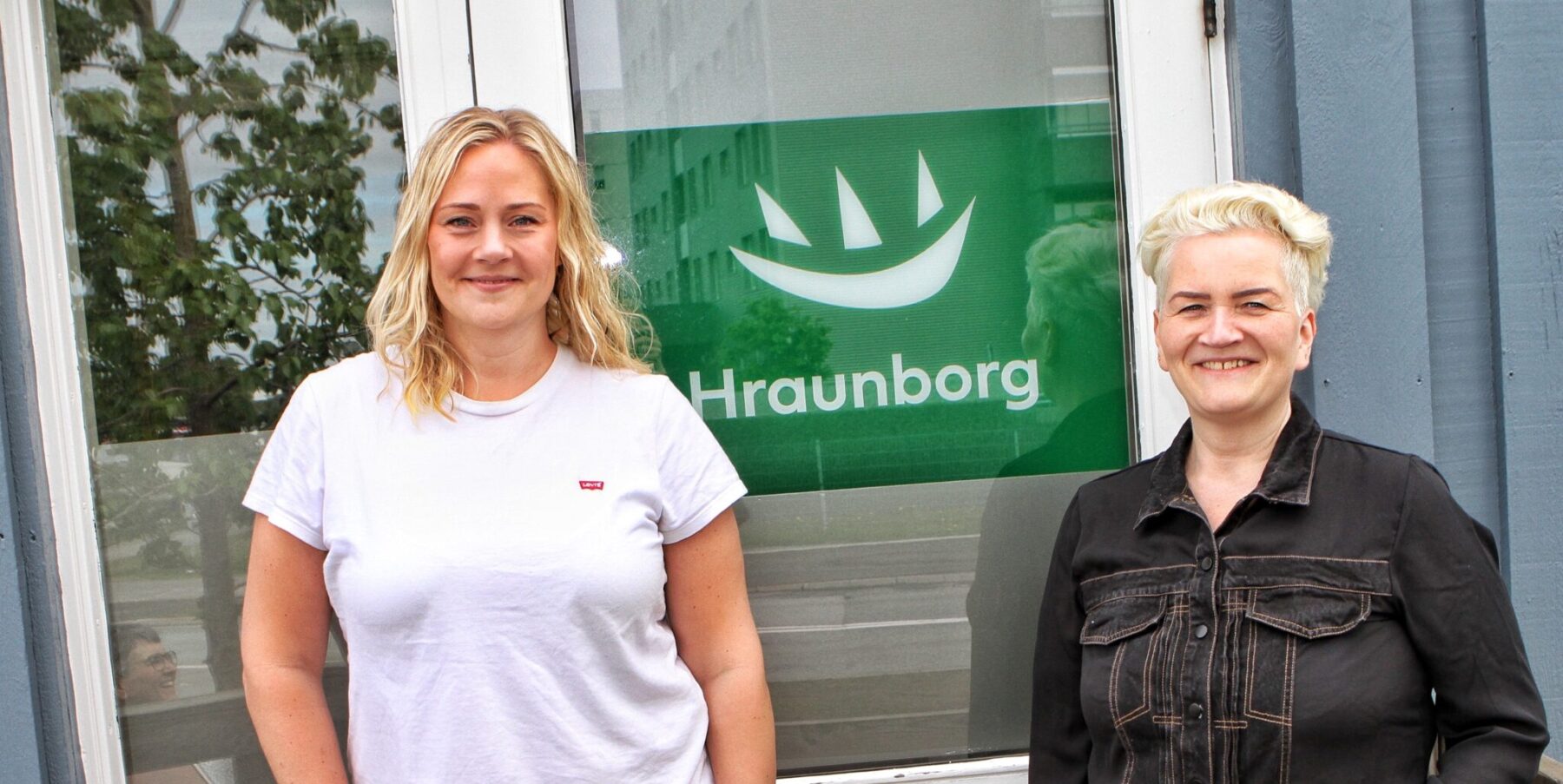
At Hraunvallaskóli, Hraunborg operates, a specialised department for children on the autism spectrum. The unit was established last autumn to meet the pressing need for targeted resources for this group of pupils. It is staffed by Íris Baldvinsdóttir, an occupational therapist, primary school teacher and project manager for Hraunborg, and Kristín Lind Albertsdóttir, an occupational therapist. From the very first day, they were keenly aware of how limited the available curriculum was for the group of pupils they work with. From this need, the development project was born. „Our World – The development of concrete and visual learning materials for children on the autism spectrum.
„This is naturally because the department was established here this autumn,“says Íris. „There was a lack of resources for children on the autism spectrum and we were hired for this job. Shortly after we started working, it became very clear that there is a severe shortage of educational materials for these pupils.“
Nowadays, a large part of the work involves creating projects from scratch – and not just one project for the whole group, but material that needs to be tailored to each individual child. „We simply make everything ourselves.“ Adds Íris. „Every single student needs their own; the curriculum must be tailored to the individual.“
Creative and unconventional teaching methods
Kristín agrees with this and emphasises that the tasks must be clear, accessible and visual. Children learn in different ways, and therefore traditional curriculum materials are not sufficient. Teaching requires varied methods, rich visual presentation and practical approaches. „We're not in conventional reading teaching, so to speak.“ says Íris. „We use the methods that we find suitable for each child.“
She mentions, for example, that students work with letters on a board, arrange them, mould them and learn through touch, movement and visual representation. „These may be unconventional teaching methods, but they are fun and work exceptionally well for the children.“
An idea born from a daily need
The idea for the development project arose from their daily work. As they were constantly creating learning materials anyway, the question arose as to whether it could be done more purposefully, more beautifully, and in a way that would benefit more people. „We wanted to create high-quality, Icelandic educational material.“ explains Íris. „We naturally need everything, but we can't do everything at once. We therefore had to narrow our focus a little.“
They are still shaping the idea and looking at what is realistic to start with. Irís says it is easy to want to tackle everything at once because the need is enormous; there is a lack of curriculum in Icelandic, mathematics, social studies, life skills and other subjects. But the project has to start somewhere. „Shall we start with the Icelandic?“ she says. „If we do an Icelandic project, we can make it a bit open-ended, so that one part suits one child and another part suits another. The material should be differentiated and flexible.“
The aim is not to create a rigid curriculum that everyone has to work through in the same way. On the contrary, they want to develop material that teachers can adapt to different needs. It needs to be possible to use parts of a project, simplify it, build upon it or change the focus, depending on what suits each individual. „This needs to be convenient and accessible for teachers.“ says Kristín. „We want others to be able to use the material without always having to start from scratch.“
Beautiful, Icelandic and picturesque
Iris and Kristín have familiarised themselves with a great deal of foreign educational material, including from the United States, where there is a wealth of colourful, visual and well-presented material for children with different learning needs. However, they do not want to copy foreign material, but rather develop Icelandic learning material based on Icelandic reality and the needs of Icelandic students. „You've been looking at so much on foreign websites,“ says Íris. „There is all sorts of beautiful learning material out there. We want our students to have beautiful learning material in their hands as well – colourful, visual and simple.“
They place a strong emphasis on the fact that many children on the autism spectrum are very visually strong and have a good visual memory. Therefore, it is important to work with their strengths rather than always trying to adapt them to conventional methods. „It is well known that many children on the autism spectrum are very visually strong.“ says Kristín. „We want the projects to be structured in such a way that we are building on those strengths.“
She gives a simple example of the Icelandic alphabet. They had looked for accessible, visual material or a video that could be used by a student who knows the English alphabet and sings it, but uses few spoken words. It proved more difficult to find comparable Icelandic material.
„It's incredible how little there is. Just the Icelandic alphabet – you'd think it would be easy to find such material, but it really isn't.“ They envisage a medium where it would be possible to weave together sound, images, letters, movement and repetition, so that the child can learn in the way that suits them best.
A central foundation would be the dream.
The conversation makes it clear that the problem is not confined to Hraunborg. Specialist teachers and professionals across the country are doing a great deal of work, each in their own school, without having a common platform to share projects. „I feel like everyone is a bit in their own corner.“ says Íris. „We're reinventing the wheel here, and the next school is perhaps doing exactly the same thing.“ The dream would be a central database where teachers could share projects they have developed, and others could make use of them. It would be possible to search for learning material by age, subject, skill, level of difficulty, or the special needs of students.
„It has always been my dream that such a database existed.“ says Íris. „If we create a project, we could put it in there. If another school creates a project, that goes in there too. That way, a powerful foundation would be created that would benefit everyone.“
They mention that the Centre for Education and School Services (MMS), or a comparable central body, would be the natural forum for such a thing. They even envisage that if their project is successful, it could be put forward to the MMS to gauge interest in publishing or distributing it. „We'll just send this on and see if they want to publish it.“ says Iris and smiles. „This is a group that is in dire need of quality educational materials.“
Exciting work lies ahead.
They emphasise that the project is still in development. The ideas are numerous: Icelandic projects, alphabet material, games, visual teaching materials, graded tasks and material based on a project-based approach. They want to delve deeper into foreign models, examine research and develop the material based on their own experience and the needs of their students.„We are still developing the idea.,“says Kristín. „This is all coming together.“
Irís says it is both challenging and exciting to work on a development project alongside her day job. However, the grant they received gives them a valuable opportunity to pause, think about things more systematically, and follow up on their ideas. „We're in work here every day, so we need time to really delve into this,“ she concludes. „We are full of anticipation and incredibly happy and grateful to have had the opportunity to work on this important project.“
In recent weeks and in the coming weeks, interviews with grantee from the Hafnarfjörður Education Fund be published on the media channels of the City of Hafnarfjörður. This gives residents and other interested parties the opportunity to gain a deeper insight into the excellent projects and creative school and leisure activities.