
The municipalities together on the development of special school provision
A letter of intent for a partnership on the development of specialist school provision in the capital region was signed today, 13 May 2026. The City of Hafnarfjörður is a party to the letter of intent, along with the municipalities of the capital region and two ministries.
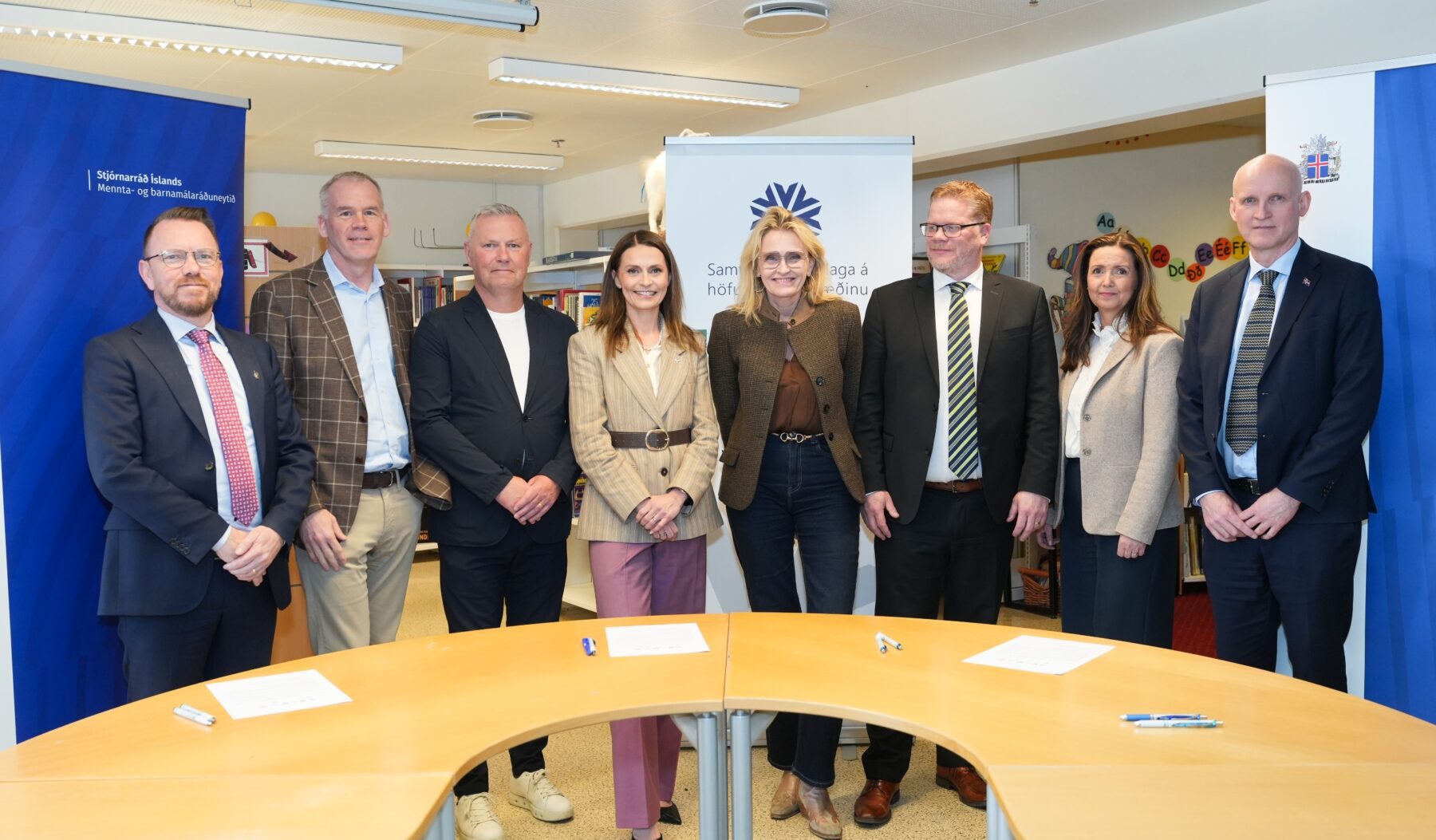
Hafnarfjörður included in the declaration of intent
A letter of intent for cooperation on the development of specialist school provision in the capital region was signed today, 13 May 2026. The memorandum of understanding is signed by the City of Reykjavík, Kópavogur Municipality, Hafnarfjörður Municipality, Garðabær Municipality, Mosfellsbær Municipality and Seltjarnarnes Municipality, together with the Ministry of Education and Children's Affairs and the Ministry of the Interior. This was announced by the Association of Local Authorities in the Capital Region.
The letter of intent is based on an analysis carried out for the Association of Local Authorities in the Capital Region (SSH) on the feasibility of increased cooperation between the local authorities and the state on special school provision. The findings of the analysis show that the collaboration is both realistic and viable, and that with a coordinated effort, it is possible to build more robust, sustainable and diverse provision for children with different support needs.
Looking at long-term and short-term solutions
The aim of the collaboration is to ensure that children who require special school provision receive services that take their needs into account and support their well-being, activity and education.
The collaboration will look to develop long-term special school provision for children with long-term special educational needs, a variety of short-term provision, and also to strengthen special units within mainstream primary schools.
According to the analysis, it is estimated that around 360 children of primary school age in the capital region meet the criteria for a special school placement at any given time, or about 1.0-1.3%. Currently, just over 200 children are in special schools and around 160 children are in other special provisions within primary education.
Joint responsibility of local authorities and the state
A joint steering group of the local authorities and the Ministry of Education and Children's Affairs will be appointed to formulate proposals for the future organisation of the resources, including the establishment of new special schools, the development of short-term solutions and the strengthening of special units within mainstream primary schools.
The group is expected to submit its recommendations by the end of 2026.
In a joint statement on this occasion, the SSH board says: „The SSH board agrees on the importance of a shared vision among the municipalities and the importance of cooperation between the government and the municipalities when it comes to these matters. Through collaboration, demand, professional expertise and funding can be combined to build larger and more stable operational units that provide children with better and more specialised services than the current arrangement allows.“
The declaration of intent marks the beginning of a joint journey for the local authorities and the government to develop a long-term vision and a comprehensive framework for specialist school provision in the capital region.
Further information and the SSH report on the feasibility analysis of a collaboration between municipalities in the capital region to establish a joint special school can be found below. The report is one of the priority projects of the Capital Region's 2025 Development Plan.