
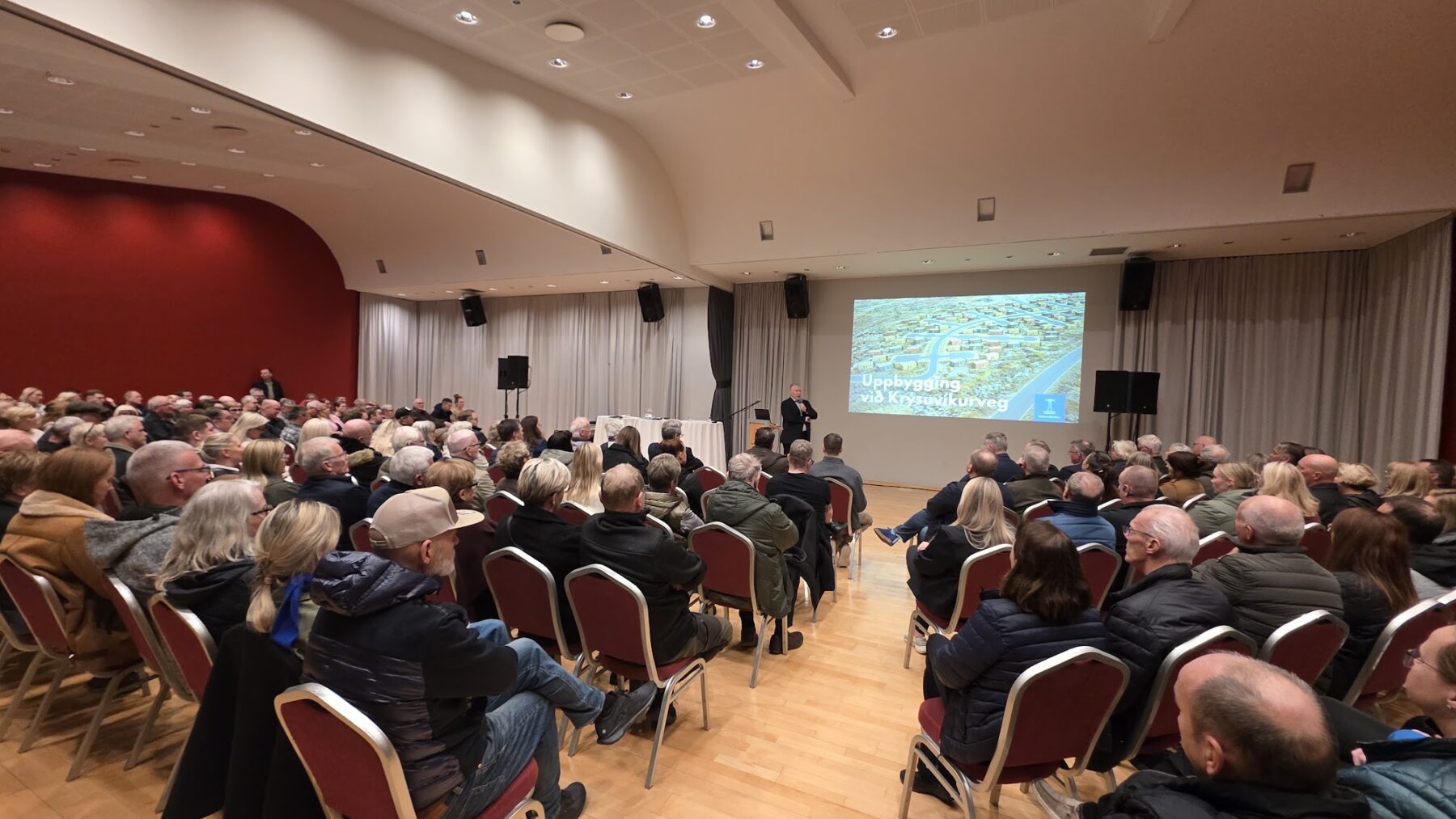
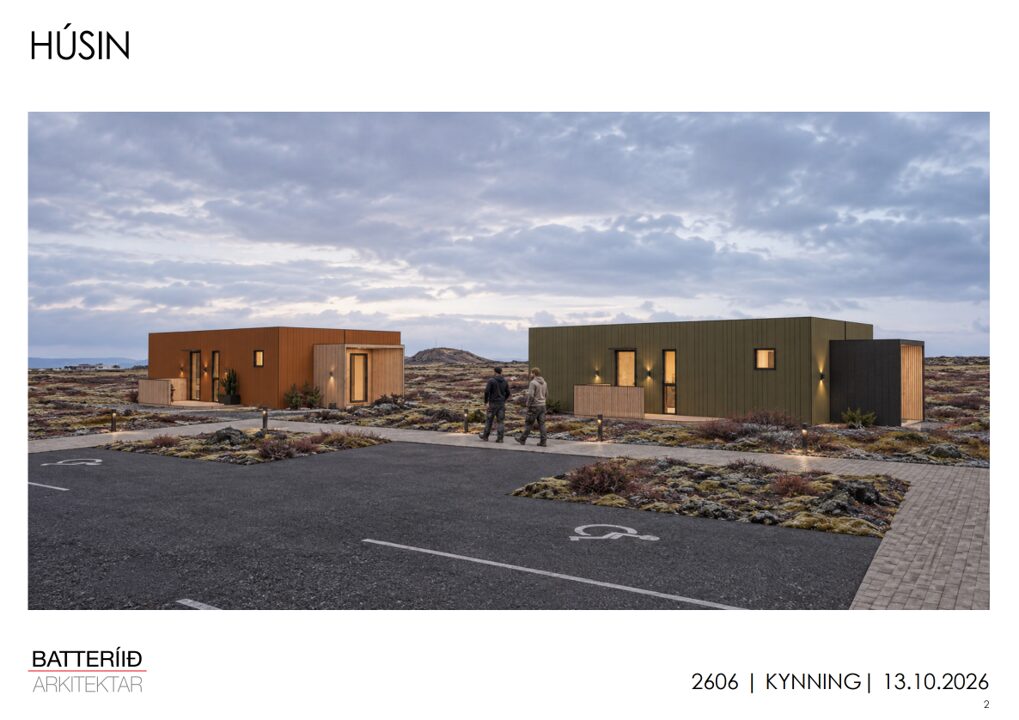
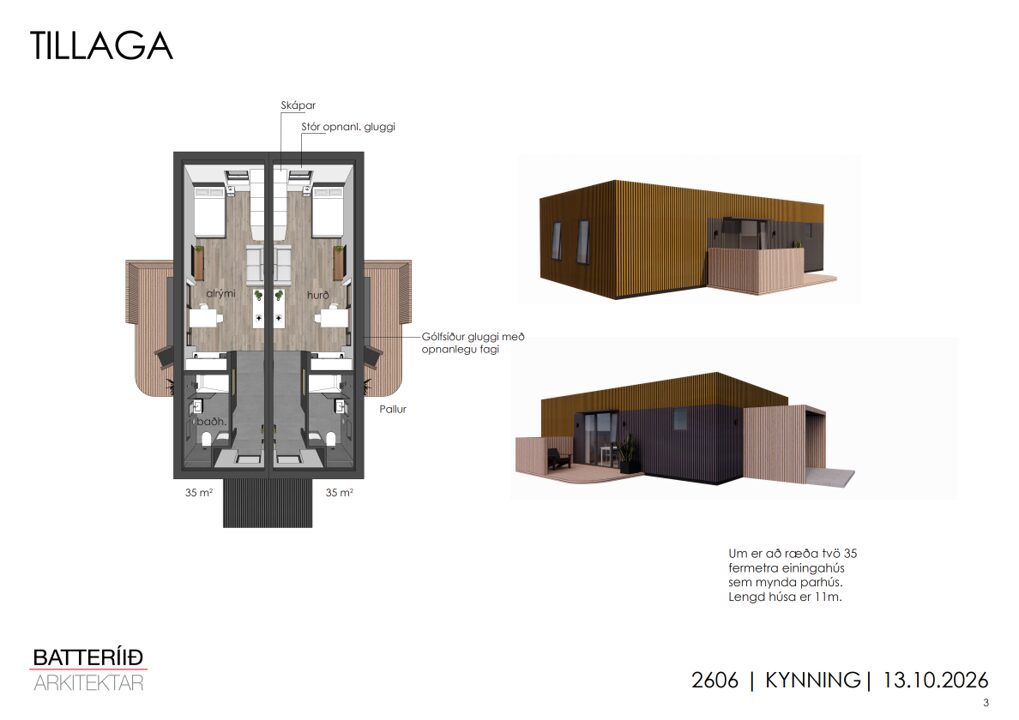
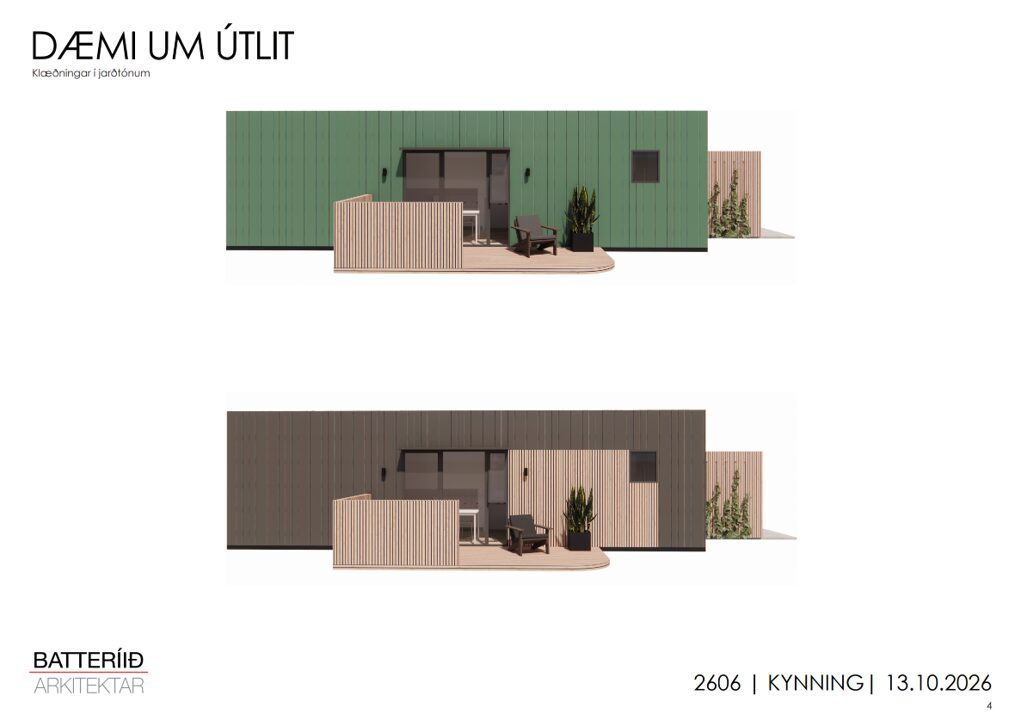
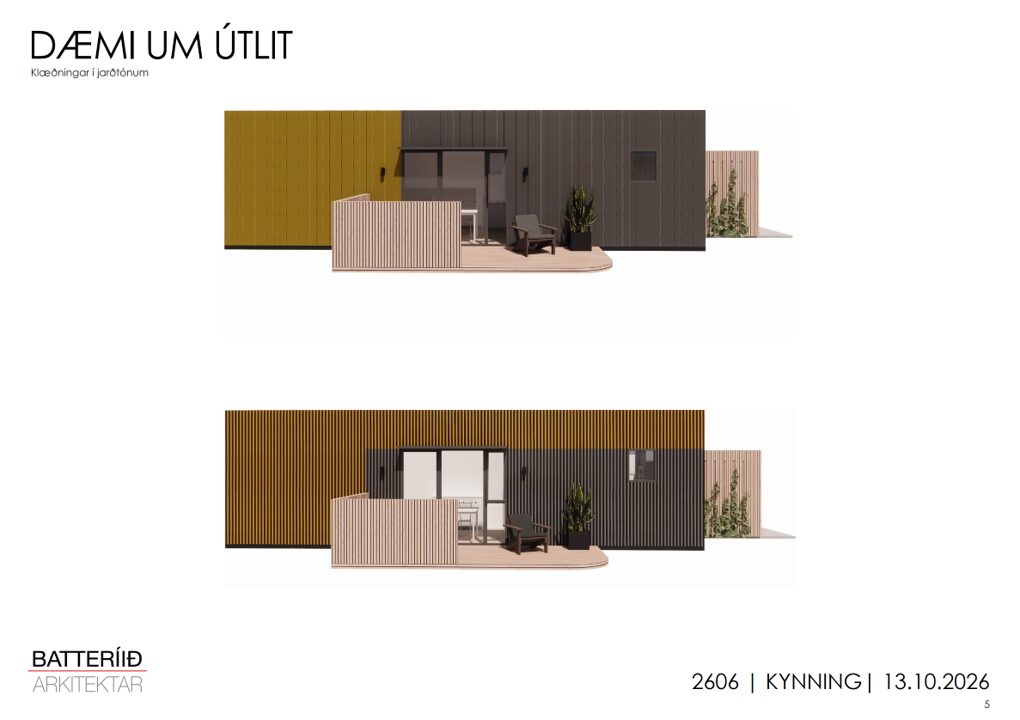
Around 250 people attended a public meeting of the City of Hafnarfjörður about a temporary development of 260 homes at Krýsuvíkurveg and Hvaleyrarvatnsveg. Residents discussed the matter with the chairman of the town council and the developer.
The town authorities will take the suggestions raised at the public meeting held on Tuesday evening away with them for consideration. The meeting was held at Ásvellir.
„The provisions in the agreement between Stólar and the City of Hafnarfjörður regarding the small-apartment development on Krýsuvíkurveg need to be clarified,“ says Orri Björnsson, chairman of the town council, following the meeting. „We must consider the suggestions and comments that were raised at the public meeting.“
Orri went over the project on behalf of the City of Hafnarfjörður at the meeting and its significance for the city's finances. Börkur Grímsson, CEO of Stólpi, and Sigurður Einarsson, architect, presented the project and the appearance of the development. Then, Stefán Gunnar Thors, an environmental economist, reviewed the planning and environmental impacts. Erla Ósk Ásgeirsdóttir chaired the meeting.
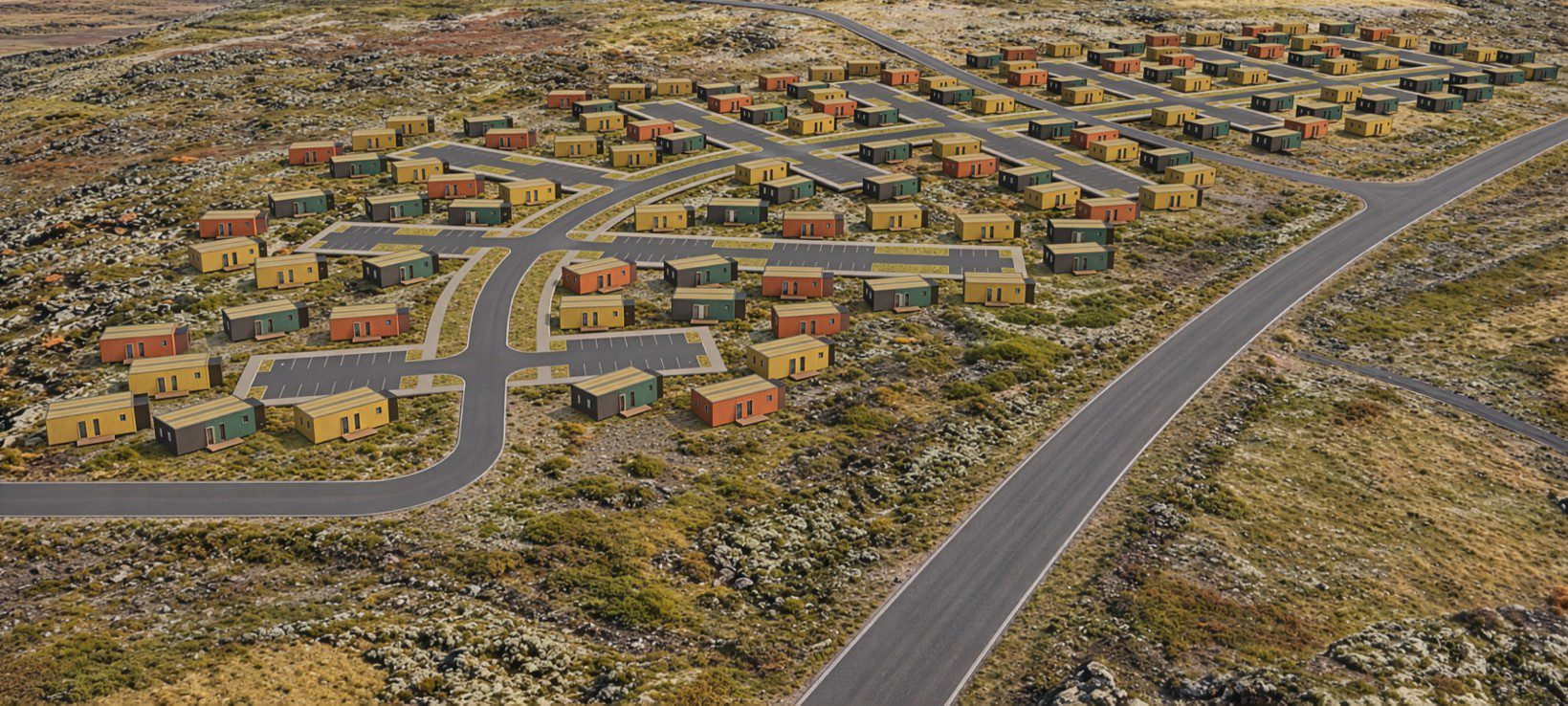
Orri presented that this was a temporary development of small apartments in semi-detached houses. The development would then be removed when the Búrfell power line is decommissioned, at which point a conventional settlement would be planned for the area. It is envisaged that people will generally live there for a shorter period.
He said the initiative generates significant income for the municipality. The rent from the area will be around 30 million kronur per year. Furthermore, around 350-500 million will be received in council tax revenue annually. The development will strengthen the town's position and offer migrant workers quality housing while they live in the country.
Stefán described what the next steps in processing the matter would be and compared them with the new master plan. A discussion then took place, and many questions and comments were raised. But what is the process now? Stefán explained that the matter was at square one.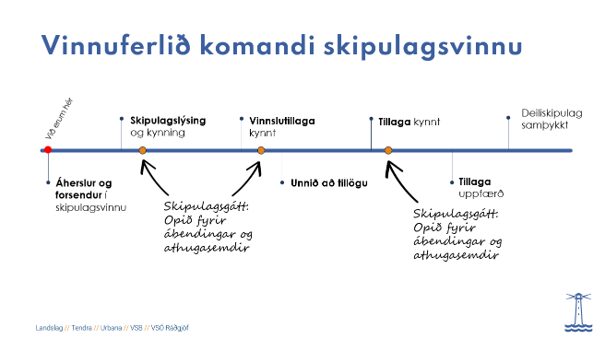
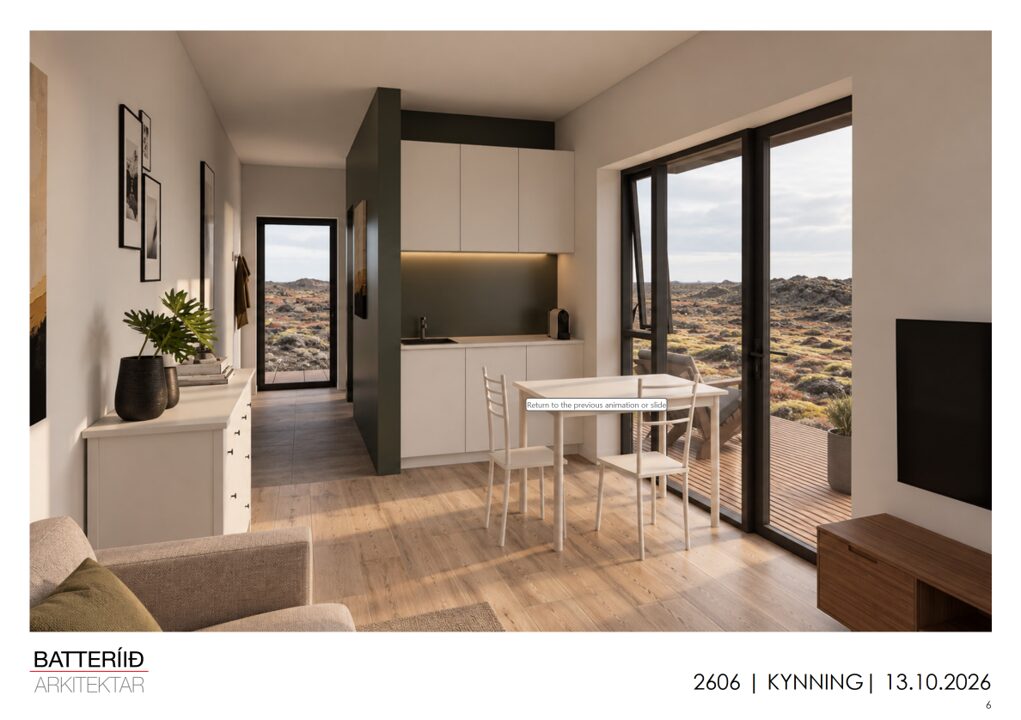
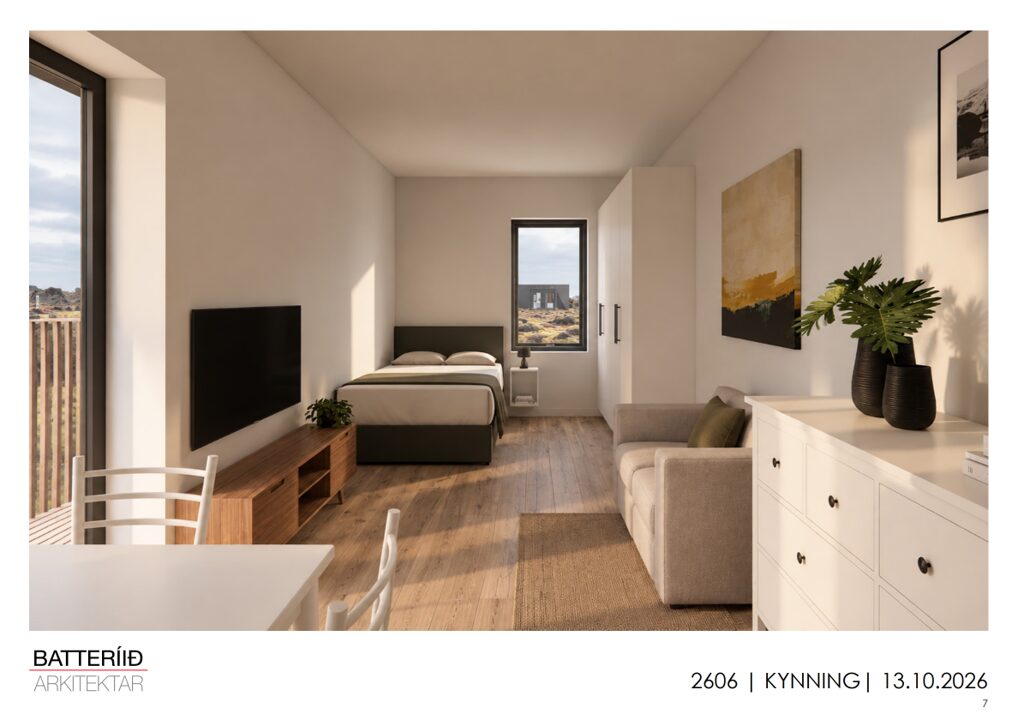
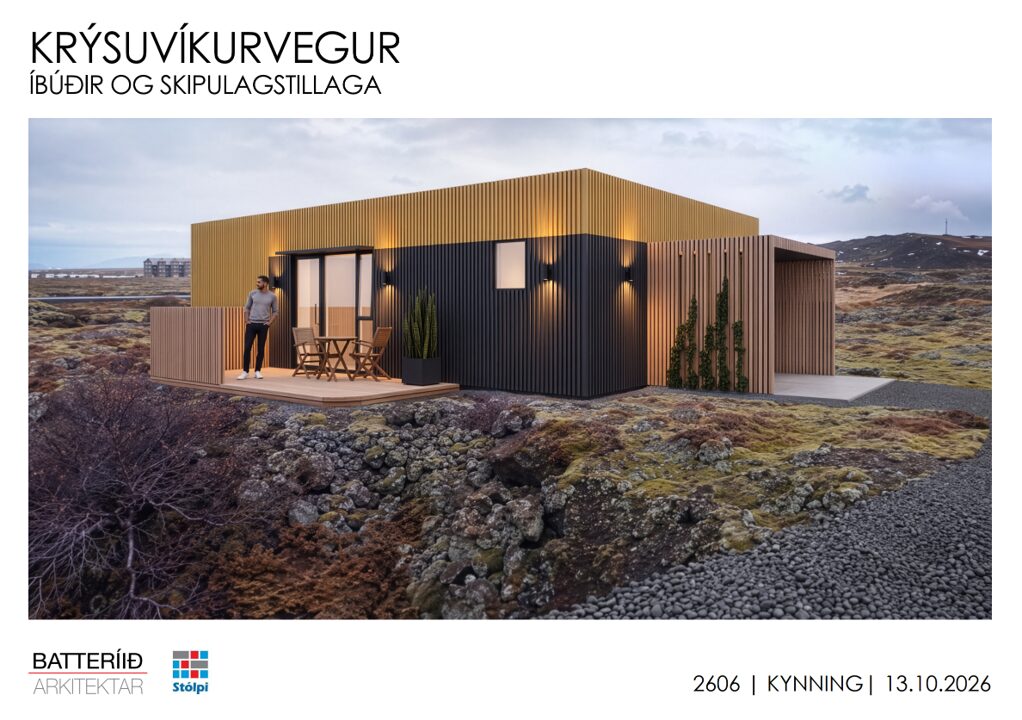
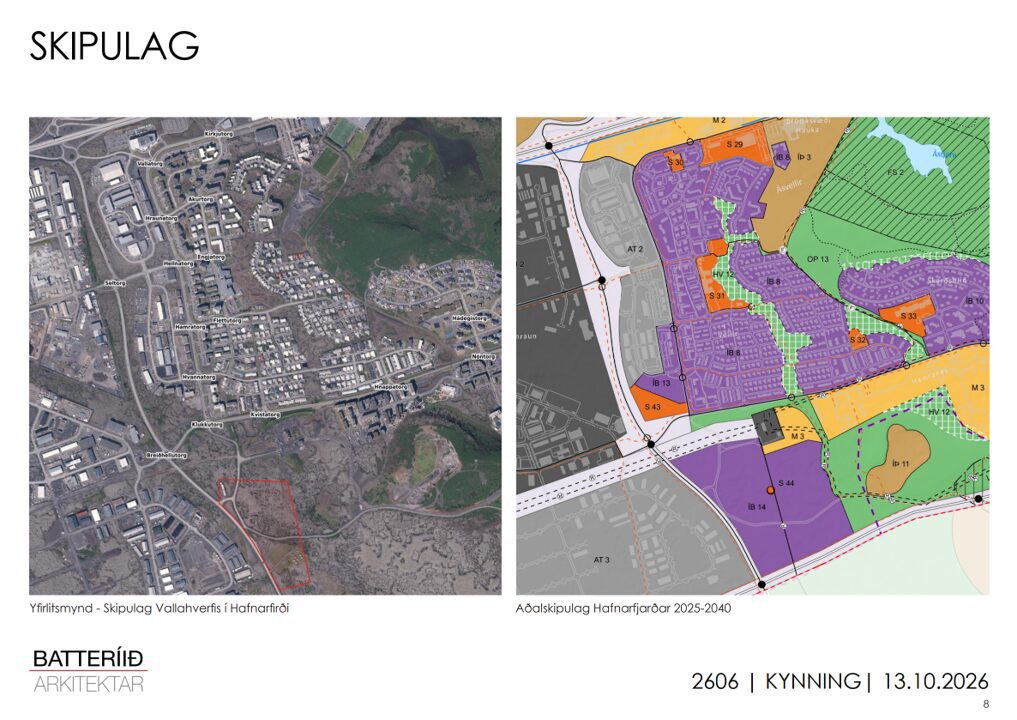
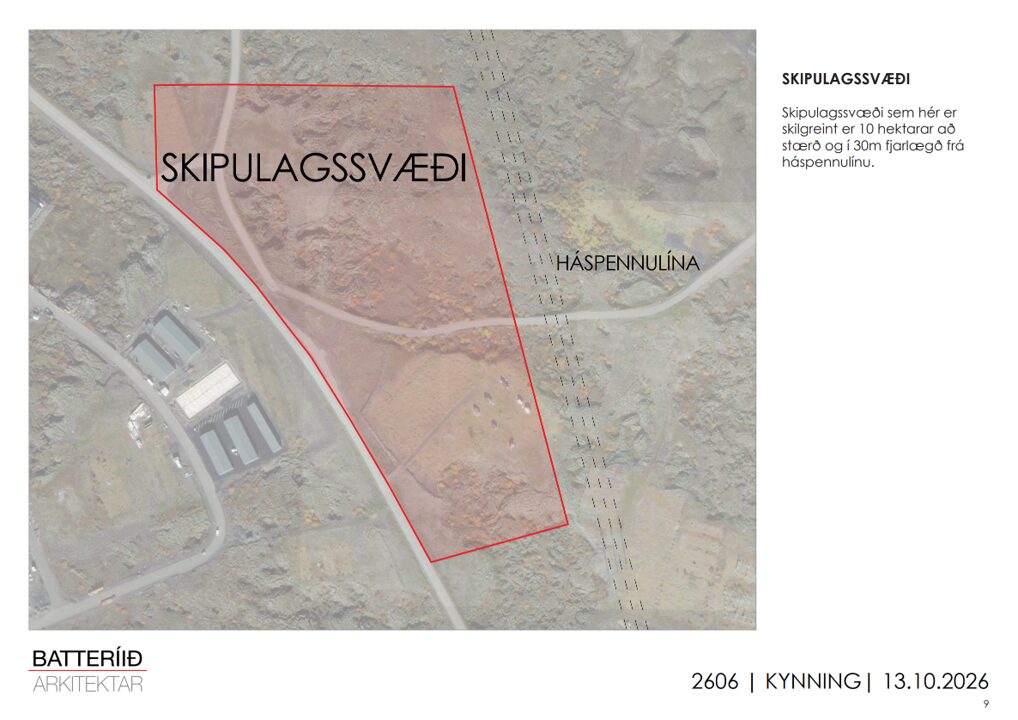
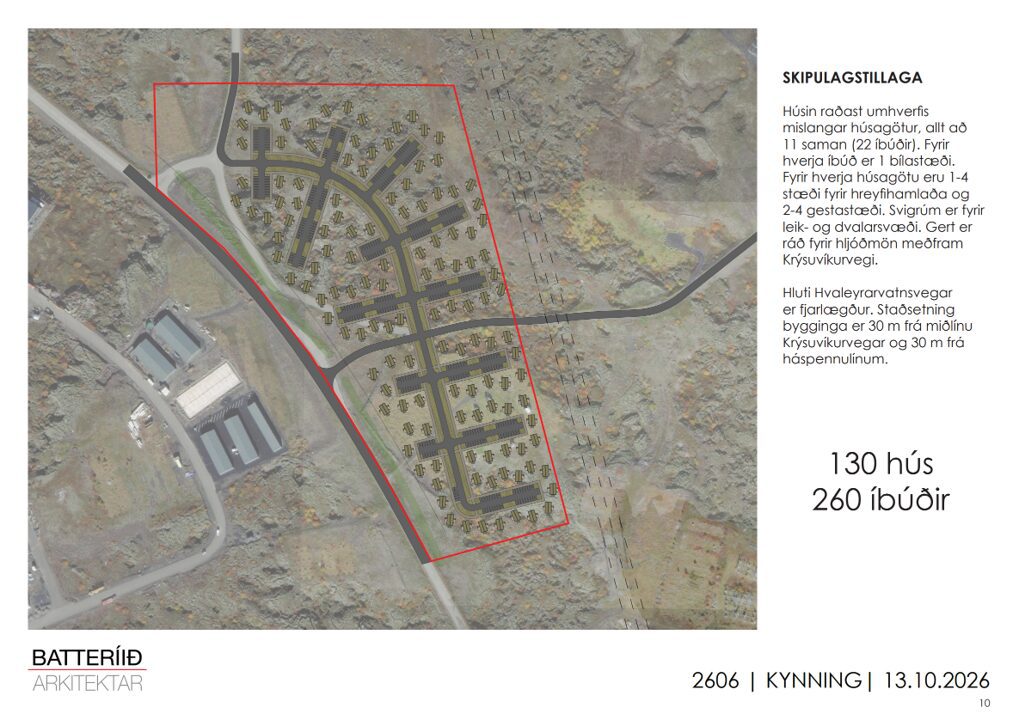
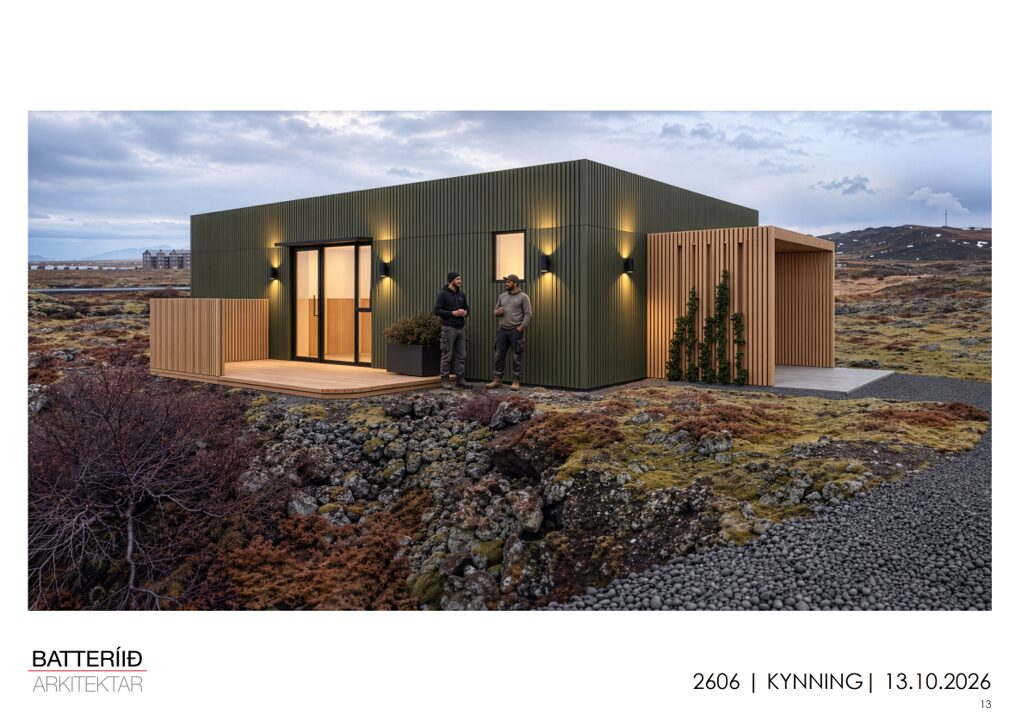
You can see what the flats and the area look like in the pictures below the article, but Börkur and Sigurður went over the design at the meeting. The questions that came from the audience after the presentations were varied.
The main concerns were that the settlement would create social problems and that the foreign workforce should be spread out more widely, rather than being concentrated in one place.
People commented on the situation of the people who would be living there. They would not only have their jobs with the same employer, but also their homes.
Orri cited many precedents for allocating plots without a tender. This was done by lottery, but also to those whom the local authorities considered an asset to the town's residents. He cited, for example, the allocation of a plot for Vigdísarholt for a care home and when Icelandair was given a discounted plot upon its arrival in the town. As for any nuisance from the development, he pointed out that, for example, there was none from the work camps erected during the widening of the Reykjanesbraut.
Orri emphasised that the Municipality of Hafnarfjörður was not putting any money into the project. All costs would be borne by Styrkás Fasteignir, a sister company of Stólar. That was important. There was nothing unusual about subsequently allocating the plots to the company. It would buy the plots from the council at a fixed price following the council's detailed planning.
„We tender plots in infill areas, but the rule in Hafnarfjörður has been to sell a plot at a fixed price and, if there are many applicants, to hold a draw between them.“
More questions were received from the audience:
Orri said that it was a condition of the City of Hafnarfjörður that the tenants would have their registered address in Hafnarfjörður. Regarding the social aspect, he said the development was a step forward, and that the housing was better than what many could get. It is nothing new for foreign workers to have both accommodation and employment with their employer. There are pros and cons to every arrangement, but for a company to rent accommodation for its staff minimises any problems that might arise.
Orri emphasised that a little over a quarter of the workforce in Iceland were foreigners. „Without them, we would not be the prosperous, good and rich society that we are today.“
Börkur, the CEO of Stólar, said that one resident per flat was generally expected, but that it would not be objected to if an employee brought a partner. Therefore, there would never be more than two people in each.
Orri said that the matter had not been advanced far enough before the election, and it was unclear whether the idea could become a reality.
Orri said it would be extremely complicated to make changes to the local plan in order to build in a dispersed manner around the town.
Orri said that Vinnumálastofnun was not a company and therefore could not rent flats in the area.
The response was that the line would be taken into account, because once it was moved, permanent settlement could be planned and the prefabricated houses moved away.
A referendum was discussed, and Orri said that the rule was that 20% of residents needed to sign a petition to get the matter on the ballot. However, that did not mean the town council would not act sooner.
Orri said that he believed supply and demand were a factor. By increasing supply, the problem would gradually be solved.
Orri said the aim of the local authorities was to offer small detached houses. As long as the Búrfell power line runs over the area, it is not possible to build otherwise there.
The answer was that people's lives evolve and change. It would be very pleasing for families to form. A settlement like this was not intended for families, and it was likely that people would move elsewhere.
The discussion was substantive and not exhaustive here. Erla Ósk Ásgeirsdóttir was the chair, and in her closing remarks she said it was clear that the main concerns were the social aspect and the contract itself. Also, what the future would hold when this ten-year contract ended, as well as the issue of monotony. She thanked people for expressing their views so clearly.
It is clear that the discussions will have an impact on the forthcoming work to plan the area.
Yes, the City of Hafnarfjörður thanks everyone who came.