
What to recycle and in which bin?
On Sorpu's website, you can easily enter the most common types of waste into a special box to get information on how to sort them. The answers to various queries might be surprising and can be found on the Sorpu website.
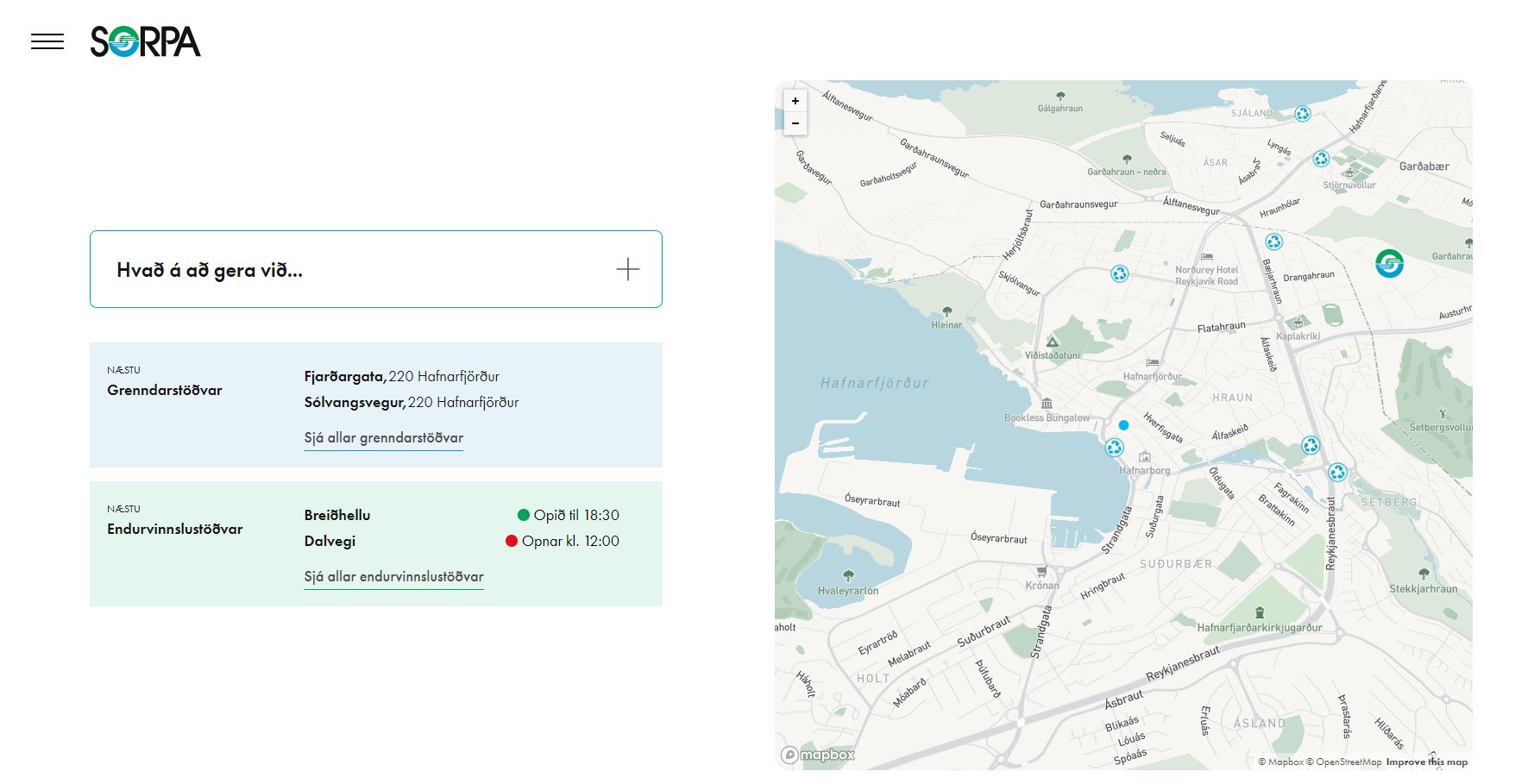
Search box for waste types on the Soru website
In a special section on the Soru website, you can easily enter the most common types of waste and get information on how to sort them. Many people wonder, for example, about the correct sorting of toothpaste tubes, cut flowers, eggshells, baking paper, cotton buds, nappies and dustbin bags. The answers to these questions might come as a surprise and can be found on Sorpu website
Four waste streams at home
A new sorting system across the entire capital region means that four waste streams are now collected from every household in the borough, as required by law. Other types of waste must be taken directly to the appropriate containers at the tip or to local kerbside bins. In addition to the four-stream kerbside collection system, the number of kerbside containers is being increased. Glass, metals, textiles and refundable packaging will be collected at neighbourhood collection points, which will be located approximately 500 metres from each home. Larger neighbourhood collection points will be about a kilometre from each home, and these will include containers for paper and cardboard, and plastic.
Food scraps – in the bin go, for example:
- Eggshell
- Food remains with bone
- Coffee grounds
- Fish waste
Plastic packaging – items that go in the bin include:
- Snack bags
- Plastic film
- Plastic bags
- Shampoo bottles
Paper and cardboard – items that go in the bin include:
- Newspapers
- Envelopes
- Pizza boxes
- Paper packaging
Mixed waste – the bin is for items such as:
- Fancy tie
- Wet wipes
- Nappies
- Vacuum cleaner bags
Let's get the correct classification right from the start – incorrect classification will prevent emptying.
Alongside the distribution of new rubbish bins in each neighbourhood, rubbish is collected, older bins are re-labelled, and a grace period is given until the next collection. This marks the formal start of the sorting scheme. Particular attention is drawn to the fact that if incorrect sorting is found in the bin at the next collection after new bins and re-labelling have taken place, a notice will be left stating that the bin has not been emptied. Residents will then need to sort the waste themselves and the bin will be emptied at the following collection. Residents are encouraged to start sorting correctly as soon as the new bins are delivered.