
The year is 1953 – a celebration in honour of the 70th anniversary of the residents of Hafnarfjörður.
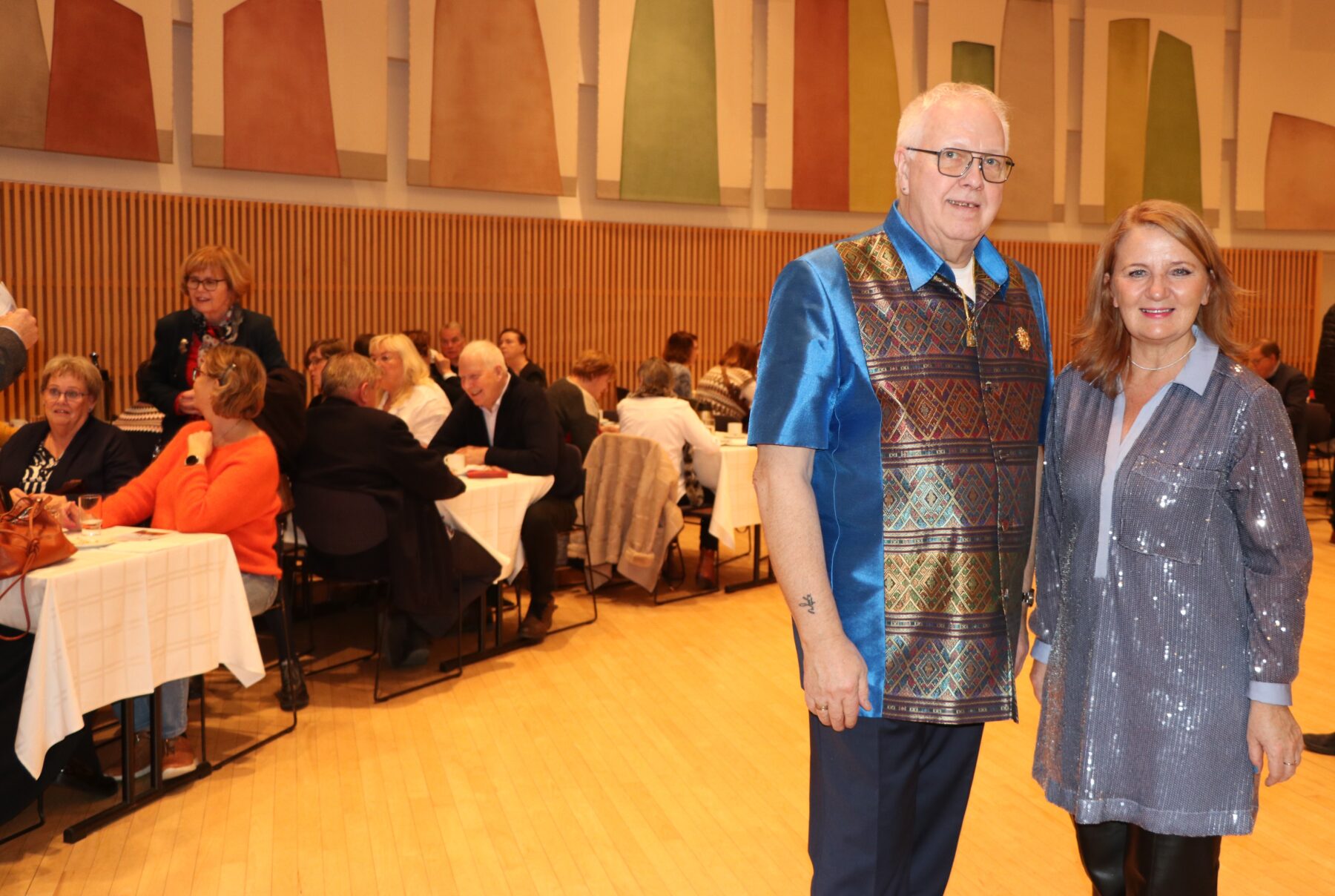
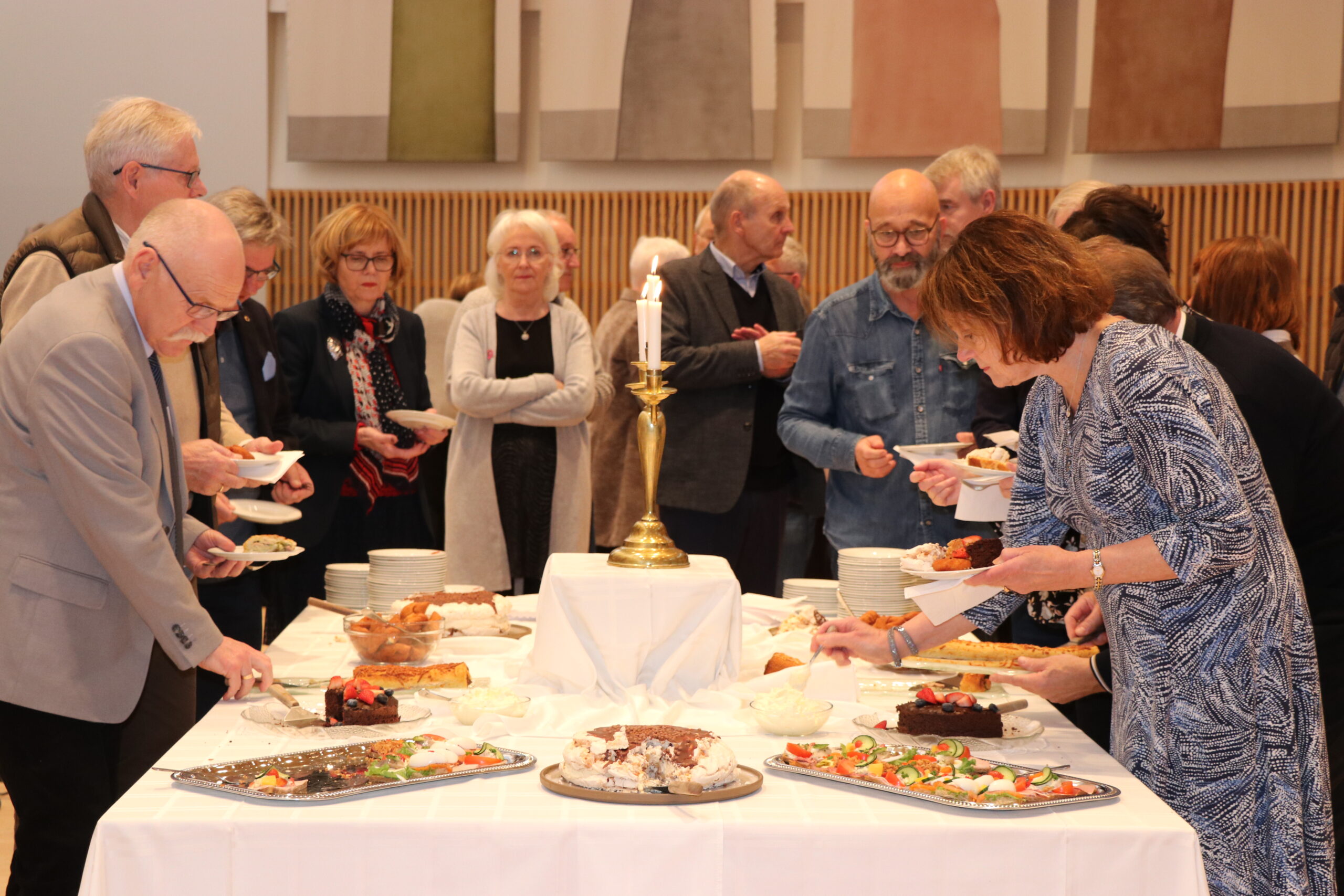
For nearly nine years, the Municipality of Hafnarfjörður has maintained the fine tradition of hosting a banquet in Hásalir in honour of those residents who have turned seventy and will do so during the year. Over a hundred seventy-year-old Hafnfirðingar gathered in Hásalar yesterday, where they met the mayor, councillors, town officials, childhood friends, colleagues from their upbringing, and fellow members of various social groups.
A tradition to honour 70-year-old residents of Hafnarfjörður
For nine years, the Municipality of Hafnarfjörður has upheld the fine tradition of hosting a banquet at Hásölur in honour of those residents who have turned seventy and will do so during the year. Around one hundred Hafnarfjörður residents have accepted the mayor's invitation to a joint birthday party each year for the past nine years, and this year was no exception. Over a hundred seventy-year-old Hafnfirðingar gathered in Hásalar yesterday, where they met the mayor, councillors, town officials, old school friends, colleagues from their upbringing, and fellow members of various social groups. In the guests' birth year, 1953, quite a lot of interesting things happened. The municipality of Hafnarfjörður was a 45-year-old local authority with 5,473 inhabitants. The Norwegian town of Bærum became a twin town with Hafnarfjörður, the Hafnarfjörður Swimming Pool was opened with a ceremony, and the Seafarers' Day was celebrated for the first time in Hafnarfjörður, the nursing home Sólvangur was consecrated, a grand Midsummer's Day celebration was held in Hellisgerði to mark the 30th anniversary of the public park, and the second heaviest potato in the country, 550g, grew in a garden at 40 Suðurgata.
The moment is about being together above all else.
The programme for the festivities is light, as the occasion is primarily about spending time together. The Mayor of Hafnarfjörður, Rósa Guðbjartsdóttir, opened the celebration with her congratulations and thanks for everyone's attendance. The group was introduced to the services provided by the City of Hafnarfjörður for older people, and to the varied, stimulating and enjoyable social activities offered by the Association of Senior Citizens in Hafnarfjörður, which are available to all those aged 60 and over. The Hafnarfjörður City Curator of Cultural Heritage concluded by reminiscing about the birth year through words and pictures, to a good reception, as everyone enjoys reminiscing about the old days. The guests enjoyed listening to the sweet tunes of the Stefán Ómar Trio at the start of the celebration, between the acts, and at the end of the party.
A diverse and proactive health promotion service
The services provided by the City of Hafnarfjörður for older people have, in recent years, been purposefully shaped and developed in line with new and changing times and rising life expectancy. A greater emphasis has been placed on increased preventative and diverse health-promoting services, which aim to promote the well-being and health of older people in Hafnarfjörður, enabling them to better take an active part in society and live in independent accommodation for as long as possible.
In the news, the main stories of the year were in 1953.
- At the Town Cinema, the film „The Three Daughters“ was shown at the beginning of the year, which was a very entertaining and lively new American musical in natural colours. Hafnarfjörður Cinema showed the film „Holiday in Switzerland“ at the same time, which was a stunningly beautiful and entertaining American-Swiss film.
- The season got off to a slow start, and a news report on the Hafnarfjörður boats said that the catch had been rather poor and bad weather had severely hampered all fishing efforts.
- The town's shop workers made a new collective agreement which was, in essence, an extension of the previous one, albeit with index-linked increases, but the agreement contained two innovations, On the one hand, the summer holiday was extended from 12 working days to 15 and working hours were shortened, as there were provisions for newsagents' shops to be open only until 12 p.m. on Saturdays, whereas they had previously been open until 1 p.m.
- Unemployment was at its lowest in early January. Unemployment registration took place in the first few days of February, and only three men came forward: one aged 77, one aged 68, and the third in his thirties, all unmarried men. As spring approached, there was so much work in the town that labourers were sorely lacking. At that time, five local trawlers, four from out of town, and twenty boats were landing on average in the town, in addition to the occasional visiting boat. The problem was solved by bringing a number of Welsh dockers to the town.
- Then, there was a major cultural event at the Town Cinema when a large concert was held there. It was the United States Air Force choir, „The Singing Sergeants“, who performed a varied programme, and all proceeds from the concert went to the Hafnarfjörður Home for the Elderly and Nursing Home.
- The Hafnarfjörður Town Council approved an offer of a twinning agreement with the Norwegian town of Bærum.
- The weather at the start of the year was unusual, and people were very concerned that by mid-March the willows were beginning to leaf and the hawthorn trees were coming into blossom in the sheltered gardens of the townspeople. This weather also had an impact on the town's fishing industry's stock-fish operations. Relentless rain for weeks on end threatened the large quantities of fish that had been hung on the trusses in and around the town.
- Regarding the culture, it was reported that in the spring the Hafnarfjörður Playhouse premiered the play „A Baptism That Says Six“. A review noted that there were 15 actors and „it must be said that they all perform their roles quite creditably, and many of them very well.“ It is surprising, when one considers that this is only an amateur company."
- Sixteen northern ironworkers from the Oddi and Atli machine workshops came to Hafnarfjörður in the summer to erect four oil tanks at the new Oil Company Ltd. oil station on Hvaleyrarhóll. This was the first time that industrialists from the North had undertaken such large-scale projects in the South.
- A road roller was purchased for the town this year. It was a major decision that was complicated by politics, but a decision was finally made. There was some delay in receiving the machine, but it was originally hoped that the grader would be received around the turn of the year; however, this was delayed and it did not arrive in the town until the spring. However, it was not ready for use straight away, as it first had to be assembled by the Hafnarfjörður Bus Company's garage.
- Until 1953, the celebrations for Seamen's Day were joint for Hafnarfjörður and Reykjavík and were held in Reykjavík. That year, however, a decision was made to celebrate the day in Hafnarfjörður. The preparations were handled by the Hafnarfjörður Seamen's Association, the Kári Captain and Mate's Association, and the Hraunprýði accident prevention branch. The day began with a parade and a seamen's mass, followed by a celebration in the Town Hall square where there was, among other things, a choir performance, folk dancing, roping, speeches, a gymnastics display and competitive rowing, while in the evening there were dances held both at the Alþýðuhúsið and the Sjálfstæðishúsið. The old dances were at the Alþýðuhúsið and the new dances at the Sjálfstæðishúsið.
- The Hafnarfjörður Swimming Pool was opened at a ceremony on 13 June. The swimming pool was first opened in 1943, but at that time it was an outdoor pool. In 1947, after many years of discussion, a decision was made to cover the pool, but the investment permit was not granted by the Althingi until 1951, and the work was finally completed in 1953. That weekend, an opening meet was held where swimmers from Reykjavík competed against swimmers from other parts of the country. The Reykjavík swimmers won the meet, but a news report stated that „the results against this team were not particularly good, and few of the swimmers seemed to be in full training“.
- Parliamentary elections were held over the summer; at this time, a Member of Parliament for Hafnarfjörður was elected, and four candidates were standing. Emil Jónsson for the Social Democratic Party, Eiríkur Pálsson for the Progressive Party, Ingólfur Flygenring for the Independence Party and Magnús Kjartansson for the People's Union – Socialist Party. Ingólfur was victorious and became the MP for Hafnarfjörður, but Emil Jónsson also entered parliament as a national list MP.
- Work began on erecting the high-voltage line from the Sogsvirkjun power station over the summer, but it was the construction company Þór in Hafnarfjörður that was responsible for the concrete work and excavation for the foundations of the steel towers, as the pylons were called, from Reykjavík up to Kolviðarhól.
- In the summer, a grand Midsummer's Eve festival was held in Hellisgerði, celebrating the 30th anniversary of this most peculiar and beautiful ornamental garden in the country, as it was described in Morgunblaðið.
- In mid-August, the equestrian club Sörli held its first ever races when its new dressage arena was inaugurated. The club had previously acquired land at the so-called Réttarflötir on Kaldárselsveg and the track was inaugurated on 16 August. The event was very well attended, with around two hundred people present, including a coachload from the Reykjavík riding club, Fáki.
- In 1953, a new quay was being built inside the southern harbour wall. This quay was intended for large ships, and with its completion, large oil tankers were able to dock in the town. The Municipality of Hafnarfjörður had purchased a 60-metre-long caisson, which was used in the construction of the pier. This was then put in place and concreted over. This was considered a major undertaking, but the Alþýðublaðið newspaper reported that the concrete used in the project was equivalent to that needed to build 20 houses.
- It was considered so newsworthy that the newspaper Tíminn put it on its front page, that a potato had sprouted in the garden at 40 Suðurgata in Hafnarfjörður, weighing no less than 550 grams. It was believed to be the second heaviest potato in the country, the heaviest having weighed 650 grams and come from a plot of land in Þykkvabær.
- At the end of September 1953, the presidential couple, Ásgeir Ásgeirsson and Dóra Þórhallsdóttir, paid an official visit to Hafnarfjörður. They were received in Hellisgerði where a short festive programme took place with speeches and music, featuring the Karlakórinn Þrestir and the Hafnarfjörður Wind Orchestra. They then visited the care home, the Rafha factory, Flensborg School, and the fish oil and meal plant, as well as viewing the construction work at the harbour. Finally, a reception for the presidential couple was held at the Alþýðuhúsið.
- On 25 October, a grand celebration was held in the town to inaugurate the Sólvangur Nursing Home. The building's foundations had been laid in 1946, but construction work began a year later. The building had four storeys and a total area of about 720 square metres. On the first floor, there was a health centre and a dining room; on the second floor, there was a ward for 25 residents and a maternity ward for up to 20 women. The third floor had space for 45-50 residents, along with a common room. The fourth floor was divided in two; the south end housed staff accommodation, while the north end had space for 12–15 residents.
- Otherwise, the main news concerning local affairs was the approval of a plan for a housing estate on the area above Öldugata and up to the Carmelite convent. The town's health board then launched a campaign against rats in the town. What I personally found most remarkable about this year is that in 1953 the Hafnarfjörður Folk Museum was formally established. This was when, during the work on the budget for the year, the town council allocated 10,000 kr. for the establishment of the Folk Museum under the heading „Hellisgerði and other items“. The reason the folk museum was placed under this heading was the idea of moving the Sívertsen House, which was to house the museum, to Hellisgerði. The main driving force behind the museum's establishment was Gísli Sigurðsson, a police officer.
- The year in Hafnarfjörður ended with a screening of Christmas films at the cinemas; at Bæjarbíó, there was a captivating new American musical with dancing and singing in natural colours, entitled „Love Song to You“. At Hafnarfjörður Cinema, the Christmas film this time was an Austrian musical in beautiful colour called „The Girls from Vienna“. Then, popular Christmas dances were held widely around the town, organised by various societies.