
Do you know what happens to your household rubbish?
With a growing population and increased consumption, it is important to consider waste sorting so that materials can be reused or recycled instead of being sent to landfill. The circular economy is an economy where products, items and materials retain their value and usefulness for as long as possible. The aim is to minimise waste generation and pollution, reduce resource consumption by circulating products and raw materials, and thereby extend the life cycle of the Earth's resources.
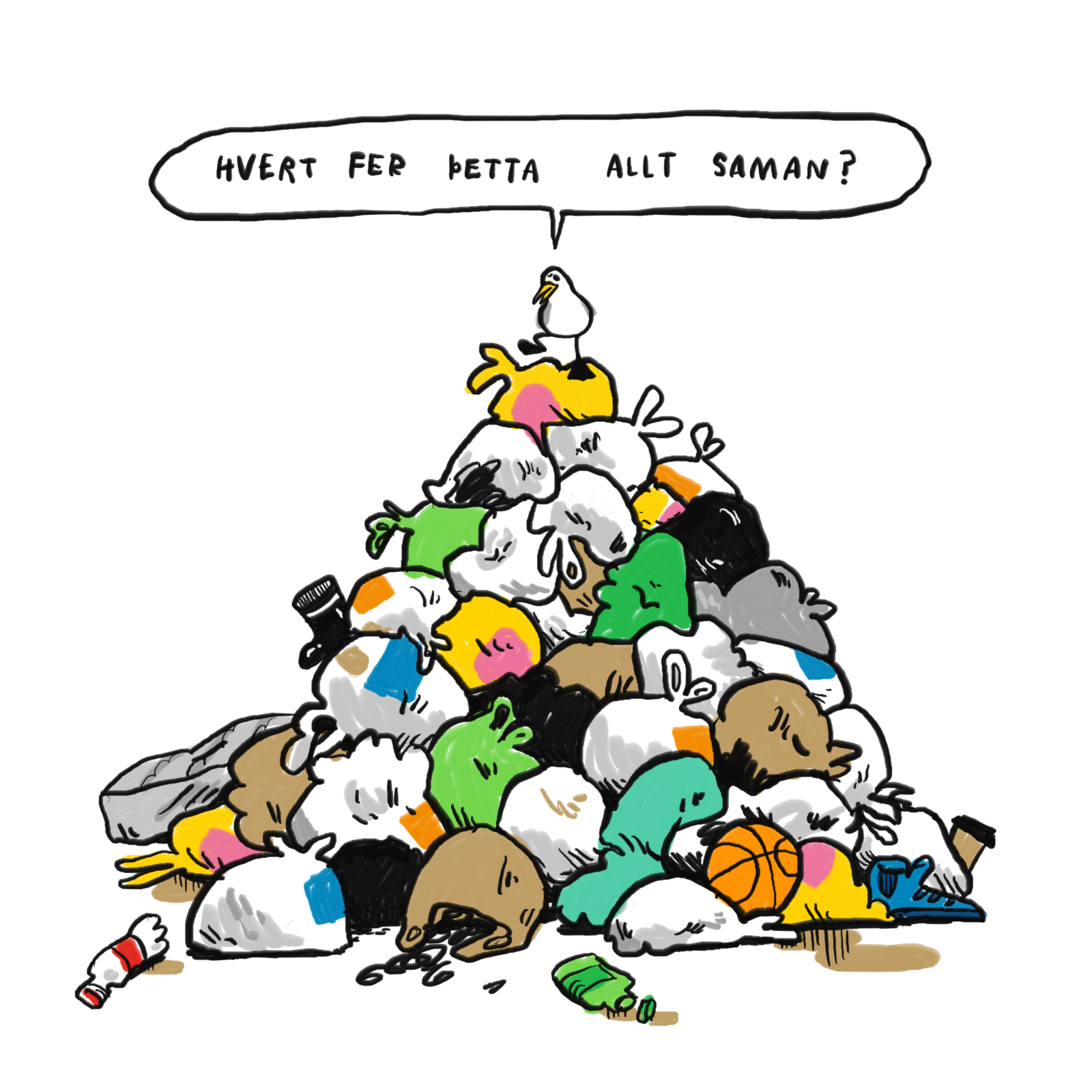
The aim is to minimise waste generation and pollution, reduce resource consumption and extend the lifespan of the Earth's resources.
With a growing population and increased consumption, it is important to consider waste sorting so that materials can be reused or recycled instead of being sent to landfill. The circular economy is an economy where products, items and materials retain their value and usefulness for as long as possible. The aim is to minimise waste generation and pollution, reduce resource consumption by keeping products and raw materials in circulation, and thereby extend the life cycle of the Earth's resources. Household waste is the waste generated in a household during normal domestic activities, which is specifically collected and placed in rubbish bins, kerbside containers, or taken to recycling centres. Homeowners pay a refuse collection charge, which is included in their council tax, for having their household waste collected from their home, as well as for the operation of local recycling centres. But do you know what happens to your household waste?
What will happen to your household rubbish?
Terra, a Hafnarfjörður-based company and the municipal waste collection service for the town, empties residents' household rubbish bins using dual-compartment lorries that run on methane. Two waste streams are collected each time: food waste and mixed waste every two weeks, and plastic packaging, paper and cardboard every four weeks, in accordance with Refuse collection calendar. From there, household waste is transported to Sorpa's facilities in Gufunes and Álfsnes. Sorpa is owned by the municipalities of the capital region, but its role is to handle waste in accordance with the municipalities' statutory duty. At Sorpa's facility in Álfsnes, each waste stream is unloaded at the appropriate reception and sorting station.
Rubbish sorters
Food waste goes to GAJU, a gasification and composting plant, and is recycled into compost and methane production. The nutrients from the compost return to the cycle, and the methane, for example, powers Terra's refuse lorries. Mixed waste is shredded and metals are mechanically sorted out, then baled and landfilled at the landfill site in Álfsnes. Work has begun to send combustible waste to Stena Recycling AB in Sweden, which is Sörpa's recycling contractor, for reuse. This means that Icelandic waste will be used for energy production in Sweden, instead of being landfilled in Iceland. Plastic packaging is baled to reduce its volume and then transported to Stena Recycling. There, the plastic is sorted by type and recycled where possible, while plastic unsuitable for recycling is sent for energy recovery. Paper and cardboard are baled and transported to Stena Recycling. There, drink cartons are sorted from the paper stream to facilitate the recycling process, as the cartons impair the recyclability of other paper. Wavy board, paper, newspapers and cardboard are recycled into new packaging, for example notebooks and toilet paper. The drink cartons are sent for specialised recycling.
Neighbourhood and recycling centres
Sorpa operates six neighbourhood stations in Hafnarfjörður.. At all locations there are bins for paper, plastic and glass, as well as clothes bins from RKÍ and bottle bins from the Scouts at some of them. A large metal bin is located at the nearby station by the Fjord.
- Metals They are transported to scrap metal companies which sort them by metal type and reduce their volume, for example by pressing. The metals are transported abroad for smelting and recycling.
- Glass is crushed and used as a filling material in construction. A pilot project is underway in which glass packaging is sent abroad for recycling.
- Textiles The proceeds are used for humanitarian work by the Icelandic Red Cross, where volunteers sort the items for resale, recycling or redistribution to those in need, both at home and abroad. All proceeds from the sale of used clothing go to a relief fund for international aid work. Worn-out clothing is sent abroad and recycled into, for example, rags and blankets.
- Packaging subject to a return feeThey are compressed into bales and transported abroad for recycling. Used aluminium cans are recycled into new aluminium cans, and plastic bottles, for example, are used to produce polyester fibre, a material used in the clothing and carpet industries. Residents can support the Scouts at local collection points or get a refund for returned packaging at the Recycling Centre or at recycling points. Sorpa operates a number of recycling centres in the capital region, including one at Breiðhellu in Hafnarfjörður. Garden waste, hazardous waste, large metals, electrical appliances, timber and bulky waste such as large packaging should be taken to recycling centres, free of charge. Waste generated by construction work is not considered household waste and is subject to a charge by Sorpa.
- Garden waste is used as a cap on the SORPA landfill in Álfsnes.
- Pesticide take them to approved waste collection points where they are sorted and handled correctly and sent for disposal or recycling.
- Electrical appliances are dismantled by authorised processors. Materials hazardous to the environment are sorted out and handled appropriately. Recyclable materials, e.g. metals, are sorted out and channelled into the correct stream. Batteries, printed circuit boards, capacitors, etc., are removed from small electrical devices. Afterwards, the devices are shredded and the metals and plastics are sorted. The different materials are then sent for recycling abroad.
- Timber is shredded in a wood chipper at SORPA's receiving and sorting station in Gufnnes. This makes it possible, among other things, to recover metal parts through mechanical sorting. The material is then used as a carbon source in the production of silicon metal at Elkem and as a base material in GAJU.
If you are in doubt about how to classify your household and/or construction waste, a comprehensive search engine can be found at Sorpu website.There you can also see if, where and what the rubbish is recycled or reused.
More information about the four-party system in general
Specific information on the implementation and arrangements in Hafnarfjörður
Sales have begun on all types of 240L rubbish bins.
The sorting is going better than expected – well done, residents!