
Started in a small room a whole century ago – centenary
The Hafnarfjörður Library celebrates its 100th anniversary this year, having started in a small room in the attic of the Primary School on Suðurgata in Hafnarfjörður a whole century ago. The library now occupies three floors and holds over 100,000 books, and its activities have become more extensive and diverse over the years, particularly in recent years.
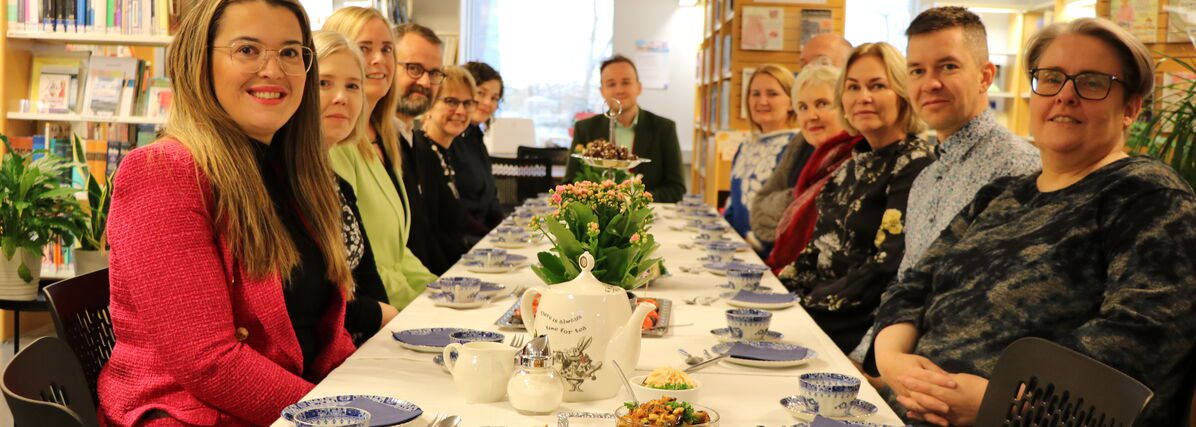
Hafnarfjörður Library celebrates its centenary – much has changed in 100 years
The Hafnarfjörður Library celebrates its 100th anniversary this year, having started in a small room in the attic of the Primary School on Suðurgata in Hafnarfjörður a whole century ago. The library is now on three floors with over 100,000 books, and its activities have become more extensive and diverse over the years, especially in recent years. In addition to books in numerous languages, the library lends audiobooks, sewing machines, baking tins, games, jigsaws and DVDs, and regular parent-and-child mornings, concerts, workshops, readings, story times, courses, art exhibitions and club activities for various groups are offered. The Anna multicultural project, which is aimed specifically at women, is a good example of a new service introduced in response to developments in Icelandic society and the increased need for social connection, togetherness and education among new and existing community groups. The reading society Framför is again the library's oldest active group. Annually, around 125,000 visitors of all ages come to the library.

Around 125,000 visitors of all ages visit the Hafnarfjörður Library annually.
Centennial celebrated in a variety of ways
The 100th anniversary of the Hafnarfjörður Library has been celebrated in a variety of ways since the beginning of the year, with events and all manner of entertainment. Recently, Juan Pictures Art painted a mural on the west gable of the Hafnarfjörður Library. A 100th-anniversary party was held last Saturday, where a large number of guests gathered to celebrate on the actual anniversary day. On 18 October 2022, passers-by were invited to a British-style tea party, hosted by the Masquerade Award winner and charming gentleman, Vilhjálmur B. Bragason. The anniversary year will continue to be celebrated with all sorts of festivities.
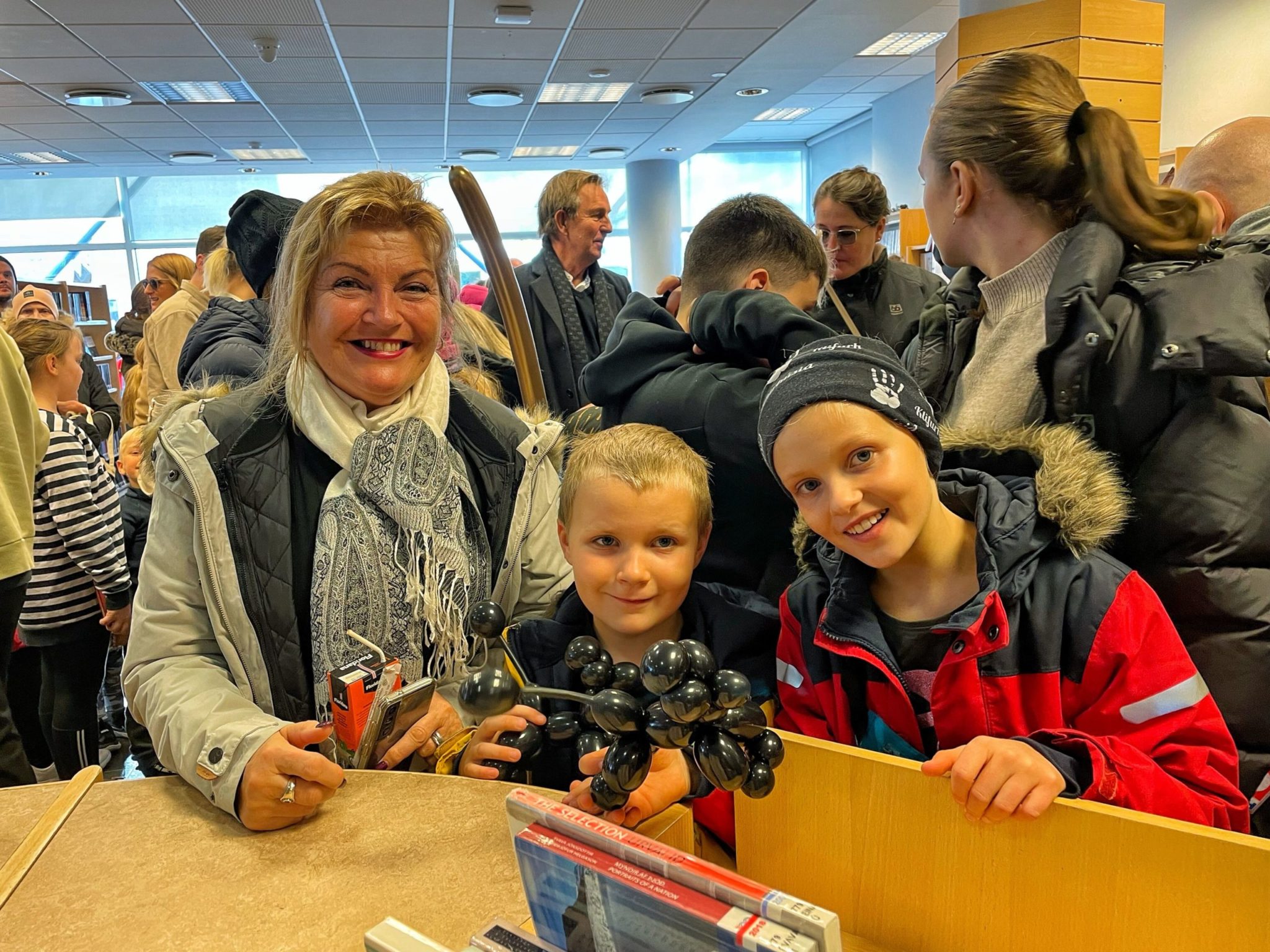
A large crowd attended the 100th anniversary party on Saturday, 15th October 2022.
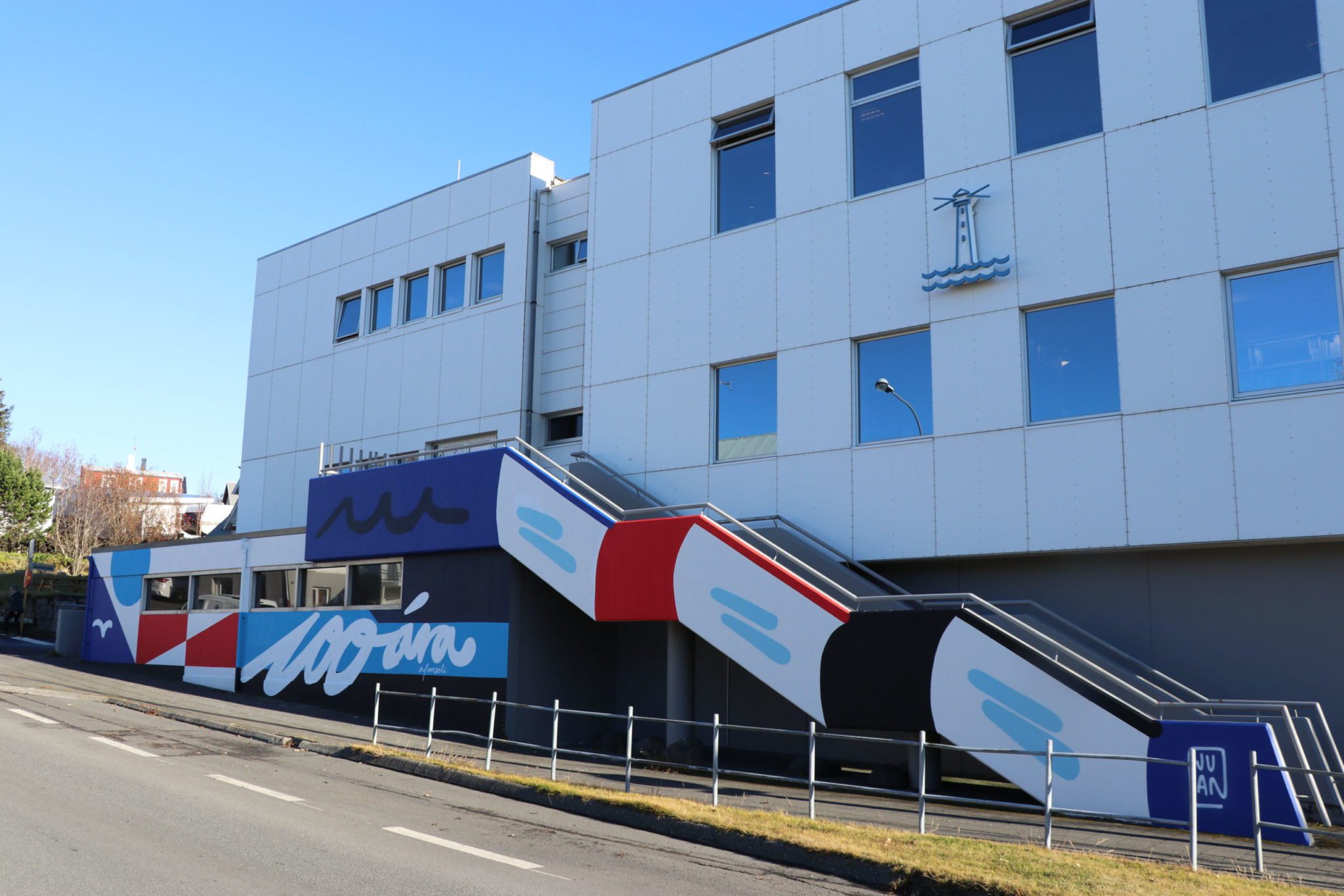
To mark the centenary, Juan Pictures Art was commissioned to paint a mural on the library's west gable.
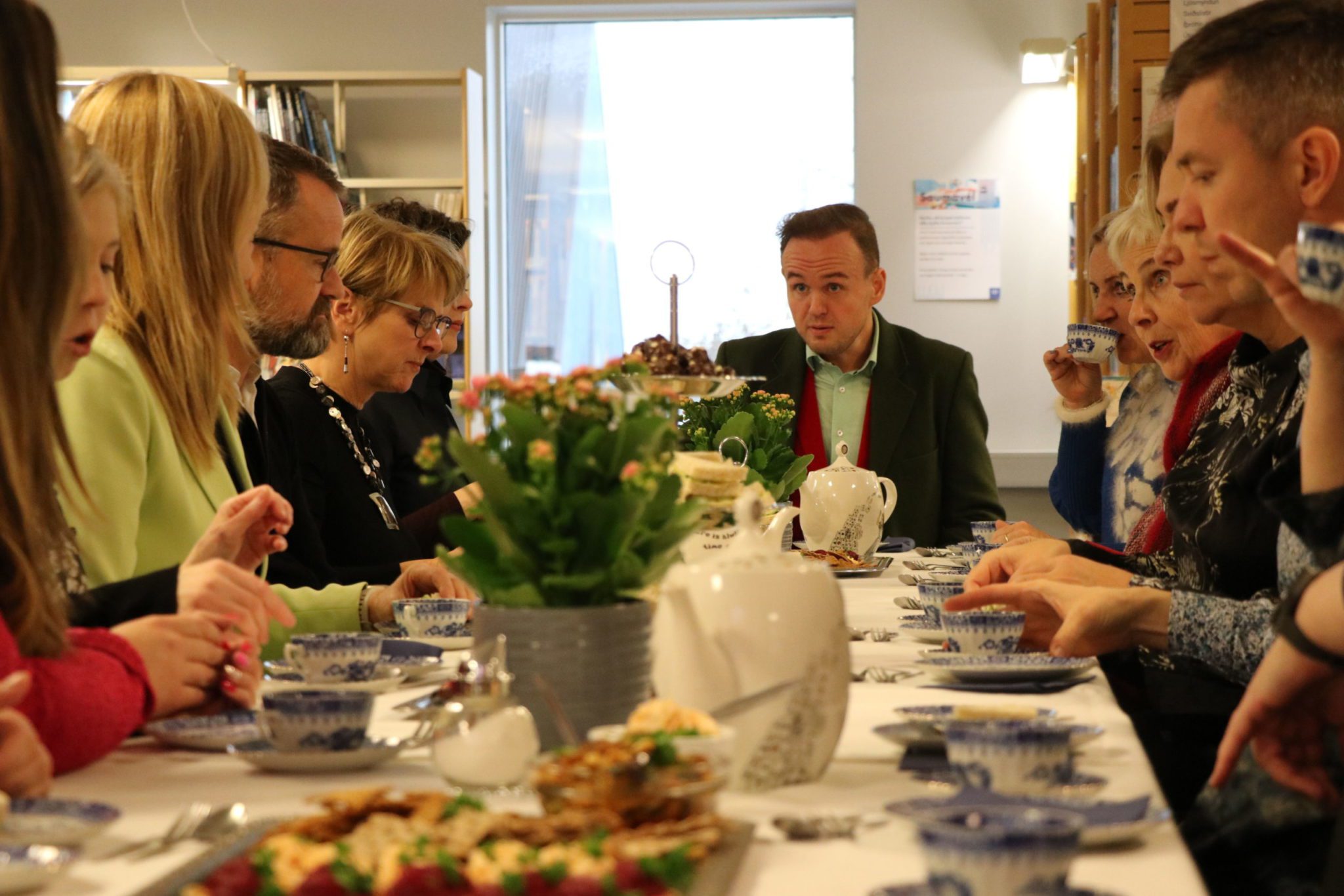
Passers-by were invited to a British-style tea party on the very day of his birthday, 18th October, hosted by the Masquerade Award-winner and charming gentleman, Vilhjálmur B. Bragason.
Looking to the future with plans for a modern library
The library has been housed at Strandgata 1 for 20 years, but it is planned to move to new premises at Strandgata 26 in 2025, where the entire collection will be on a single floor. By moving to more suitable and even larger premises, the space available to the library can be utilised in a very diverse way. Ideas for services in the new premises include a design studio, a recording studio, a sound studio, a book café, an outdoor area for children, a larger children's section, a youth section, a larger multipurpose hall, meeting facilities, a more visible music department, a place for everyone, and longer opening hours.
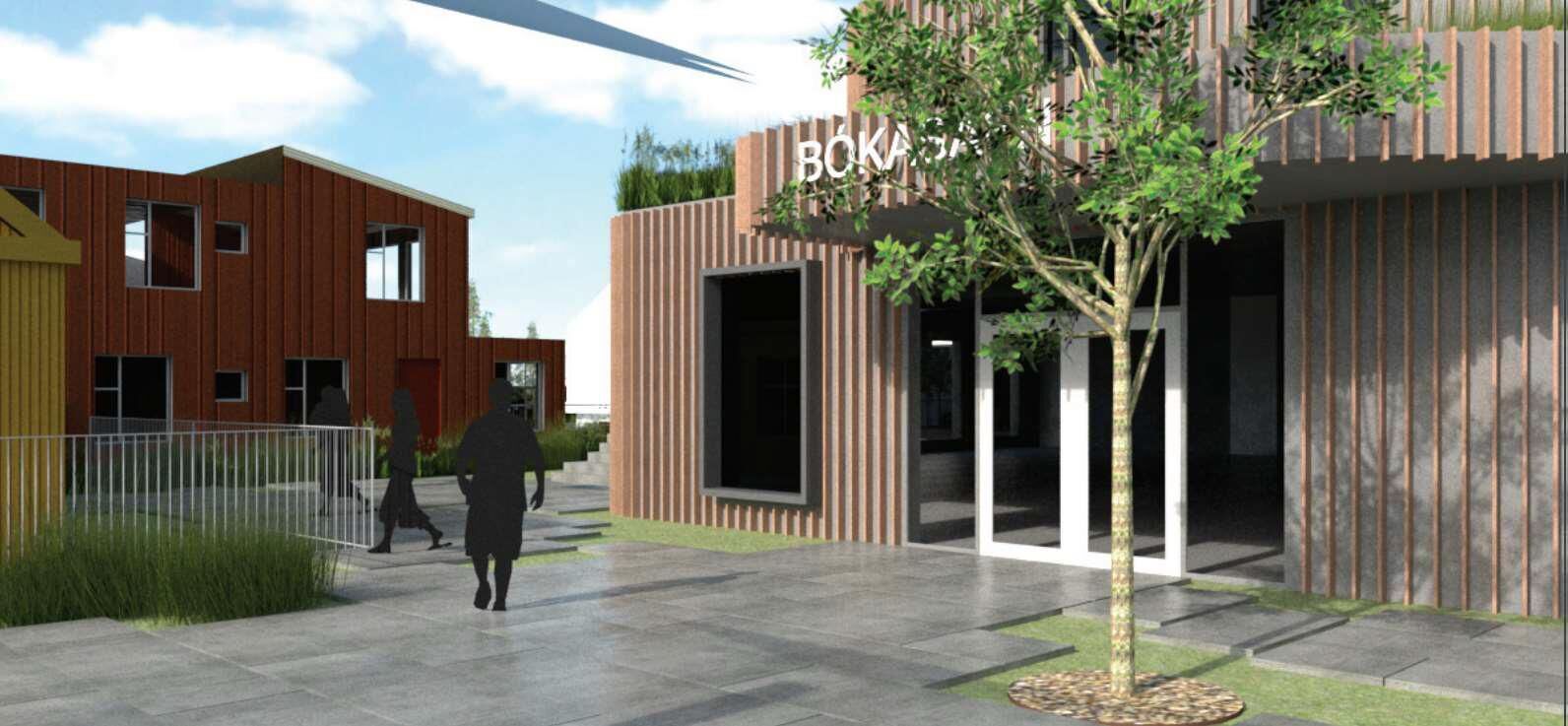
The Hafnarfjörður Library is scheduled to move to new premises in 2025.
The ideas align well with the development and growth of museums abroad.
At the end of 2020, the Hafnarfjörður town council approved the proposals for a new, modern library on a building plot owned by the company 220 Miðbær ehf. The new building will be connected to Fjarðar's older premises at 13-15 Fjarðargata, and construction has begun. The concepts for the new library are in keeping with the trend and development seen in new libraries built in Northern Europe in recent years, including in Helsinki, Aarhus and Oslo.
An excerpt from the history of the Hafnarfjörður Library
- 1910 – The establishment of a library in Hafnarfjörður first came onto the agenda when Jón Jónasson, the headmaster, challenged the town council to set up a library in the town. Later that same year, 25 residents called on the town council to establish a public library. A committee was appointed which concluded that a library would be too costly for the town's finances, and so nothing came of the matter for the time being.
- 1915 – Teachers of Hafnarfjörður Primary School, led by Gunnlaugur Kristmundsson, urged the town council to establish a public library in the town. A committee was appointed to look into the matter.
- 1921 – The Hafnarfjörður town council acceded to a request from the town's primary school teachers and decided to establish a public library. 3,000 króna was allocated from the town's coffers for the library's running costs, with the funds raised through an entertainment tax on film screenings and dances in the town.
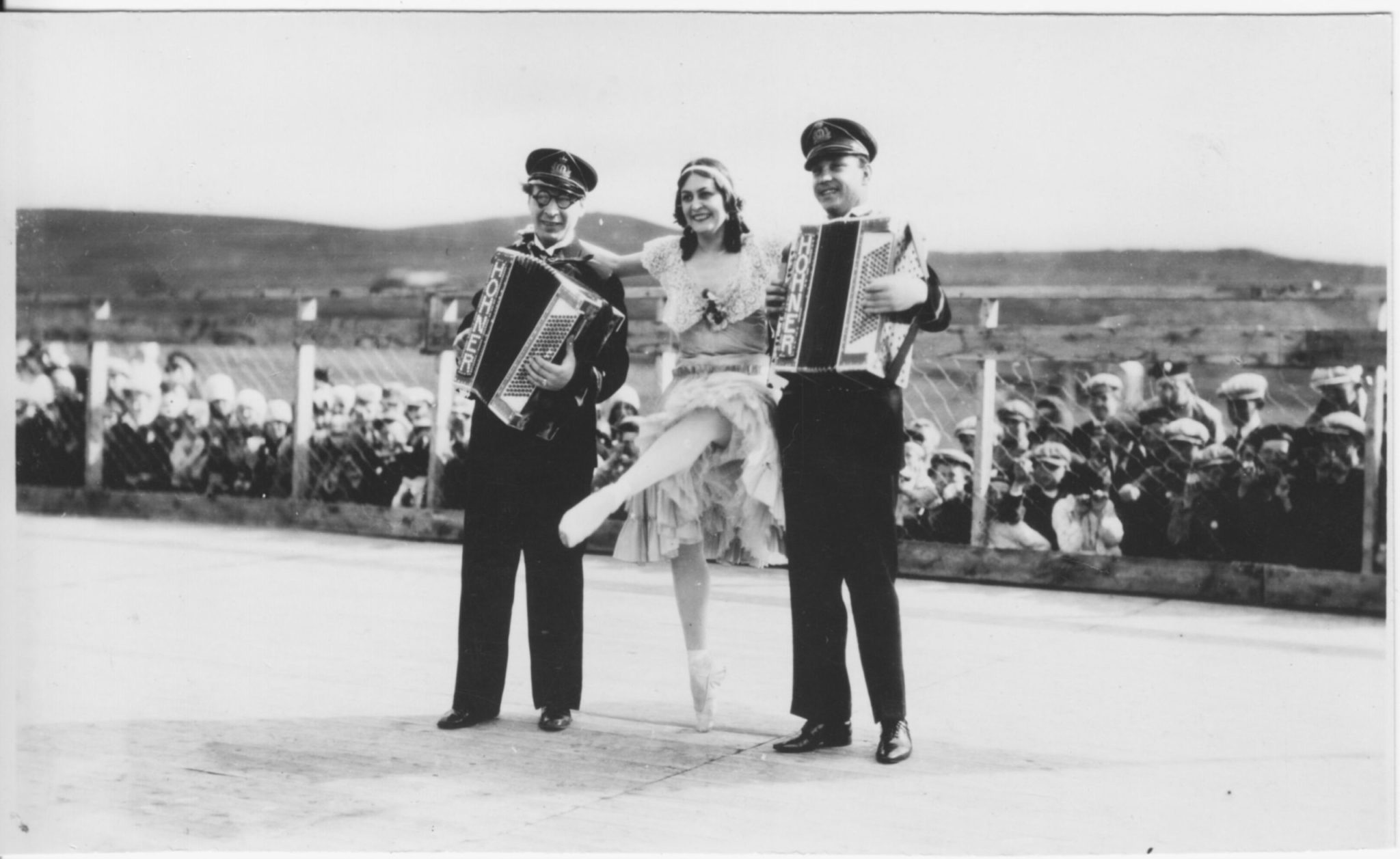
- 1922 – The Hafnarfjörður Library began operations in a small room in the attic of the Primary School on Suðurgata, which the town council had provided to the library free of charge. The grants the library received from the municipal and national governments were only sufficient for book purchases, and therefore a librarian was not permanently employed at that time.
- 1927 – when the Hafnarfjörður Primary School moved to new premises by the stream, the museum was given a very large classroom in the old school building. However, the museum was still cramped and it was not possible to have a reading room there, so it was still only possible to issue books on loan.
- 1938 – when the new premises of Flensborgarskólinn on Hamrinn was opened, the Hafnarfjörður Library moved its operations there. The library was provided with good facilities and, for the first time, a reading room. That same year, Magnús Stefánsson (Örn Arnarson) was permanently appointed librarian at the library.
- 1948 The library committee applied for a plot of land for a library building at Mjósund and was given an undertaking for it two years later.
- 1955 – Construction began on the Library at Mjósund. Around the same time, a new law on libraries was passed and the library's name was then changed to „Hafnarfjörður Municipal and Regional Library“. The Gardar, Bessastaðir and Vatnsleysustrandarhreppur municipalities were then members of the library, and thereafter a contribution was paid to the library from the county fund.
- 1958 – the day before Hafnarfjörður's 50th anniversary as a town, on 31 May, the new library at Mjósund was opened to the public. It was considered particularly modern and tasteful.
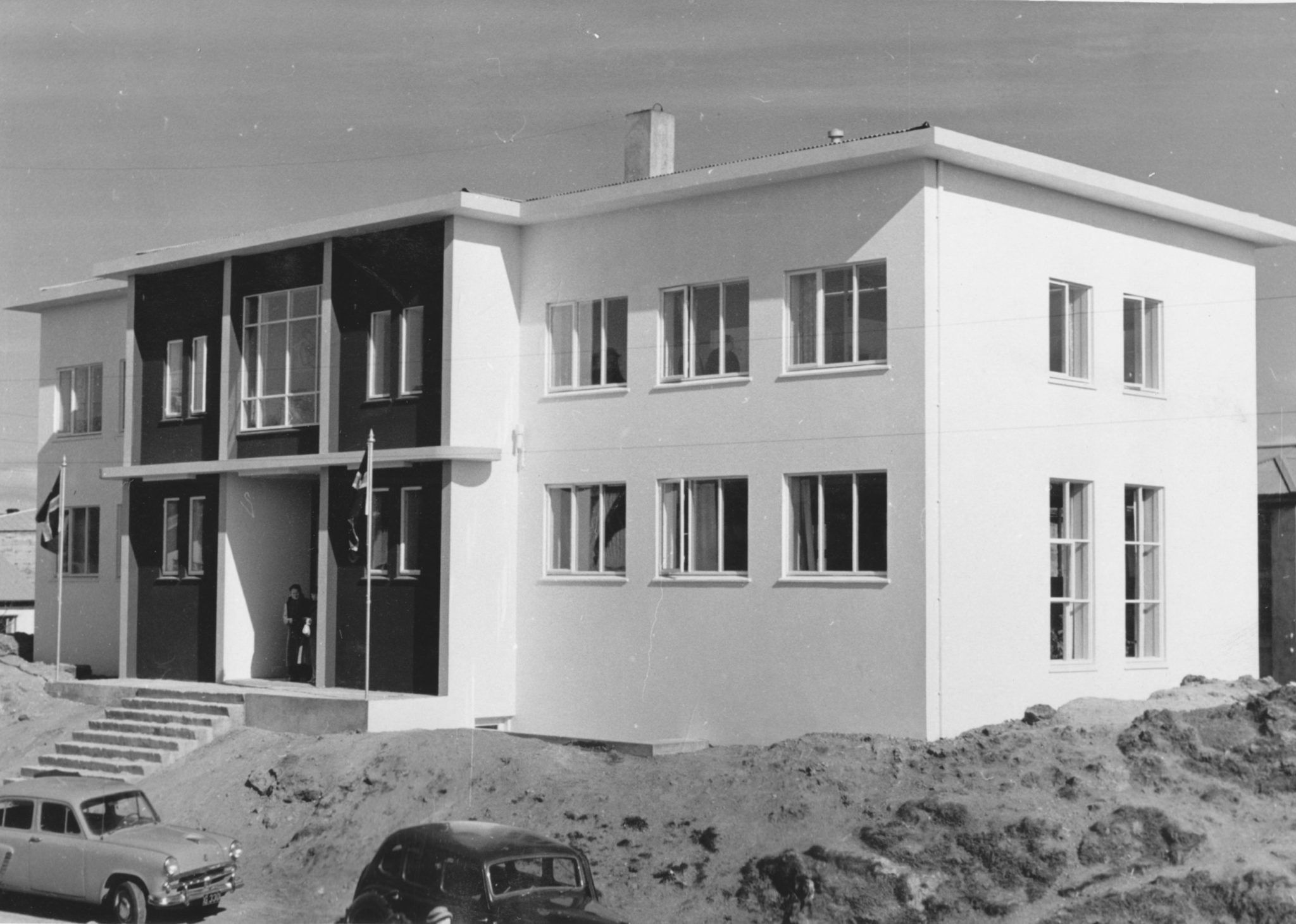
- 1959 – a special music department was opened in the museum, and it became the first Icelandic museum to offer record hire. The department was founded on a generous donation from the couple Friðrik Bjarniason and Guðlaug Pétursdóttir.
- 1972 – The library turns 50. The Hafnarfjörður Technical School, which had been based on the upper floor of the building, moved out and, as a result, the music department gained use of that part of the premises.
- 1982 The reading room on the ground floor of the library was converted into a children's section, and a new, high-quality reading room was then opened on the upper floor.
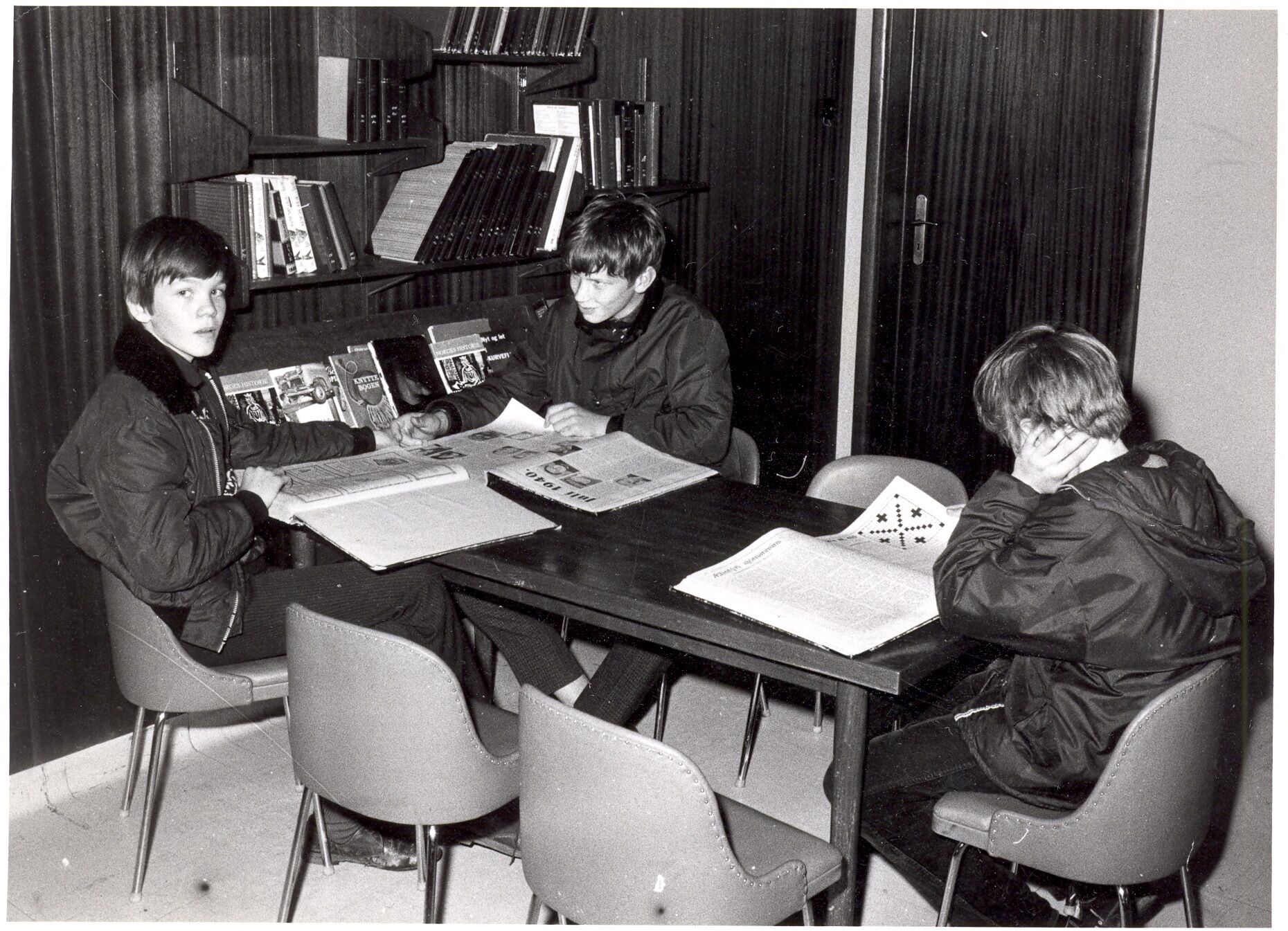
- 1983 – At a celebratory meeting marking the 75th anniversary of Hafnarfjörður's status as a town, a motion supported by all town councillors was passed for the construction of a new building for the Hafnarfjörður Library.
- 1984 Hafnarfjörður Library introduced the new initiative of offering weekly story times for children aged 3-6, and they were an immediate success.
- 1985 – The Hafnarfjörður Library began renting out videotapes. The emphasis was primarily on classic films and high-quality films about famous people, family films, and films on various social subjects.
- 2002 – after years of discussions and a search for suitable premises, the Hafnarfjörður Library moved into a large building at Strandgata 1 on the library's 80th anniversary. The premises were considered an excellent fit for the operation, being almost three times larger than the old building, and it also received recognition for its accessibility.
- 2006 An agreement was signed between the Hafnarfjörður Library and the German Library, under which the German Library would henceforth be housed in the library, and various related activities would be held there.
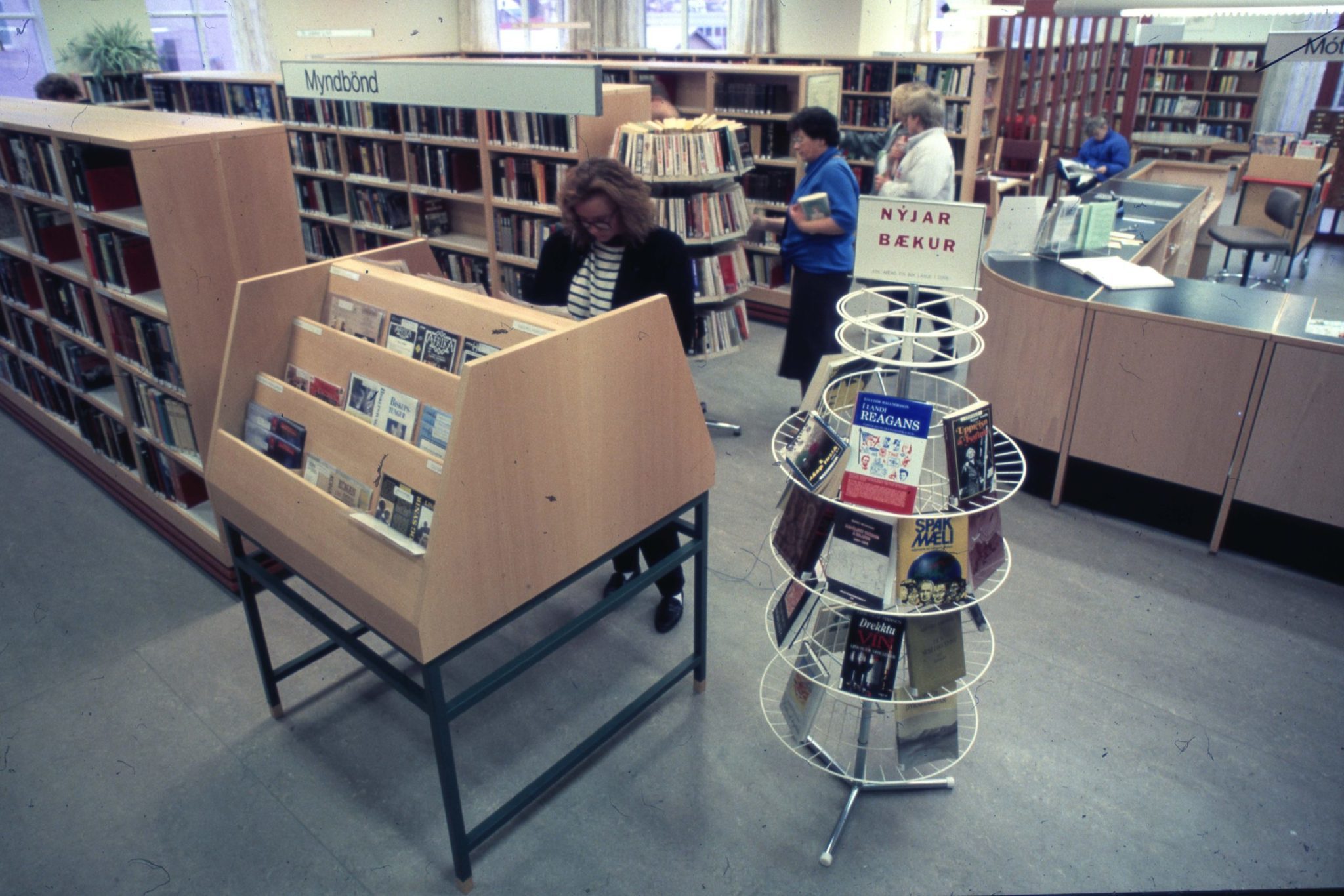
- 2008 – to mark the 100th anniversary of Hafnarfjörður's status as a town, a design competition was held in collaboration with the Icelandic Association of Architects for an extension to the town's library, but this proposal never came to fruition.
- 2020 The Library's podcast was launched and the Rabbrýmið – a podcast studio – was opened. The hire of sewing machines, baking tins, games, jigsaw puzzles and tools was started. The library's opening hours were extended.
- 2022 – the library was the first to issue digital library cards, new self-service machines using RFID technology were introduced, it opened on Saturday mornings during the summer, and borrowers were given access to 3D printers.
Anna at the Library – a driving force and an active campaigner
Anna Guðmundsdóttir was born on 19 May 1915 in Patreksfjörður. She moved to Borgarnes at the age of three, where she lived until she was an adult. In 1955, Anna was appointed librarian at the Hafnarfjörður Public Library, likely the first woman in Iceland to head a public library. She had been involved with the library for some time, as her second husband, Magnús Ásgeirsson, was appointed its librarian in 1941. Due to Magnús's ill health, Anna took on much of his work, managing the daily running and development of the library. Magnus passed away in 1955 and after that, Anna was appointed Librarian at the museum. When the library moved to new premises at 12 Mjósund in 1958, its operations increased significantly. A full-time assistant librarian was then hired, and as a result, Anna was made the library's head librarian. Anna was the driving force behind the establishment of the Librarians' Association of Iceland and she called the founding meeting of the association at the City and County Library in Hafnarfjörður on 4 December 1960; there were 38 founding members. Anna was the society's chairperson for a time and was its first honorary member. She was an active campaigner within the society, and the recognition and status of the profession were very dear to her.
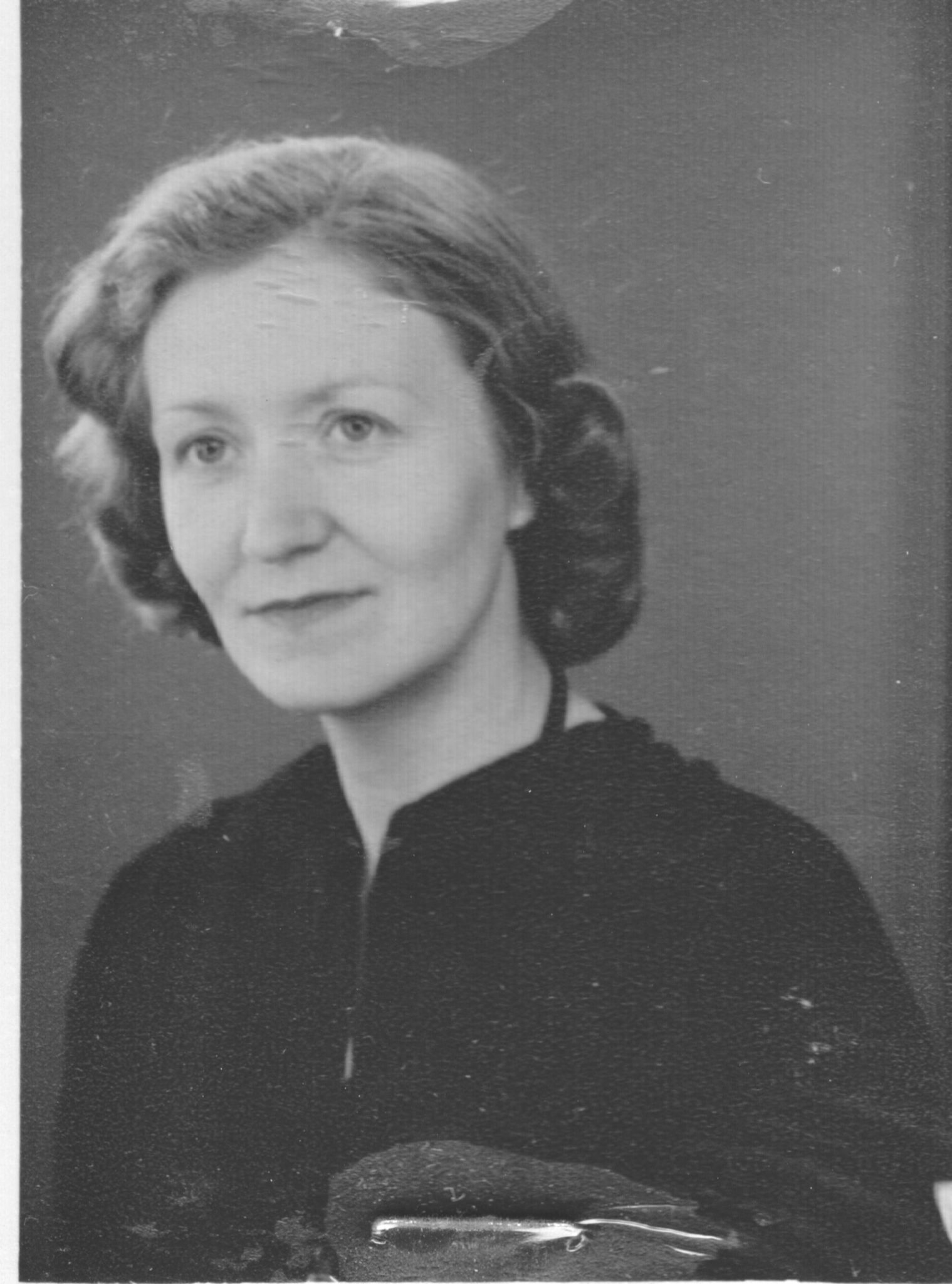
In 1955, Anna was appointed librarian at the Hafnarfjörður Library, likely the first woman in Iceland to head a library.
An artistic woman who designed, among other things, the museum's symbol.
Anna was an artistic woman who drew advertisements and book covers for the publishing house Helgafell. She designed a letterhead with the lighthouse for the library, which then became the symbol of the institution. Anna came up with ideas for various innovations at the library. She made the library warm and homely with flowers and established the first children's department in the country. She prepared book chests which were placed on board long-voyage ships from Hafnarfjörður. The contents of the chests were then renewed when the ships returned to port. At Sólvang, she prepared similar chests which, over time, became the nucleus of a library. After the Hafnarfjörður Library moved to Mjósund, Anna organised evening gatherings two to three times a winter in the library's reading room. Guests included the library committee, the town council and others. Anna attended Nordic librarians' conferences in Denmark and Norway and arranged for Hafnarfjörður and its twin towns, Frederiksberg in Denmark and Uppsala in Sweden, to exchange books. During the years Anna worked at the library, the Hafnarfjörður Library became a model for other libraries in the country. She worked at the Hafnarfjörður Library until 1971, when she became the director of the Árnessýsla County Library. Anna Guðmundsdóttir died on 29 June 2006, aged 91.