
Headspace continues to provide free counselling in the Hamra
On Friday, 16 December, the City of Hafnarfjörður and Bergid headspace signed an agreement to continue their collaboration to provide a low-threshold counselling service for young people in Hafnarfjörður at the youth centre, Hamrinn. The initial partnership began in March 2021, and the service has been very well utilised, benefiting young people in Hafnarfjörður. The counselling provided by Bergid headspace is based on the principles of easy access and complete confidentiality, and is entirely free of charge.
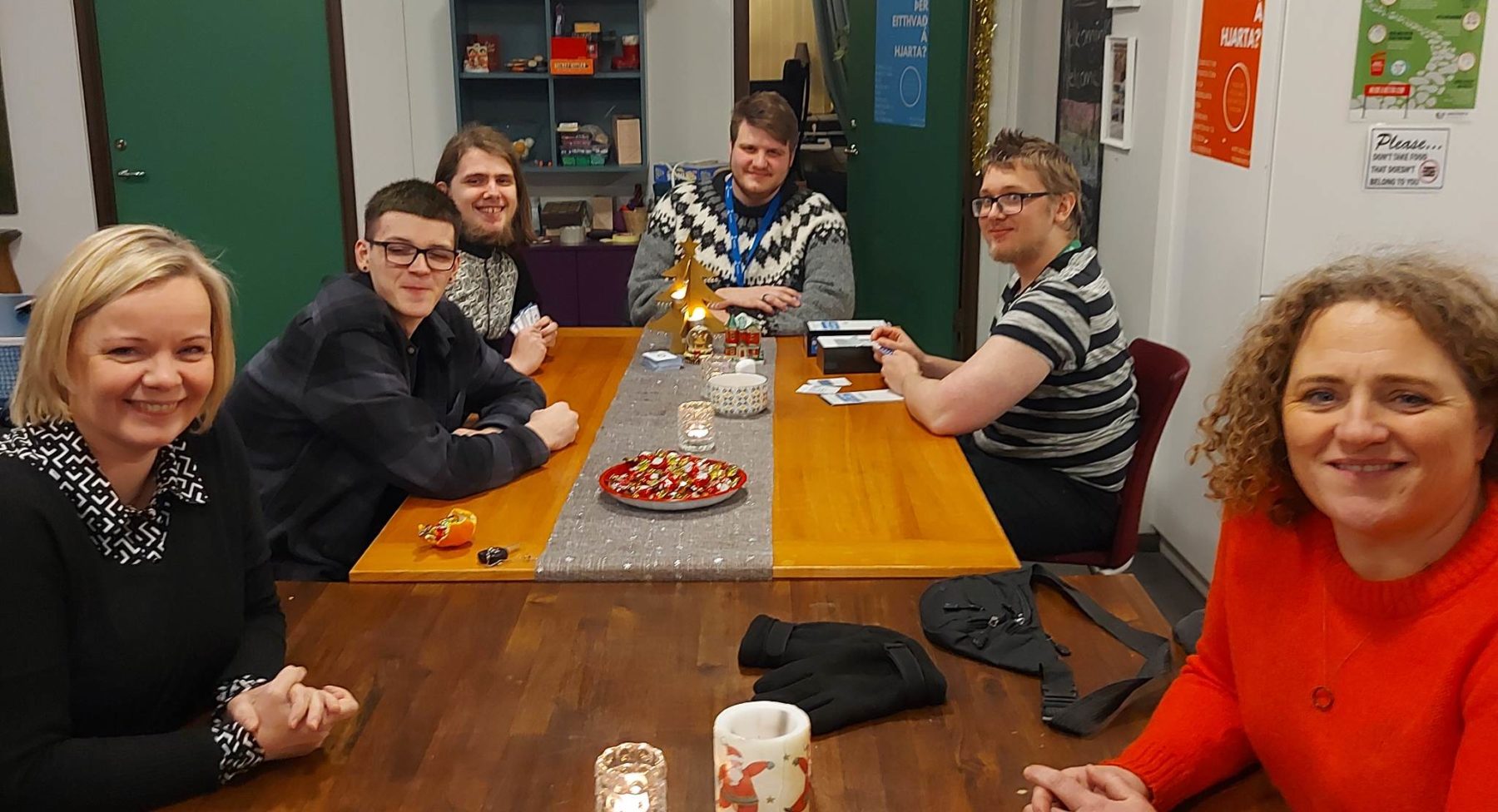
Young people in Hafnarfjörður will continue to receive free counselling at the youth centre Hamrinn.
On Friday, 16 December, the City of Hafnarfjörður and Bergið headspace to continue the collaboration to serve young people in Hafnarfjörður with a low-threshold counselling service at the youth centre, Hamarinn. This timing was particularly chosen as the signing marked the start of the general meeting of the Hamar and Músík & mótor House Association, and 14 young people were elected to the new board for 2023. The City of Hafnarfjörður and Bergið headspace started this collaboration in March 2021, and the service has been very well utilised and has benefited young people in Hafnarfjörður. Counselling at Bergið headspace is based on the philosophy of easy access and complete confidentiality, and the counselling is entirely free of charge.

The continuation of the agreement with Bergið was welcomed by the newly elected board of the town's youth centres.
Counsellor in Hamrin every Monday
Bergið headpace has an adviser at Hamarinn every Monday, and you can book an appointment by contacting Magga Gauja, the project manager of the youth centre, directly via the Hamarinn or Músík & mótor social media channels. call 664-5551 or come to Hamarinn and speak to her or another member of staff. You can also book an appointment at www.bergid.is and state that the interview is to take place at Hamran. The service can also be accessed at Bergsins headquarters on Suðurgata in Reykjavík, if that is more convenient.
About Bergið headspace
The main role of Bergsins headspace is to provide young people with support to work through their issues in their own way. The aim is for young people to improve their well-being and increase their engagement in daily life, at school or work. The role of a Berg headspace counsellor is twofold: to identify and assess problems and provide support, and to advise and find pathways into services elsewhere. In this way, Bergið headspace is the heart at the centre, a hub where young people and their families can get in touch, receive their own counsellor who provides support and advice, and assesses the need for resources. Young people have easy access to services and advice. All counsellors have a clinical background and experience in counselling; they are qualified social workers as well as education and careers advisors. Bergið's services focus on mental well-being, health and activity (education and work), offering low-threshold services, informative advice, a trauma-informed approach and empowerment.
About the Headspace philosophy
The Headspace philosophy has its roots in Australia, where it was felt that resources needed to be tailored for this age group. The main aim is to create an accessible, non-judgemental service with the involvement of young people and families to increase the likelihood that the service will be used. The idea is for the service itself to integrate all needs, such as physical health, mental health, addiction, and support with activities such as work and education. This support is based on the concept of early intervention, where a multidisciplinary approach to the young person is ensured. The first headspace centres in Australia opened in 2006, and there are now at least 110, making them a major part of healthcare for young people in Australia, particularly in the country's rural areas. It appears that Headspace centres in Australia have achieved their goal of significantly increasing young people's access to services. Research into the outcomes for young people who have attended Headspace suggests that around 60% of them achieve positive outcomes, with improved well-being, increased engagement, or both. Headspace-branded centres have also been operating in Denmark since 2013. There are now 18 such centres, and the number is growing. A 2017 evaluation of the service found that, according to client self-assessment, 78% of those who sought help from Headspace felt the support had helped them, 50% reported experiencing less loneliness and 70% said the support had helped with work and study. Such low-threshold services are therefore believed to reduce the severity of mental health problems and mental illness, dropout from secondary school, leading to greater employment participation, as well as less loneliness and an overall better quality of life.