
Safe housing for all – mapping completed
Last October, the joint project of the Housing and Building Inspectorate (HMS), the Federation of Icelandic Trade Unions (ASÍ) and the Capital Region Fire and Rescue Service (SHS), ”Safe Living for All”, was launched. Its aim was to map living in commercial premises. The project began with a mapping of the capital region, which has now been completed, and detailed findings can be found in a subsequent report.
Safe housing for all – mapping completed in the capital region
Last October, the joint project of the Housing and Infrastructure Authority (HMS), the Federation of Icelandic Trade Unions (ASÍ) and the Capital Region Fire and Rescue Service (SHS), ”Safe Housing for All”, was launched. Its aim was to map residential use in commercial premises. The project began with a mapping of the capital region, which has now been completed and is Detailed findings can be found in the subsequent report.

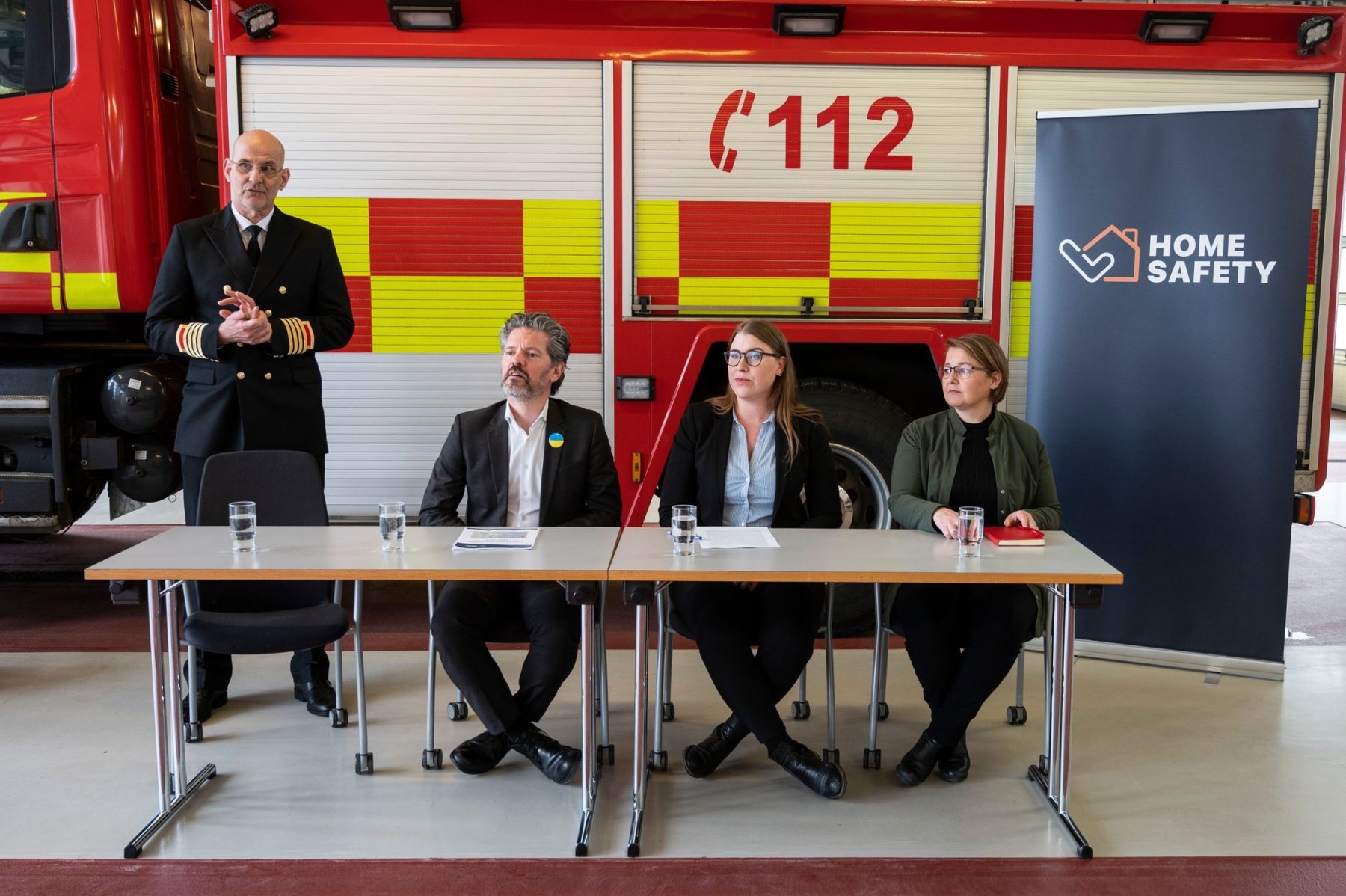
At a press conference held in Skógarhlíð today, Jón Viðar Matthíasson, Fire Chief of SHS, Regína Valdimarsdóttir, Team leader at HMS, Drífa Snædal, President of the ASÍ and Dagur B. Eggertsson, Chairman of the SHS board, on the main findings.
In addition to mapping the number of residents in non-residential buildings and the condition of fire safety measures, the composition of the residents was also examined in terms of mother tongue, employment status and other factors. The results show that the number of people living in non-residential premises has decreased since the SHS survey was conducted in 2017. It was previously estimated that between 3,500 and 4,000 individuals were living in commercial premises, but today the number is estimated to be 1,868, of whom 19 are children. Most of these dwellings are in areas undergoing regeneration. It should be borne in mind that factors within the community can affect the number of people living in commercial premises.
Fire safety is overall better than anticipated, but it is estimated that around half of the population lives with acceptable fire safety standards. However, the Capital Region's Fire and Rescue Service believes it is necessary to re-examine a quarter of the housing stock in the near future to better review the fire safety measures. Almost 33% of residents are Polish-speaking, followed by Icelanders at almost 24%. A large majority, or nearly 85% of residents, are in the labour force. There are indications that Icelanders more often own the residential property they live in, whereas people of foreign origin are more likely to rent.