
A quieter environment, longer playtime and increased quality
The project 'Hæglæti in Early Years Practice' was created following the results of a staff survey at the Hlíðarendi nursery school, where staff experienced work-related stress, despite low staff turnover, good facilities and an experienced team. This sparked an exploration into how to create more balance and calm in the daily work.
A calmer environment, longer playtime and improved quality of communication
The 'Hæglæti in Early Years Practice' project was created following the results of a staff survey at the Hlíðarendi nursery, where staff experienced work-related stress, despite low staff turnover, good facilities and an experienced team. This sparked an exploration of how to create more balance and calm in the daily work. Bryndís Guðlaugsdóttir, the nursery manager, told us about the project – which received a grant from the Hafnarfjörður Education Fund this spring. A department head at the Hlíðarendi nursery wrote their master's thesis on slowness and sustainability in school life. When the management began to discuss the project's findings and the situation in the nursery, a shared vision emerged that mindfulness could be a way to improve both staff well-being and the quality of the work.
„We deliberately set out to introduce the concept of slowness to our staff, and it soon became apparent that people's understanding of the term was very different. Some associated slow-paced living with „doing everything slowly“ or reducing activity, while others struggled to understand the concept as English was not their first language. Therefore, we had to start from scratch and discuss what slow-paced living really means in the context of nursery work,“ says Bryndís.
The nursery's daily schedule has been revised.
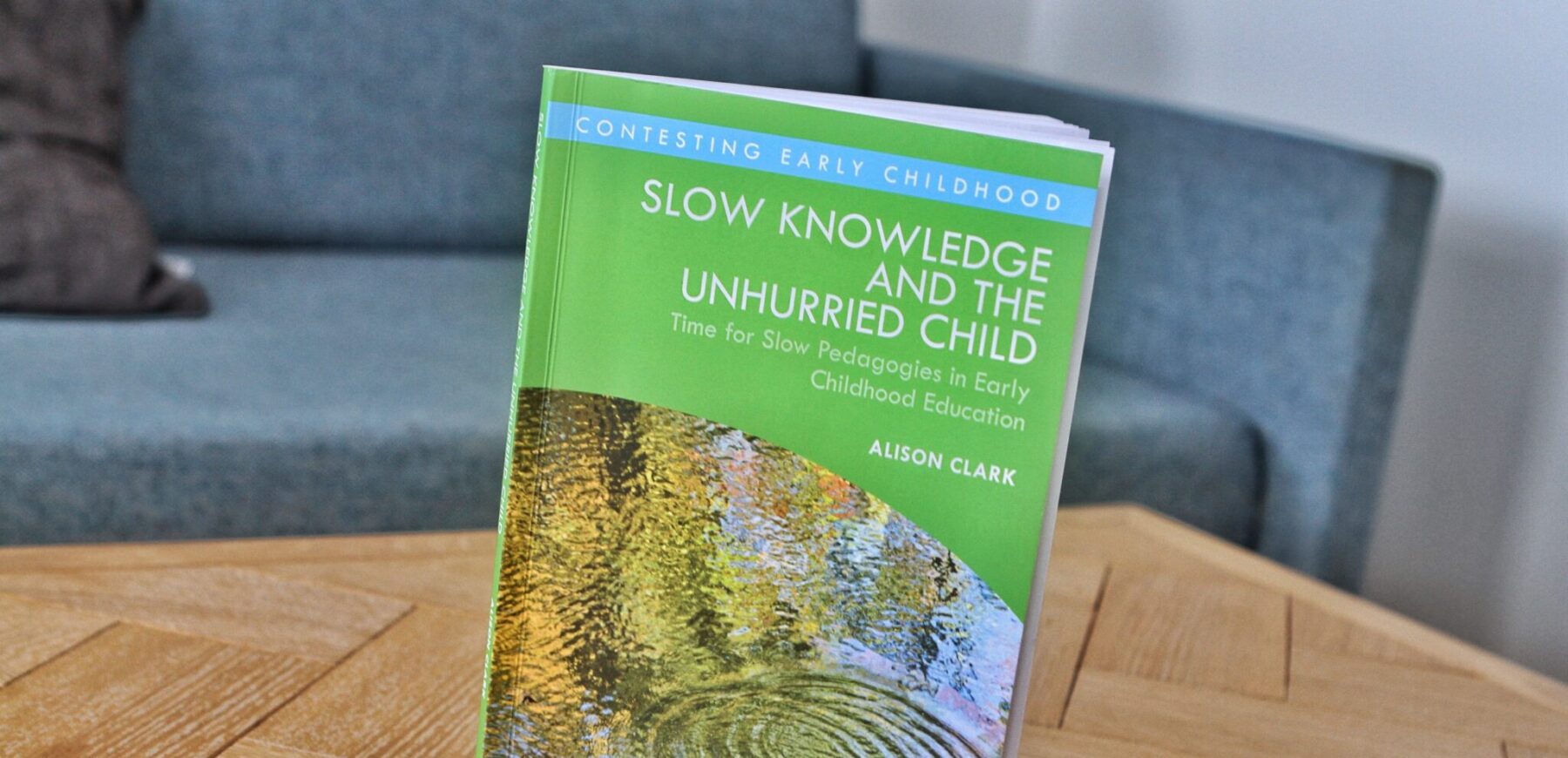
The first steps involved, among other things, revising the nursery's daily schedule. The aim was to reduce transition times, extend children's continuous playtime and create more room for staff to be present in the children's interactions and play, without constantly rushing between tasks. „The emphasis is on children learning through play and on staff being better able to seize the learning opportunities that naturally arise from the play.“ Bryndís says the project has developed rapidly and has led to managers seeking further education on mindfulness. „It is the task of all of us to familiarise ourselves, to some extent, with the book Slow Knowledge and The Unhurried Child by the psychologist Alison Clark, before next autumn. It is available to staff in both print and digital formats. This way, we can strive to build a shared understanding of what slow learning entails and how the philosophy can become part of our daily work.“
Training for staff on planning days
A draft plan has been drawn up for the next academic year, which will include, among other things, staff training on planning days and the establishment of a group for those who wish to take an active part in ongoing development work. „We will emphasise that the project is a collective endeavour. The recognition the project has received with the introduction of the cultural grant has had a significant impact on morale and has increased staff interest in participating in its development. We are very grateful here.“ says Bryndís cheerfully, reminding us how important recognition and positive feedback are in the workplace. Staff feel that they are seen and appreciated for the work they put in daily, and that feeling is passed directly on to the children.
A long-term project with a mindset change
Bryndís then says that there are plans to change the organisation of the work to create more space and calm in the house. „For example, staff will be added to take a portion of the children out on outdoor trips each day. This will mean fewer children in the wards at any one time, which will contribute to a quieter environment, longer playtimes and improved quality of interaction between the children and staff.“ The emphasis is on this being a long-term project and a change in mindset rather than a short-term solution. Bryndís says she sees society today as characterised by great speed and constant stimulation, for both children and adults. It is therefore important that the nursery becomes a place where children have the space to engage in play, enjoy tranquillity and experience a sense of security in a slower, more considered environment. Ultimately, the aim is not to do less, but to do things with greater presence, calm and purpose, for both children and staff.
In recent weeks and in the coming weeks, interviews with grantee from the Hafnarfjörður Education Fund be published on the media channels of the City of Hafnarfjörður. This gives residents and other interested parties the opportunity to gain a deeper insight into the excellent projects and creative school and leisure activities.