
Initial proposals for the location of Borgarlína presented
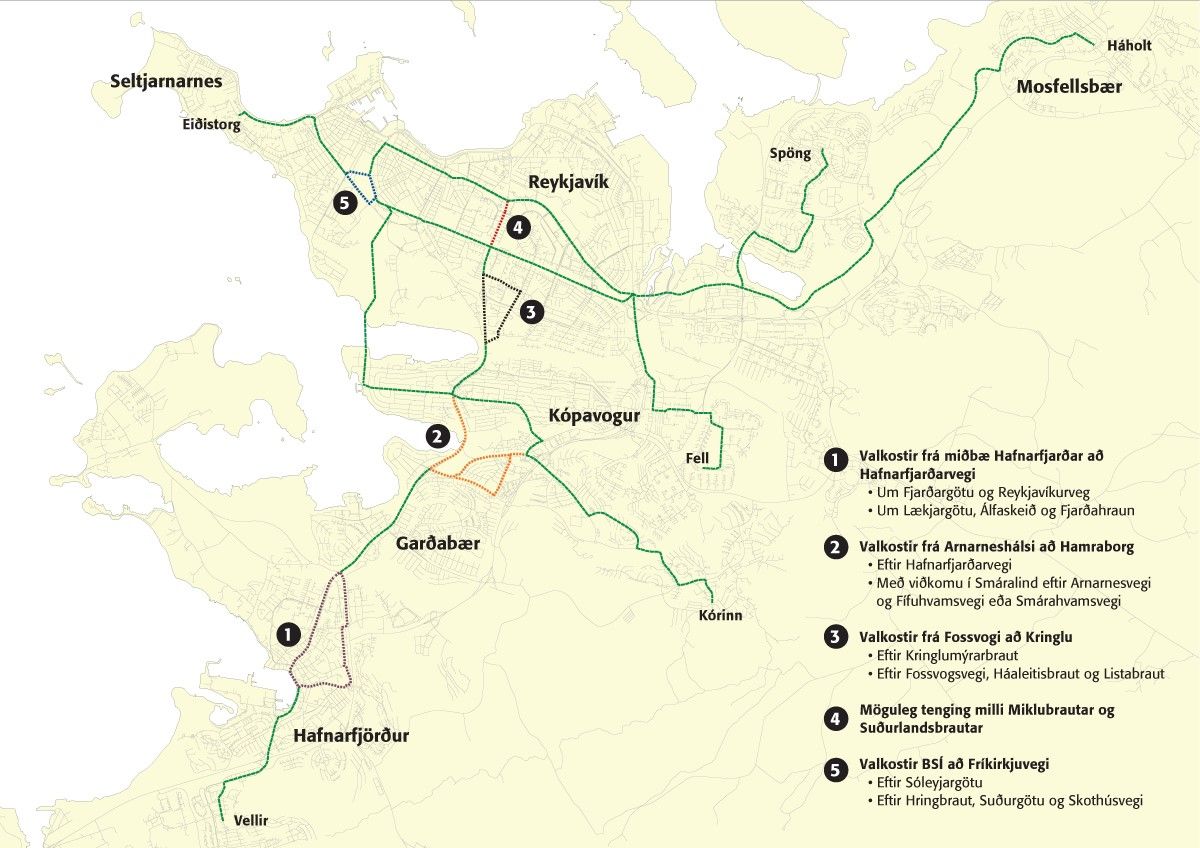
A milestone will be reached in the preparation for the planned City Line, a new high-quality transport system that will be given dedicated space in the capital region's road network, when draft proposals for changes to the 2040 Regional Plan for the Capital Region and the master plans of the six municipalities that are party to the City Line are presented at a joint meeting of the municipalities at Salinn today
A turning point will come
in preparation for the planned City Line, a new high-quality transport system that will receive
a dedicated lane in the capital region's road network, when draft proposals for changes
in the Regional Plan for the Capital Region to 2040 and the Master Plan
the six municipalities that are behind the Metro Line will be presented at a joint
the meeting of the municipalities in Salnum today. Proposals will be presented there on
the location of line routes and the main stops of the City Line and defined criteria for
development in the line's impact areas, but it is anticipated that the City Line will be
up to 57 km in length and that the project will be phased.
The processing proposals currently in pre-publication are based on
the options analysis of the Danish engineering firm COWI. In that work, consideration was given to
of how the capital region will develop in the coming decades. This is a proposal
an overall network of infrastructure to be built in phases. The aim is to
that final proposals on the line's location will be available by the end of summer and that preparations
The first phase is to be completed in early 2018.
See the interim report on the analysis of the Borgarlína lines
The cost of the Borgarlínu infrastructure is estimated at around
1.10-1.15 billion króna per kilometre at January 2017 prices and therefore
The cost of the entire network, which will be built in phases, could amount to 63 to
70 billion kroner.
First
Proposals for the City Line

Why?
It is estimated that over the next 25 years, the population of the capital region will increase by almost
40% or about 70,000, and will then have become almost 300,000. When we add
With the growing stream of tourists, it is clear that traffic is set to increase significantly. If it remains
With travel habits remaining unchanged, this increase will cause difficulties in transport and increased
delays in traffic, despite huge investments in new
traffic infrastructure. It is estimated that, unless changes are made, journey times could increase by up to
65% and traffic delays of just over 80%.
The aim of the municipalities with the City Line is to increase
the importance of public transport in the capital region. That will not happen without
infrastructure for high-capacity public transport will be built. About
The same principles apply to the urban line as to the planning of infrastructure for other modes of transport, e.g.
infrastructure. One must look decades into the future, so that the milestones which are built
would eventually become a natural whole. It is clear that traffic matters
of the capital region will not be solved by either a more robust road network or
public transport. Therefore, the interaction between these two solutions needs to be established and there
Public transport will play an important role for the region's residents. One of the main challenges for the future urban environment is
lack of space and for that reason, foreseeable technological advances with self-driving
Cars can never replace high-capacity public transport.
Environmentally friendly
and a quick mode of transport
The City Line is the result of extensive and close collaboration.
of the municipalities in the capital region in recent quarters and behind it lies
A detailed analysis of the future of transport in the capital region in collaboration with
The roadworks.
The trams on the City Line will be electric and will travel in dedicated lanes and receive
priority at traffic lights. It increases reliability and speed, so that journey time
becomes more competitive with other modes of transport. The proposed Metro Line is therefore cost-effective.
and an environmentally friendly way to increase transport capacity between the municipalities and make it easier for them
able to accommodate an increase in population and tourists of almost 40% by the year
2040 without the load on the main road network increasing in proportion. It is anticipated
high travel frequency which can be 5-7 minutes during peak times. Emphasis will be placed
well-appointed, covered bus shelters, with ticket vending machines and information boards
which show in real time when the next tram is arriving. The trams will stop right at
ramp platforms that will be at the same height as the wagons' floor, making access easier for
all.
The start of the planning process for the City Line
The development of Borgarlína is in accordance with the regional plan for the capital region.
from 2015 but an agreement on the preparation of the line was signed by the mayor
and to the mayors of the other municipalities in the capital region in December 2016.
The aim is to have the final proposals for the route of the Borgarlína ready by the end of the summer.
2017. Today's presentation in the Hall marks
a milestone now that the public and stakeholders can familiarise themselves with the draft of
proposals for the layout of Borgarlínan, but the deadline for submitting comments or
Comments are open until 20 June 2017. Comments and suggestions must be
written and must be received by the SSH office or the relevant office.
municipal.
Further information provides Hrafnkell
On Proppe, Regional Planner of the Association
municipalities in the capital region, telephone: 892 2698 – email:
hrafnkell@ssh.is
See more at The urban line.is