
A space for children to flourish
At Engidalsskóli, a creative education project has been running which gives students the opportunity to work with their hands, experiment, and discover their strengths in practical and creative work. The project is based on the idea that not all students find their place in traditional schooling, social activities or sports. Some children need a different environment to flourish; a place where they can create, build, design and work at their own pace.
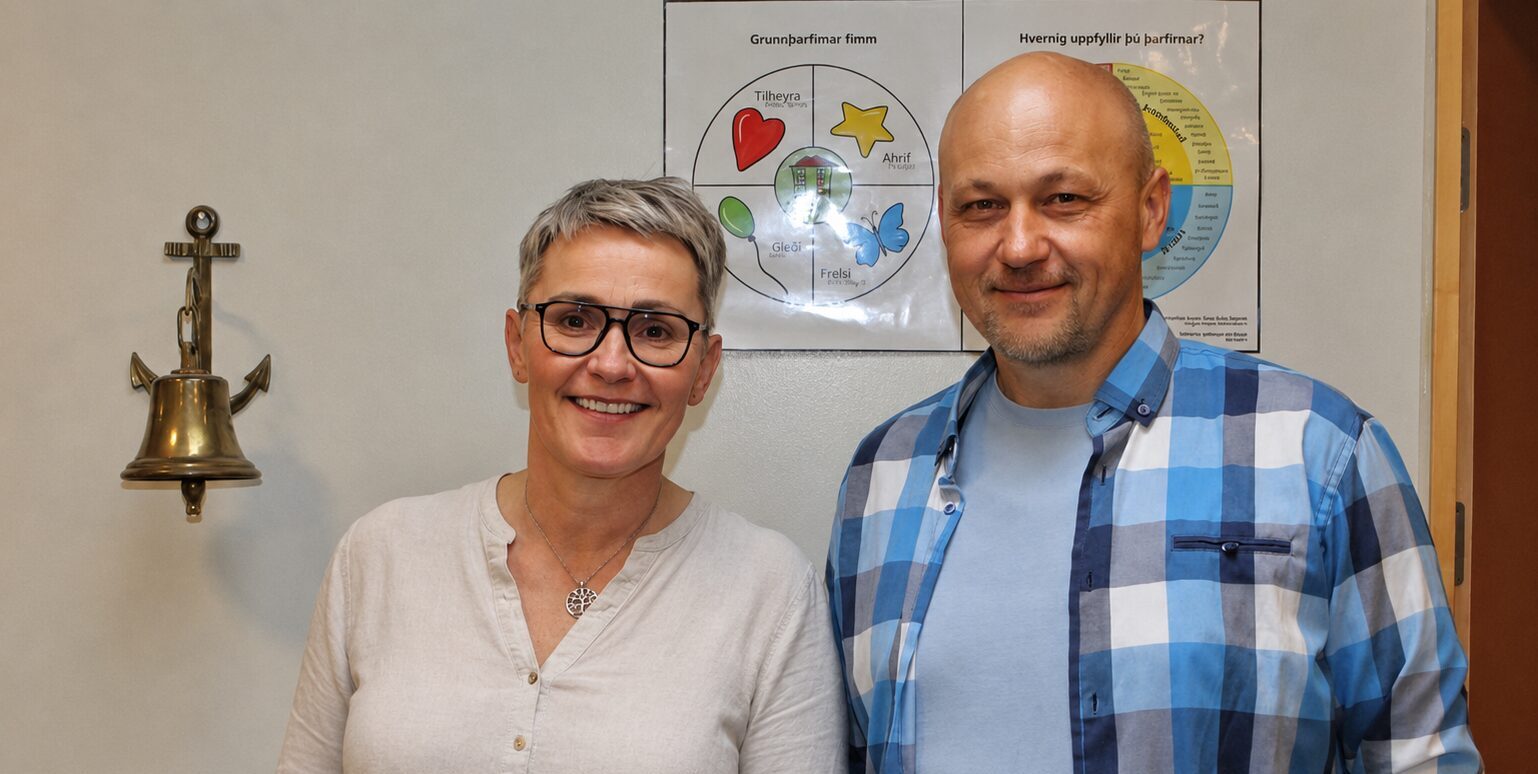
„We want to create a space for kids who don't necessarily feel they fit in elsewhere.“
At Engidal School, a creative education project has been developed which gives pupils the opportunity to work with their hands, experiment, and discover their strengths in practical and creative work. Margrét, headteacher of Engidalsskóli, says the project, which received a grant from the Hafnarfjörður Education Fund, has developed from a real need within the school. The project is based on the idea that not all students find their place in traditional schooling, social activities or sports. Some children need a different environment to flourish; a place where they can create, build, design and work at their own pace. „We're not necessarily thinking about the kids who find their niche in handball, football or traditional club activities.“ says Margrét. „We're looking at kids who perhaps need a different kind of space.“
The inspiration for the project is, among other things, connected to a member of the school staff., Maciej Bauer (called Matti), who has extensive practical experience and an excellent rapport with students. He comes from Poland and has a diverse education and experience that has not yet been fully recognised in this country. At Engidalsskóli, however, he has proven to be a great asset, particularly in his work with children who need more support, a closer connection, or simply a different outlet for their talents.
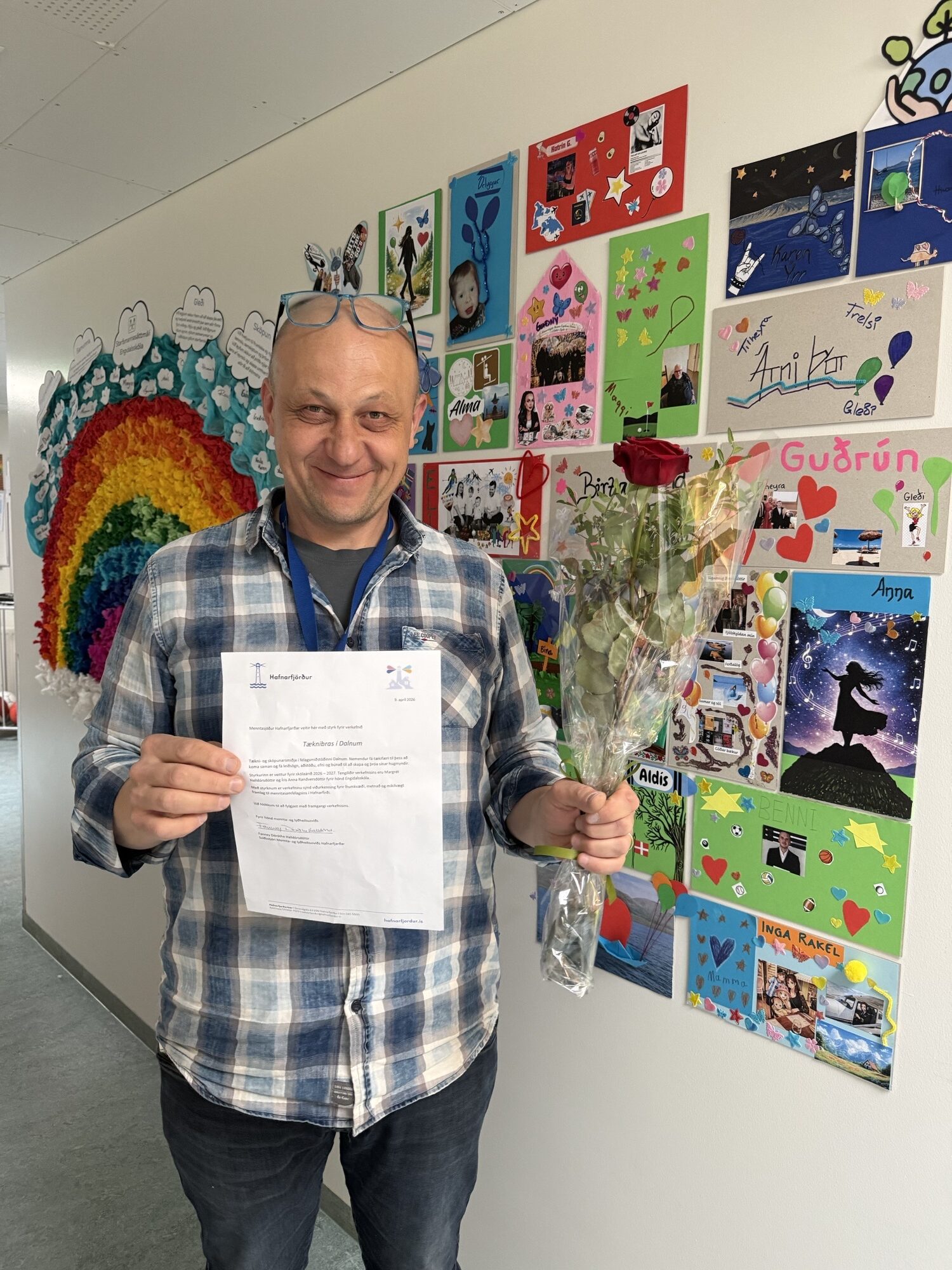
Working with cardboard, electricity, moulds and equipment
Margrét says Matt has a rare combination of practical skills and a human approach. He is a boatbuilder with a blend of developmental education, occupational therapy, social work and psychology, and subsequently obtained his teaching qualifications and holds an Icelandic teaching licence. He is also undertaking a master's degree in Art and Craft Education at the University of Iceland, like several teachers at Engidal School. He also works a great deal with his hands and has, among other things, taught students to build, mould and create from a wide variety of materials. At school, he has worked with cardboard, papier-mâché, electricity, moulds and various kinds of equipment. For example, pupils have made electric toys, three-dimensional projects and large-scale works, including castles for school events. „It was just that many people wanted to get in on the act with him.“ says Margrét. „He connects so well with the kids.“
Interest was greater than originally anticipated. The project started as a more specialised elective, but gradually it became clear that many more students had a need for such a creative space. There were even suggestions to find larger premises where more people could take part, although this was not feasible for the time being.
It is important that school work accommodates different strengths.
According to Margrét, it is important that school life accommodates different strengths, both in students and staff. Some students thrive in academic studies, others in sports or social activities, while still others find their best fit in practical work where they can see ideas become something tangible. „Schoolwork needs to accommodate different strengths.“ she says. „We benefit a lot from having people with diverse backgrounds.“
The project is still in development. The school has been experimenting with the timing, organisation and scope. The idea is to offer an after-school activity, for example in the afternoon, so that pupils can take part and still be home before dinner. Margrét mentions that times such as four to six or five to seven have been discussed, but that nothing has been finalised. Material costs, equipment and staff wages outside of normal working hours are also a consideration. The school has received grants to purchase various tools and equipment, and part of the project is about ensuring the facilities are good enough for pupils to work on a variety of projects.
Margrét says that the projects themselves should be largely determined by the students' interests. Some want to build, others to design, shape or test electricity and technology. The aim is not for everyone to follow the same formula, but for students to have the opportunity to develop their own ideas. „The idea is a bit for the kids to work based on their own interests.“ The school has also looked into partnerships outside the school. Margrét mentions that they have been in contact with Össur in Iceland and are planning to go on visits with students. Such collaboration can open children's eyes to how practical knowledge, design and creation are connected to real-world jobs and solutions in society.
More space, greater proximity and projects that spark interest
What stands out for Margrét is the sheer magnitude of the need. She says these are not necessarily children who are always visible in the discussion or defined by a specific problem. Often, they are simply pupils who need a different space, more one-to-one attention, or projects that spark their interest. In such an environment, children can experience a sense of empowerment. They get to try, make mistakes, fix, build and create. At the same time, a social connection is formed around the projects; students help each other, talk together and form relationships on different grounds than in conventional schoolwork.
„Some children rarely get to feel that they are experts in anything.“ says Margrét. „In a project like this, they can experience that they can create something that matters.“ The project is set to continue. It needs to be better established, in terms of its organisation, funding and staffing. However, Margrét says it is clear that the school sees great benefits in continuing. „This is still developing.“ she says. „But it stems from a real need of the students and from what we see works.“
In recent weeks and in the coming weeks, interviews with grantee from the Hafnarfjörður Education Fund be published on the media channels of the City of Hafnarfjörður. This gives residents and other interested parties the opportunity to gain a deeper insight into the excellent projects and creative school and leisure activities.