
The year is 1950 – a birthday party for seventy-year-olds from Hafnarfjörður.
It has become a tradition for the Mayor of Hafnarfjörður to invite all those Hafnarfjörður residents who turn 70 during the year to a party in Hásölum. It was not possible to hold a party in 2020 due to the pandemic, and finally yesterday the celebration was held in Hásölum.
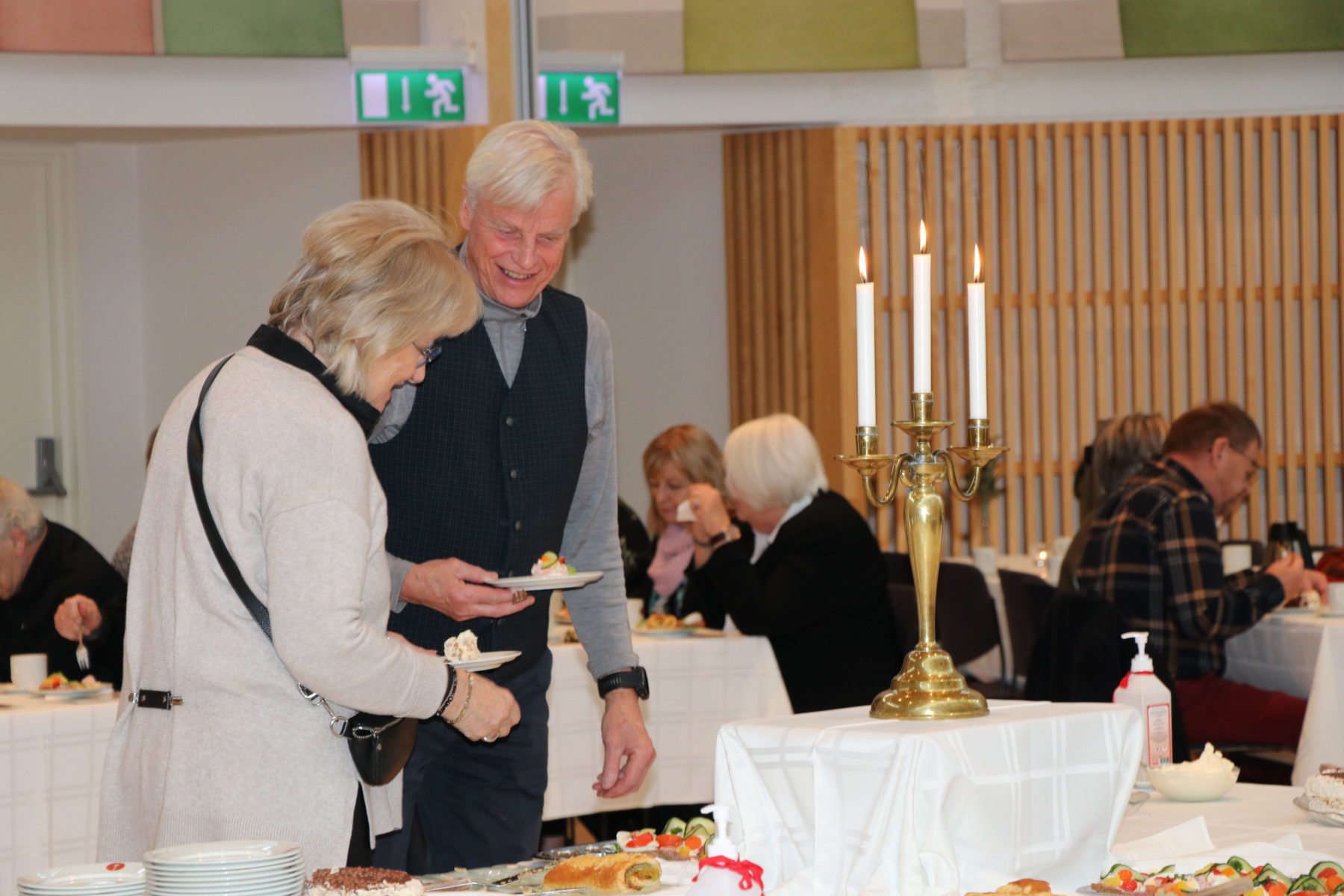
A tradition has developed whereby the Mayor of Hafnarfjörður invites all residents who turn 70 during the year to a reception at Hásölum. It was not possible to hold a reception in 2020 due to the pandemic, and finally yesterday the celebration was held at Hásölum. Around 100 cheerful residents of Hafnarfjörður gathered to listen to gentle music and the group was given a presentation on Hafnarfjörður's services for senior citizens, a varied social life at Association of Senior Citizens in Hafnarfjörður as well as listening to interesting and entertaining stories from the year of birth 1950 from the town's archivist.
More photos from the birthday can be found on Hafnarfjörður's Facebook page

Stories from the year of birth 1950
The year 1950 was, of course, remarkable for various reasons, like most other years. In world history, the biggest events were the outbreak of the Korean War and Harry Truman's declaration of support for the development of the hydrogen bomb, despite Einstein's warnings. Following a national referendum, the monarchy was restored in Belgium, India became a federal republic, and the Chinese invaded Tibet. Famous people born this year include Bill Murray, Stevie Wonder, Karen Carpenter and Agnetha Fältskog.
In Iceland, the following was of most note….
Locally in Iceland, the main news was that the Iceland Symphony Orchestra held its first concert, the government of Steingrímur Steinarr took power, and the National Theatre was inaugurated, Heiðmörk was made a nature reserve, the aircraft Geysir crashed on Bárðarbunga, and after the króna's exchange rate had been kept more or less fixed for two decades, it was devalued by no less than 43%, and import restrictions were also eased.
In Hafnarfjörður, the following were the main news items….
Here in Hafnarfjörður, various things were happening, as one might expect. The population passed 5,000 for the first time, and the town grew rapidly during this period. At the start of the year, popular films were shown in the town's cinemas. At the Town Cinema, an American musical comedy called „The Irish Rose“ was shown, and advertisements noted that this film was in natural colours. At the Hafnarfjörður Cinema, the epic film „The Sign of the Cross“ was showing at the same time, advertised as a magnificent film from Rome in the days of Nero.
Among the new businesses in the town, on 3 January the Fríða Laundrette opened on Lækjargata. It offered a home collection and delivery service, and customers could choose whether their laundry was returned damp or fully finished. Hafnarfjörður was still, at this time, a major fishing town, and during the 1950 winter fishing season, 20 boats were sent out from the town. Regarding the development of industry, it should also be mentioned that this year the company Olíufélagið hf. was allocated a large plot of land south of the harbour to build a large oil storage facility there.
At the end of January 1950, a severe storm struck the southwest, a gale from the southwest with strong winds and rain. The harbour walls did not protect the harbour from that direction, and a great deal of damage was caused. A large part of the harbour's boat fleet was moored to the quays and some were dragged away and broken, but thanks to the great vigilance of the skippers, it was possible to save a great deal of valuable property and prevent further damage. The damage still amounted to tens of thousands. Another storm hit the southwest corner in early March, and the outcome was not as good, as most of the boats were at sea when it struck. The motorboat „Jón Magnússon“ from Hafnarfjörður was lost; it was a 60-tonne oak boat operated by the Framtíðin partnership. All hands on board were lost: four from Hafnarfjörður, one from Ísafjörður and one from Bolvík.
Municipal elections were held in the town in the spring of 1950, and three parties were standing: the Independence Party, the Labour Party and the Socialists. Although politics today can be harsh and pointed, it is child's play in comparison to what went on in the 1950 election campaign. It involved talk of underhand journalism, vile insinuations, lies, mob rule, Stalin's lackeys, and so on. The People's Party had been in power in the town for the past few years and, in their view, were doing quite well. The main election issues concerned the development and expansion of the Bæjarútgerðin, the harbour's development, Krýsuvík, and housing issues. The Independence Party framed the campaign as a choice between Krýsuvík and the Labour Party, or the harbour and the Independence Party. The election results were that the People's Party held on with five men elected, the Independence Party got three and the Socialists one. The Independence Party supporters, however, pointed out that they had increased their support far more than the Social Democrats since the last municipal election.
One of the most remarkable pieces of equipment to be purchased for the town that year, and which received considerable media coverage, was a 14-tonne bulldozer with a mechanical shovel. Initially, it was primarily used for the water supply, but it could also be used to dig foundations for houses, load road material onto lorries, push up new roads, and clear snowdrifts from the town's roads. Wherever this excavator was at work, a considerable crowd of onlookers would invariably gather to watch, as it was considered so remarkable. In the middle of summer, another innovation was introduced, a new invention by the Municipal Works: a saltfish washing machine that had been designed and built by Haraldur Kristjánsson, the fire chief. This washing machine could process about 2,000 fish per hour. For comparison, it is worth mentioning that the machine's round-the-clock output was comparable to five days' work for 20–25 girls. Only once before had a machine for washing fish been tried in this country, but it was foreign and proved to be of little use.
An unemployment registration took place in the town in February, which revealed that 39 individuals were unemployed in Hafnarfjörður, of whom 11 were drivers, 5 were seafarers, 17 were youths and 6 were labourers. The origin of the youth work, or work school, can be traced to this year, as Óskar Jónsson proposed at a town council meeting that preparations be made to run a municipal children's and youth work programme in gardening and vegetable growing on the town's land. He considered it necessary to provide teenagers who were unable to leave the town for summer work with sufficient projects suitable for them.
The town experienced a water shortage in 1950, and some parts of the town only had water for part of the day. The reason for this was that there was not enough pressure in the water supply for the areas situated higher up in the town, and this was addressed by installing a pump to increase the pressure. However, the pump subsequently broke down, which greatly delayed a resolution to the problem. A great deal of work was put into laying the new water supply to the town over the summer, and by autumn, more than two-thirds of the pipeline had been laid from the top of Kaldárbotnar, including the most difficult section. The autumn was then used to concrete the dam at the water source itself.
The Hafnarfjörður Brass Band was founded in early 1928 by a few enthusiasts in the town, and its main purpose was to enhance the town's musical life. Initially the band consisted of 16 musicians, who were guided by Albert Klahn. Friðþjófur Sigurðsson was the band's chairman. There had not been a brass band in the town since 1928, and since then the Svanur brass band from Reykjavík had played for the people of Hafnarfjörður on various occasions, having received support from the municipal council. The town's Good Templars hosted an event in the spring that made the media. The Morgunblaðið newspaper reported: „Last Saturday evening the Good Templar lodges in Hafnarfjörður held a most novel entertainment, the so-called Þorrablót. A long table down the middle of the hall in Gúttó was laden with provisions: flatbread and flounder, hangikjöt in large wooden troughs, and Icelandic butter to cut through the richness of the fatty meat.“
This year, a bust of Bjarni Sívertsen, the 'Father of Hafnarfjörður', was unveiled in Hellisgerði. The bust was donated to Hellisgerði by the shipping companies Vífill and Hrafnaflóki. The monument was made by Ríkharður Jónsson and was the first monument to be erected in Hafnarfjörður. The plinth beneath the statue is built from sea-stones that were brought from Selvogur, where Bjarni was from.
There had been some instances of fires breaking out in the town's electrical fuse boxes, which was mainly caused by plugs or fuses not being used correctly, with people often driving nails into them instead. The Hafnarfjörður Power Company responded to this by also selling fuses at the town's garages, which generally had an open counter until midnight, much later than the Power Company. Then, for various reasons, the telephone tariff was changed this year. The permitted maximum number of local calls per quarter was reduced from 850 to 800, but in return, long-distance calls, i.e. calls between Hafnarfjörður and Reykjavík, became cheaper, Each such call was classified as three local calls, whereas it had previously been classified as four.
To finance the harbour works, the Hafnarfjörður town council decided to offer bonds to the town's residents. This was a 10-year bond loan amounting to 500,000 króna, in denominations of 5,000, 1,000, 500 and 100 króna, with an interest rate of 6.1% per annum and a government guarantee. In the advertisement, the town's residents were encouraged to buy the bonds, thereby accelerating the construction of the harbour breakwater and at the same time earning a higher rate of interest than was generally available.
One of the biggest projects in Hafnarfjörður this year, apart from the water supply and harbour works, was the construction of the new care home, Sólvangur. It was one of the largest buildings in the town, and the project was half-funded by the profits from the operation of the Bæjarbíó cinema, with the remainder coming from the municipal budget.
As Christmas approached, the Christmas books suitable for the Christmas presents of children from Hafnarfjörður were advertised: 'Sigrún at Sunnuhvoll' and 'Eiríkur Becomes an Athlete'. These were books that were very popular that Christmas. There were three Christmas films in the cinemas: the children's film Gosi at Hafnarfjörður Cinema, which was advertised as being both beautiful and entertaining. They also showed the lively and hilarious American comedy *The St. Trinian's Society*, while at the Bæjarbíó they screened an impressive and substantial new American epic called *Mrs. Mike*. The year ended, as in so many other years in Hafnarfjörður, with a Christmas tree party at the Good Templars' Hall.
Sources
- Alþýðublaðið, 3 January 1950, p. 7
- Tíminn, 15 January 1950, p. 8
- Alþýðublað Hafnarfjarðar, 21 January 1950, p. 4
- The Morning Newspaper, 24 January 1950, p. 11
- Tíminn, 07.03.1950, p. 1
- Hamar, 20 January 1950, p. 1
- Alþýðublaðið, 31 January 1950, p. 1
- Hamar, 10 February 1950, p. 1
- Alþýðublað Hafnarfjarðar, 27 January 1950, p. 2
- Hamar, 16 June 1950. P. 4
- Vísir, 08.02.1950, p. 1
- Tíminn, 10 March 1950, p. 8
- Hamar, 10 February 1950, p. 2
- Alþýðublaðið, 26 August 1950, p. 5
- The Morning Newspaper, 15 February 1950, p. 12
- Alþýðublaðið, 15 February 1950, p. 8
- The Morning Newspaper, 21 February 1950, p. 12
- Alþýðublað Hafnarfjarðar, 16 September 1950, p. 4
- Alþýðublað Hafnarfjarðar, 18 February 1950, p. 3
- Alþýðublaðið, 30 April 1950, p. 12
- The People's Will, 13 April 1950, p. 7
- Alþýðublaðið, 26 August 1950, p. 5
- Alþýðublaðið, 24 December 1950, p. 2