
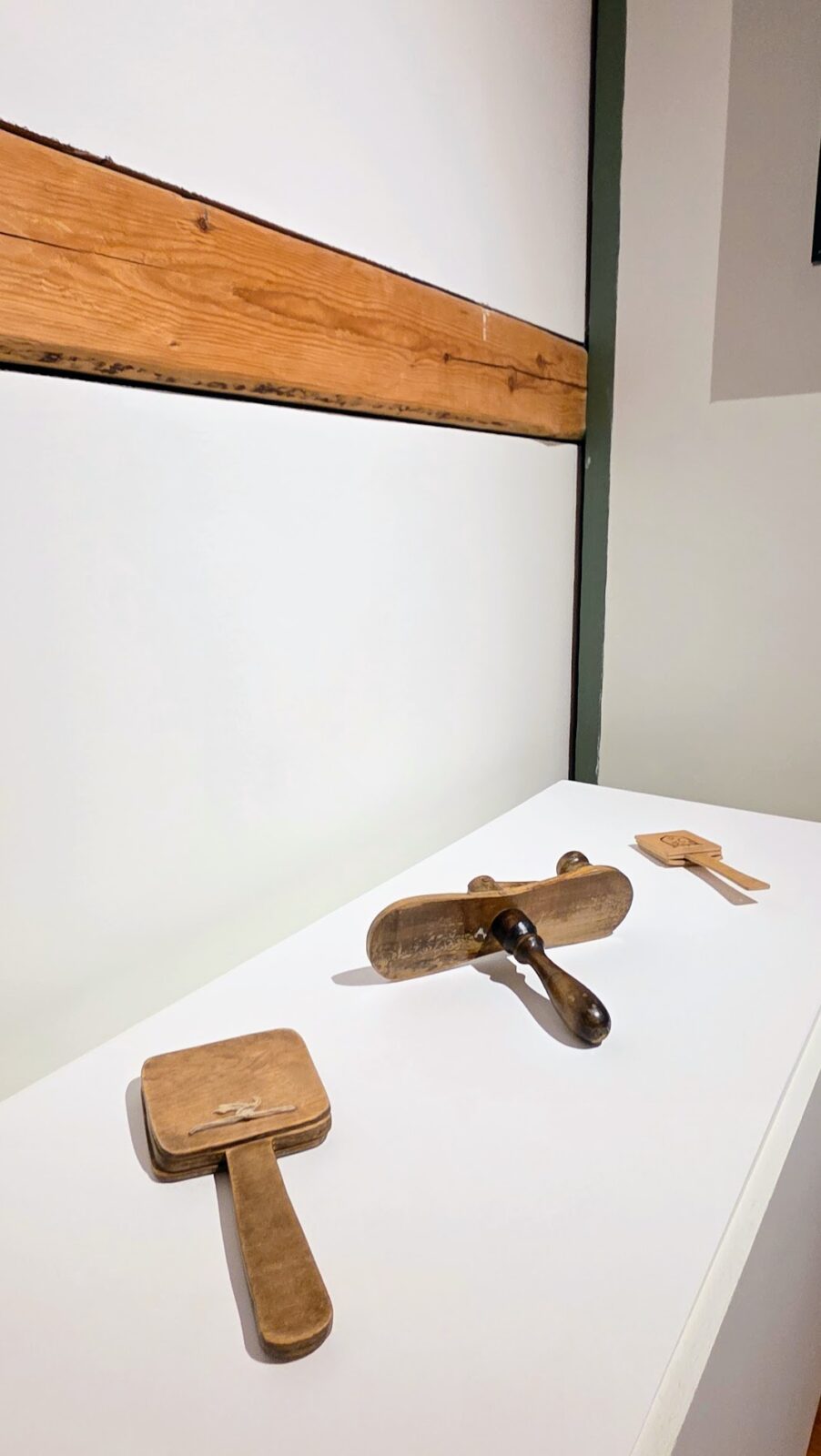
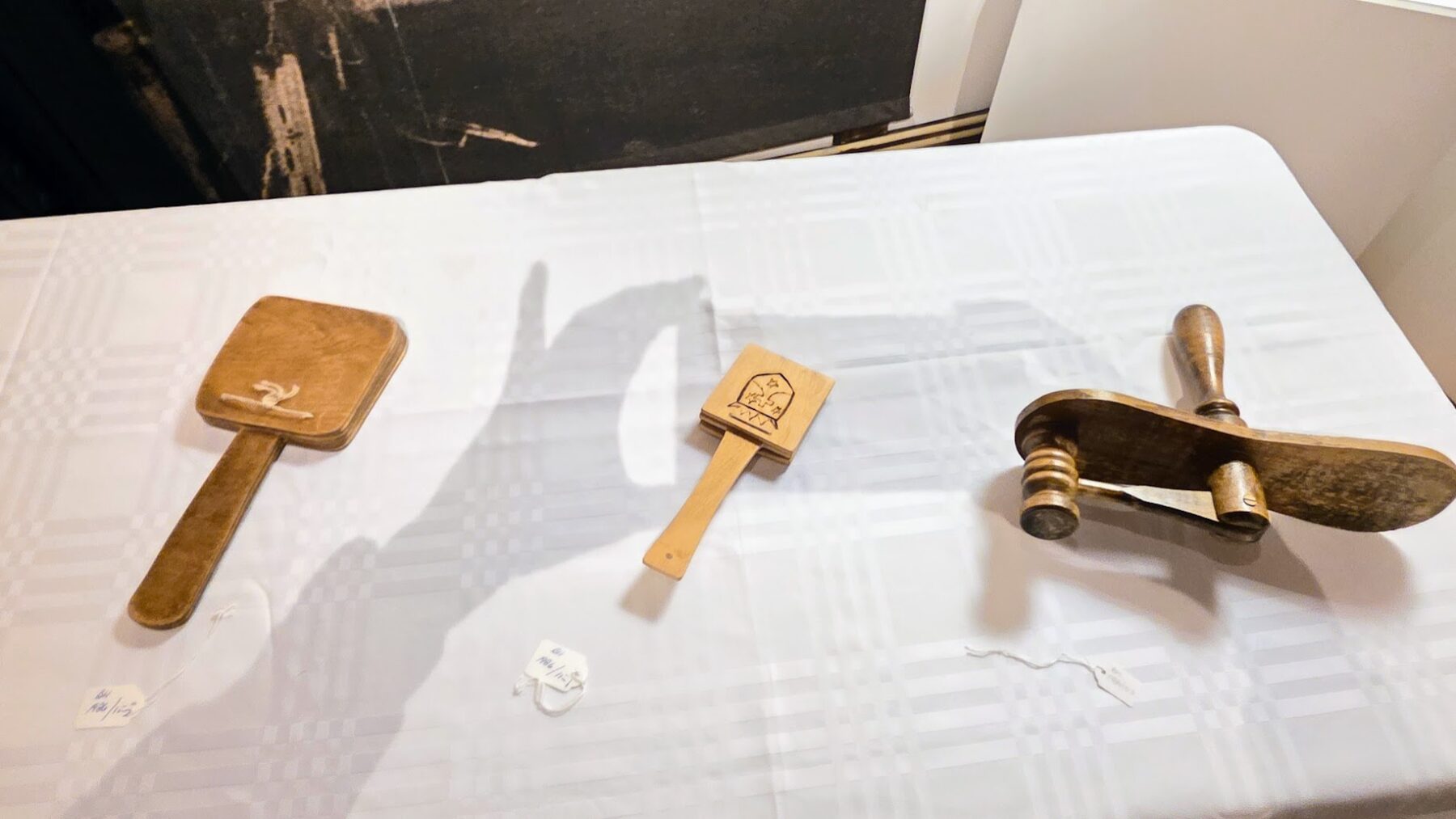
Our Folk Museum has three dymblas. Dymblavika is now in full swing, and it's fun to show the children what it's named after. The Folk Museum is open on Saturday, 4th April.
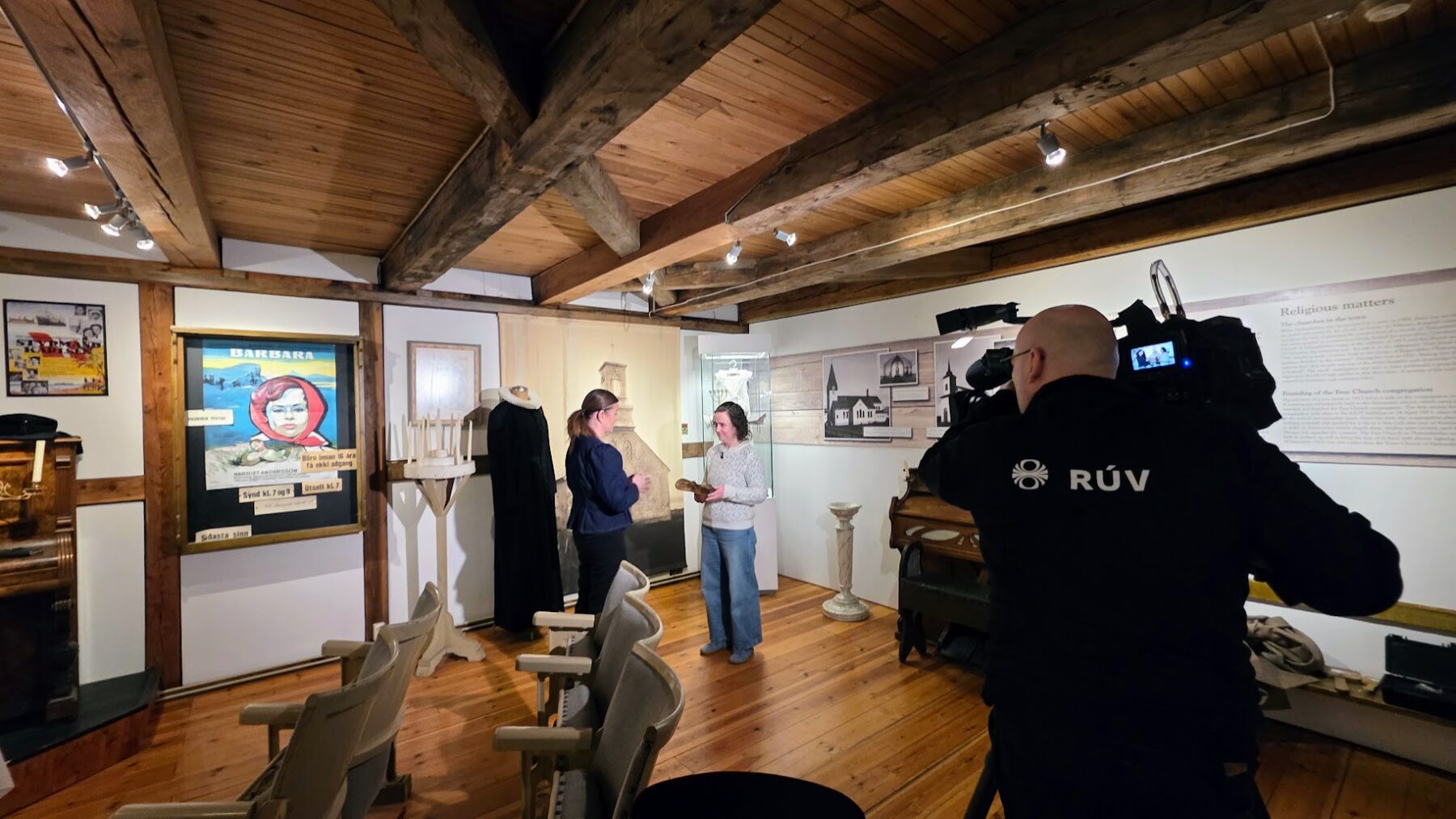
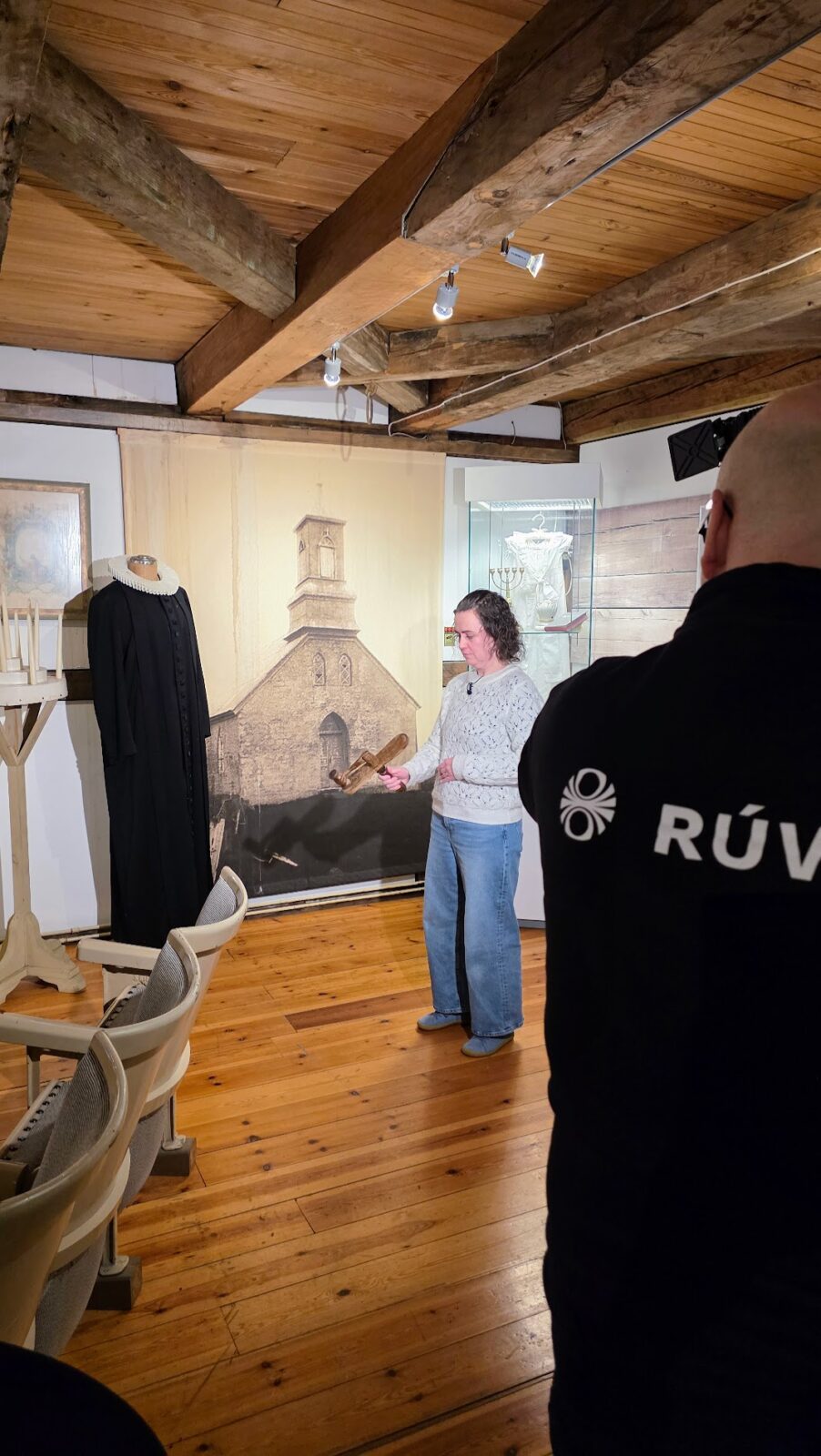
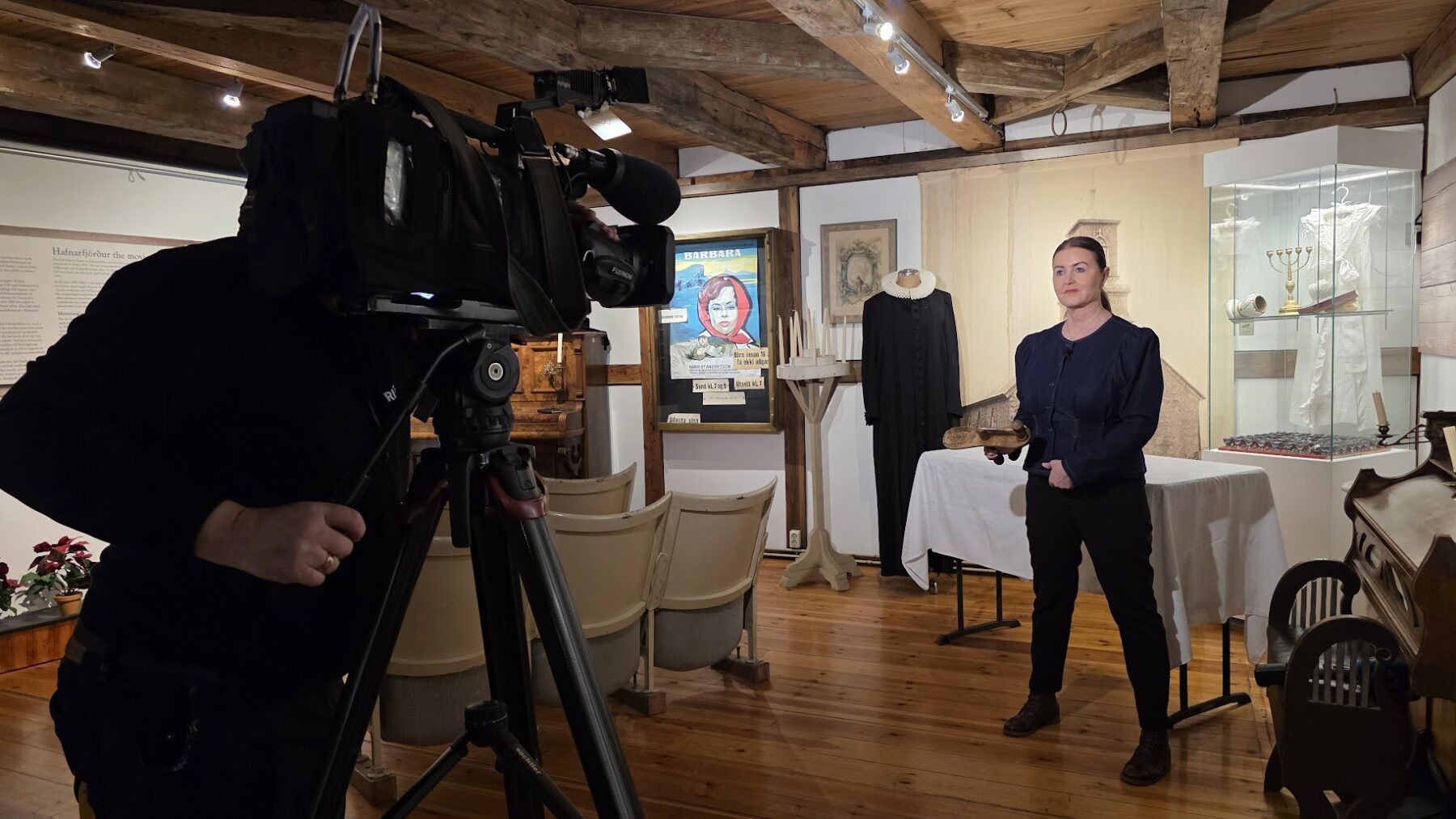
Holy Week is now in full swing. Our Folk Museum has three cymbals! That's unlike most museums in the country, if any. But what is a dymbil? RÚV news visited the Folk Museum yesterday and had a look at the dymbils that have been in the museum's possession for 40 years.
Heiðrún Eva Konráðsdóttir, a specialist at the museum, says Kristín Magnúsdóttir donated the three dymblana to the museum in 1986. The most magnificent one, which received attention in the television news report, like the other two, came from the Catholic church in Hafnarfjörður, which was consecrated in 1926.
„The dymbel has a dark wood colour and a sliding handle. The shaft is about 16 cm long and the crossbar is about 30 cm,“ describes Heiðrún. When the dymbill is swung in a certain way, the hammer delivers a very quick and loud blow when it strikes the crossbar. The other two in the museum's collection are smaller, and the smallest is particularly reminiscent of a school project, being lightweight and bearing a coat of arms. The dymblars symbolise the seasons of the liturgical year, the Passion of Christ. Their sound is hollow, in contrast to the bright ring of church bells.
„The three dymbels will be on display in the museum over the Easter period. It is open on Saturday from 11 am to 5 pm,“ she says.
It can be read on the ScienceNet website. It states that the word 'dymbildagar' has been found in written language since around 1300, but could of course be much older.
„It is remarkable that it does not appear in Icelandic lawbooks, neither in the chapter on Christian lawGrey goose, which was enacted by the Althingi around 1130, nor in the New Christian Law (1275), and neither inBook of John (1281). Could this suggest that it was originally a colloquial word which did not enter official documents until relatively late.“ The word dymbilvika does not appear in Icelandic until the Church Ordinance of Christian III from 1537, which Bishop Gissur Einarsson translated in 1541.
Heiðrún says the museum regularly receives donations, like this dymble forty years ago. This year, there have already been ten. The museum is in a difficult position when accepting donations because they are only accepted if they are connected to Hafnarfjörður and are not already in the collection.
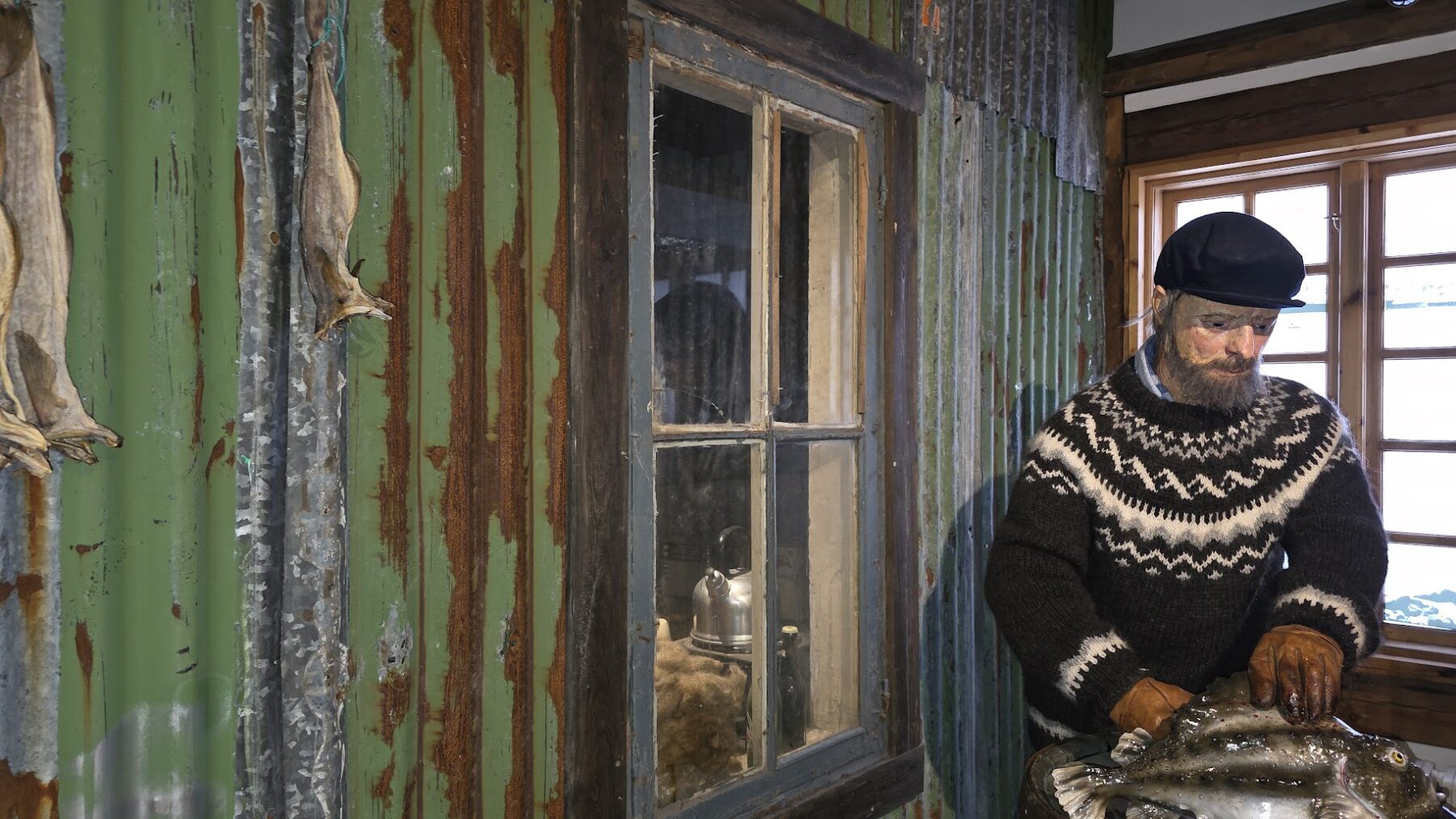
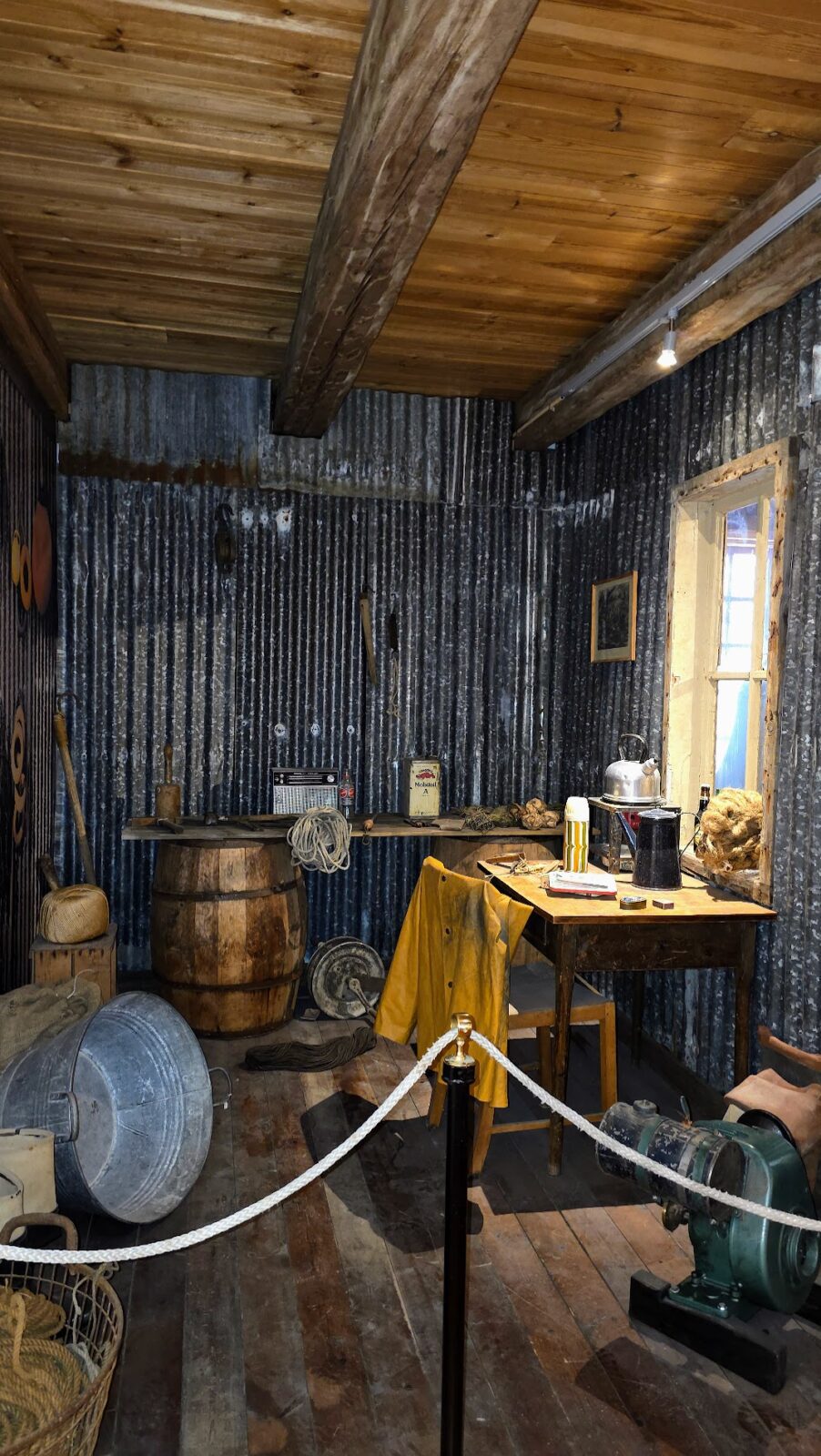
A visit to the Packhouse of the Folk Museum is an adventure. There you can peek into many eras. The museum is beautiful, crammed full of memories of the past. Come for a visit.