
Rúna laid to rest – flag at half-mast in Hafnarfjörður
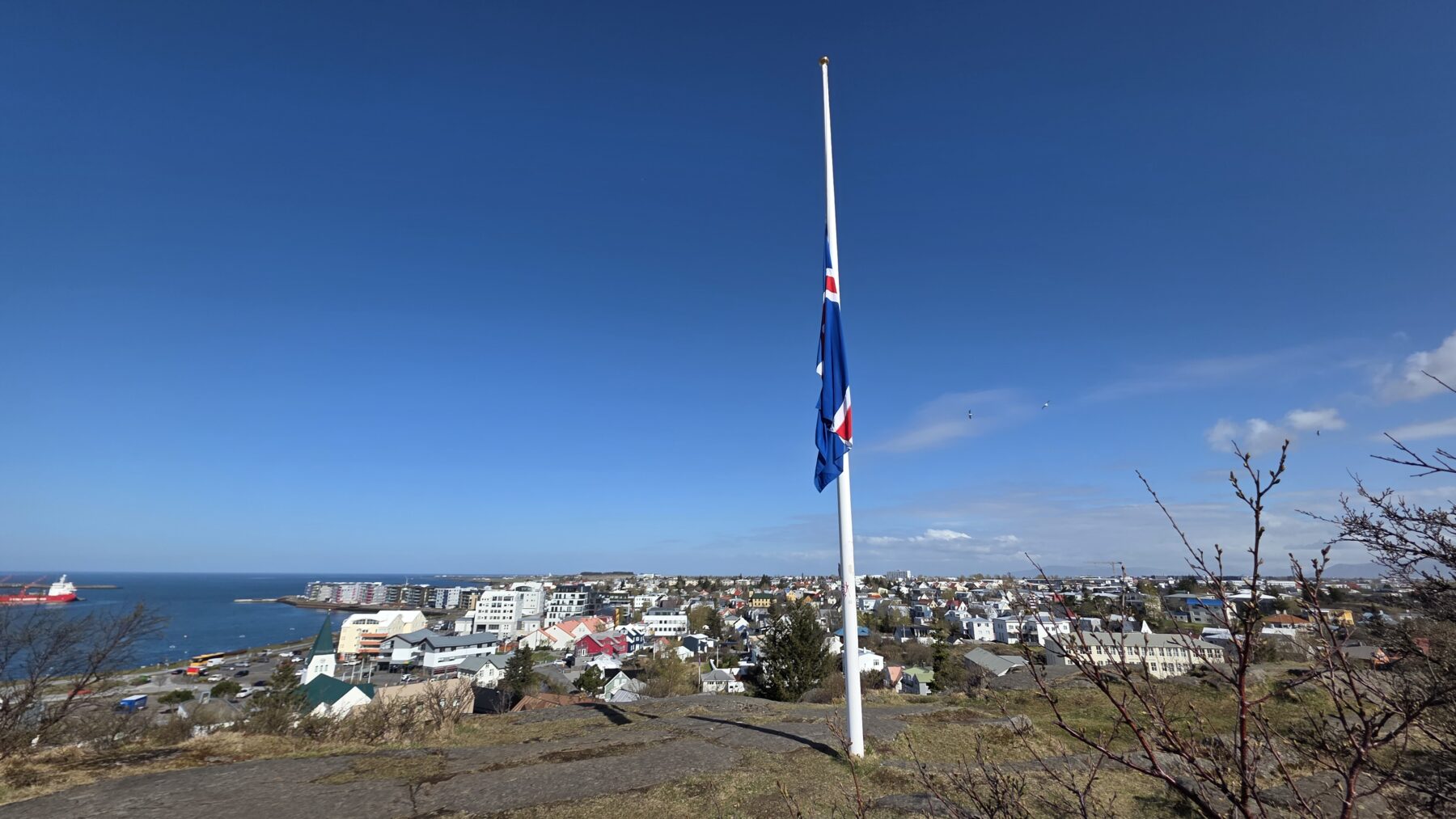
Sigrún Guðjónsdóttir, our first Civic Artist, Rúna, will be laid to rest today, Monday 18th May, from Hafnarfjarðarkirkja. Flags are flying at half-mast throughout the town.
Left a deep mark with her art
Sigrún Guðjónsdóttir, the artist Rúna, will be laid to rest today, Monday 18th May, from Hafnarfjarðarkirkja. Rúna was the first Artist in Residence of Hafnarfjörður, appointed in 2005. The funeral is being streamed. Flags are flying at half-mast across the town as she is laid to rest.
„Her passing brings to an end a long and unique career that left a profound mark on the history of Icelandic art and design,“ writes Aldís Arnardóttir, director of Hafnarborg, in a tribute in today's Morgunblaðið.
As stated in the introduction to Rúnu in Morgunblaðið, she was born in Reykjavík on 15 November 1926 but grew up at 5 Tjarnarbraut in Hafnarfjörður. She died at the care home Hrafnista in Hafnarfjörður on 4 May 2026.
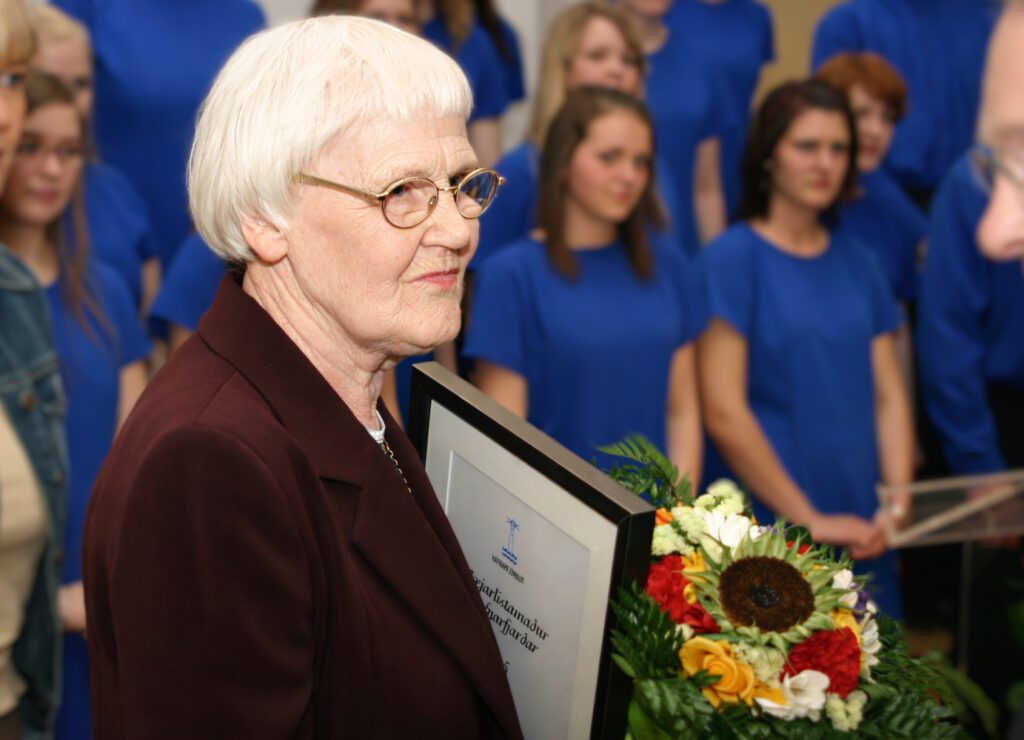
Rúna, Artist in Residence 2005. Photo: Guðni Gíslason
Rúna was the daughter of Guðjón Guðjónsson, headmaster of Hafnarfjörður Primary School, and the writer Ragnheiður Jónsdóttir. She studied at the Iceland School of Arts and Crafts from 1943 to 1946, and also qualified as a drawing teacher from the Iceland Teachers' College.
Rúna's husband was Gestur Þorgrímsson, and they were married in 1946. After living in Denmark, they moved to Hafnarfjörður and for the next few years lived in her parents' house by the stream. In 1957, they, along with Rúna's parents, built a large family home at Laugarásvegur 7 in Reykjavík, where they had their studio for more than two decades. They moved back to Hafnarfjörður in 1981, to Austurgata 17, and had their studio in the premises of the old Málms.
„Rúna's life and art were inextricably linked. She worked in a diverse range of fields, from free artistic creation to design, and was a pioneer in Icelandic ceramics. During her career, she also had a successful collaboration with prestigious international design firms, as well as working on book illustration, writing, advertising and murals, among other things in collaboration with her husband, Gest Þorgrímsson,“ says Aldís.
Rúna lived there alone until she was admitted to a nursing home last August. Rúna and Gestur both taught art for decades, she among other places at the Reykjavík Girls' School. In the 1960s, she illustrated a number of books and wrote one children's book, The Red Fish.
She arguably broke through in 1974 when she won a competition for the national festival plates, which were widely distributed. Rúna became a beloved artist and is particularly known for her painted porcelain tiles, and in her later years she also worked on considerably larger pieces on Japanese paper. She also worked on several outdoor projects with Gestur, and they also worked on ceramics after they set up a studio and facilities for it on Laugarásvegur.
Rúna was very active in the social affairs of artists and was elected the first chairperson of the Association of Icelandic Artists. Rúna and Gestur had four children: the eldest is Þorgrímur, followed by Ragnheiður, then Guðjón Ingi, and Ingibjörg Þóra is the youngest. She has 13 grandchildren, 17 great-grandchildren and one great-great-grandchild.
„On behalf of Hafnarborg, we send our deepest condolences to Rúna's family and friends, and at the same time thank Rúna for her invaluable contribution to art and culture. Her memory lives on in the works that continue to speak to us with their unique voice,“ says the director of Hafnarborg in his concluding remarks. The City of Hafnarfjörður wholeheartedly echoes this sentiment and offers its condolences to the family.
Her funeral is at 1 p.m. The stream can be accessed here: www.mbl.is/utfarir-i-dag