
Emergency management measures during Covid-19
The Civil Protection Committee of the Capital Region (AHS) met before the weekend and reviewed the measures that the municipalities' emergency management authorities implemented during the COVID-19 period this winter. Mayor Dagur B. Eggertsson, who is also the chairman of the Capital Region Civil Protection Committee, opened the meeting and briefly outlined the sequence of events. Representatives of the municipalities in the region also spoke at the meeting.
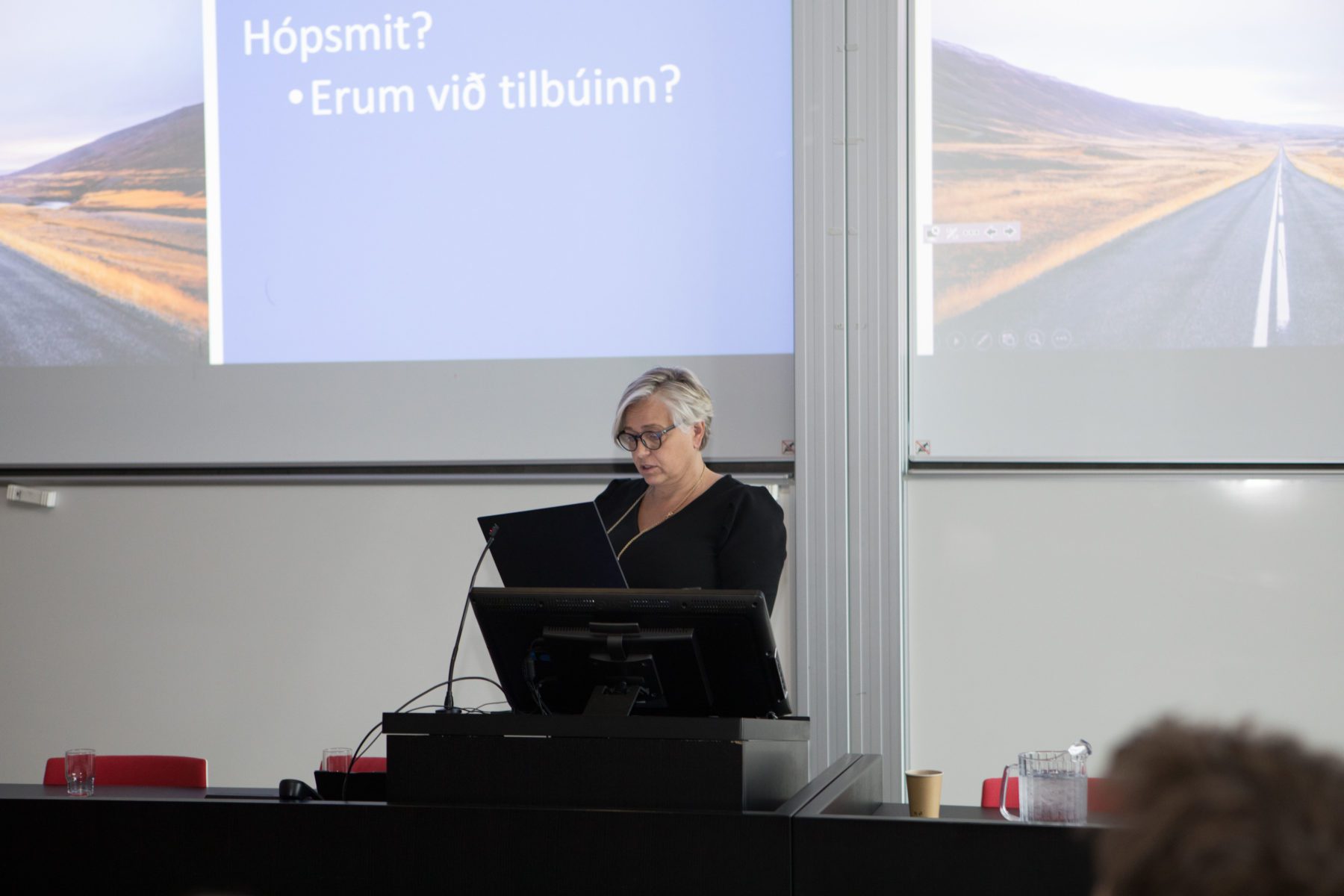
The Civil Protection Committee of the Capital Region (AHS) met before the weekend and reviewed the measures that the municipalities' emergency management authorities implemented during the COVID-19 period this winter. Mayor Dagur B. Eggertsson, who is also the chairman of the Capital Region Civil Protection Committee, opened the meeting and briefly outlined the sequence of events. Elected representatives of the municipalities, along with their emergency management teams, were invited to attend.
Dagur also took the opportunity to praise the staff of the municipalities for their excellent work, as their operations have been under a great deal of pressure and they have had to reorganise their activities in a short space of time, focusing on those tasks that are socially important and on ensuring an uninterrupted service. Dagur also praised the trio for their contribution and spoke in particular about how positive it was that they decided to keep the public informed and the entire process transparent.
Emergency authorities activated response plans in early February
On 31 January, the Civil Contingencies Committee for the Capital Region met with the Director of Public Health to discuss the virus then known as Wuhan. The message following that meeting was to encourage local authorities to convene their emergency committees, activate response plans and look to the influenza pandemic plan. It was also recommended that all municipal operations be prepared for a transition from the uncertainty phase to the danger phase.
A state of alert was declared on 28 February when the first case was detected in the country.
A state of alert was declared on 28 February when the first case was detected in the country, and was raised to a state of emergency on 6 March, with the country remaining at that level for 80 days. During this time, the AHS met three times and the AHS Civil Protection Council met nine times. The local authorities and their emergency committees made very good use of the time from the January meeting until the first infection was detected to prepare as well as possible, and they worked closely together to resolve the complex issues that arose. Several response plans were followed, both national and specific plans. Cooperation was key during this time, and it was a major advantage to activate the emergency management bodies so early in the pandemic.
Important to remain vigilant
Thorólfur Guðnason, the Chief Medical Officer, went over the challenges we faced as a nation and the issues that remain unresolved today, such as the opening of the border. There is no experience of the kind of lifting of restrictions that needs to take place at borders in the world today. From an infectious disease perspective, it was incredible how quickly the pandemic got started here and how quickly it came to a halt. He reiterated the importance of securing the success we had achieved and that we must remain vigilant about new infections entering the country. Many things are in flux around the world and standardisation, for example on certificates, is lacking, and therefore Iceland will not accept certificates from other countries. He reiterated the importance of us needing to open our borders, but to proceed with caution.
The largest civil defence project in Iceland to date
Superintendent Víðir Reynisson said the operation was the largest civil contingency operation in Iceland, involving the entire country at once, as well as the whole world. We have been faced with a public health issue of unprecedented scale, and the societal impact has been enormous. He was grateful for the contribution of local council staff during these times. He also thanked all the professionals who joined forces to tackle the tasks that arose; he noted that in a crisis, it is important to have a decentralised structure based on expertise.
How fortunate that the local emergency management authorities were convened so early.
Jón Viðar Matthíasson, Chief Fire Officer and Executive Director of the Capital Region Civil Protection Committee, stressed that it was very fortunate how early the emergency committees were convened. Therefore, as soon as that work began, it was the role of the AHS staff to assist and support the emergency management teams, who led the effort throughout in their respective municipalities, and their cooperation and coordination was never compromised. He echoed the point that had been made that it was a great stroke of luck how well all the municipalities worked together, and it was admirable to see how capable their staff, as well as other municipal employees, were in difficult circumstances under the firm leadership of the municipal managers, who are the mayors and townrathors in the area.
Representatives of the local authorities in the area also spoke at the meeting, and the common thread in their remarks was satisfaction with the information sharing during this period. There was a consensus on the importance of emergency management and that the speed with which it was activated was a fundamental factor.
Summary from the City of Hafnarfjörður
It went well.
Hafnarfjörður during the lockdown. The emergency management was immediately activated and it held a meeting.
almost every day. The emergency government worked closely together with the aim of keeping
to provide an uninterrupted service as far as possible, as well as to look after the well-being of staff. Proceed
was guided by instructions from Civil Protection in all the decisions that were made.
Then the instructions on disinfection, distance and use were followed.
protective equipment. Emphasis was placed on providing good information to staff.
and residents of the municipality by all available means, as well as by telephone calls
and visits to service users.
 Sigríður Kristinsdóttir, the city lawyer and director of the administrative services department, who also sits on the emergency management team of Hafnarfjörður, delivered a brief summary on behalf of the city.
Little transmission among staff and students
First big
The decision that was made was to postpone the town's annual ball which was due to be held
evening of 7 March. That decision was made on the morning of that day. All play and
The municipality's primary schools were operational throughout. No school was
Closed. An outbreak occurred in one school. The school had already been divided into
a compartment and the activity continued uninterrupted in the school's other compartments. There was little
Infections within the schools, but some students and a few staff members have been quarantined.
Service adapted to changed circumstances
It went well.
the family and child affairs department. There are 11 residential units and a short-term stay which
is on a 24-hour watch. Services were adapted to the changed circumstances and all response plans
activated. The canteen for senior citizens was closed and home delivery was offered.
mat. Special care was taken in child protection work. Foreigners were also looked after.
residents and applicants for international protection.
Compartmentalisation and remote working shifts on all
operational sites
Hafnarfjörður Harbour
was open all the time but compartmentalised. Operations went well and were addressed.
against ships, both landing vessels and transport ships. Operations at the Town Hall and at
The cubicles at Norðurhellu 2 were dismantled. Part of the accounts and payroll department moved into one
of the houses of the Hafnarfjörður Folk Museum. Staff in all departments take it in turns to
working from home and the workplace, and all meetings were held virtually. Town Hall canteen
was open all the time but introduced rationing and portioning of food.
Customer service and service centre open 24/7.
Customer service
open all the time but was divided and operated in two locations. Opening hours were
Unchanged from 8 am to 4 pm every weekday. The service centre was also open.
all the time, but part of the staff was transferred to another site within the premises
which the workhouse has used. In accordance with the instructions, all collections were closed which
and the town's swimming pools for a while. Town council meetings, board and committee meetings
were in a remote meeting.
Thanks to everyone for the great collaboration on the great
uncertain times
That's fine by me.
I would like to take this opportunity to thank the council's staff for their professional
a contribution and coordinated cooperation characterised by humility and initiative, residents
for cooperation and understanding in all areas and for the City Council and committees of Hafnarfjörður
for good cooperation in coordinating new strings and workflow. Cooperation
cooperation between the government and local authorities was close and effective during this uncertain time and
Working within SSH is good and effective. Finally, the trio receive the much-talked-about and Civil Protection
Great gratitude for standing at the helm, coordinating actions and messages, and always being
ready and willing to come to assist and provide information at short notice
disclaimer.
We are all civil defence!