
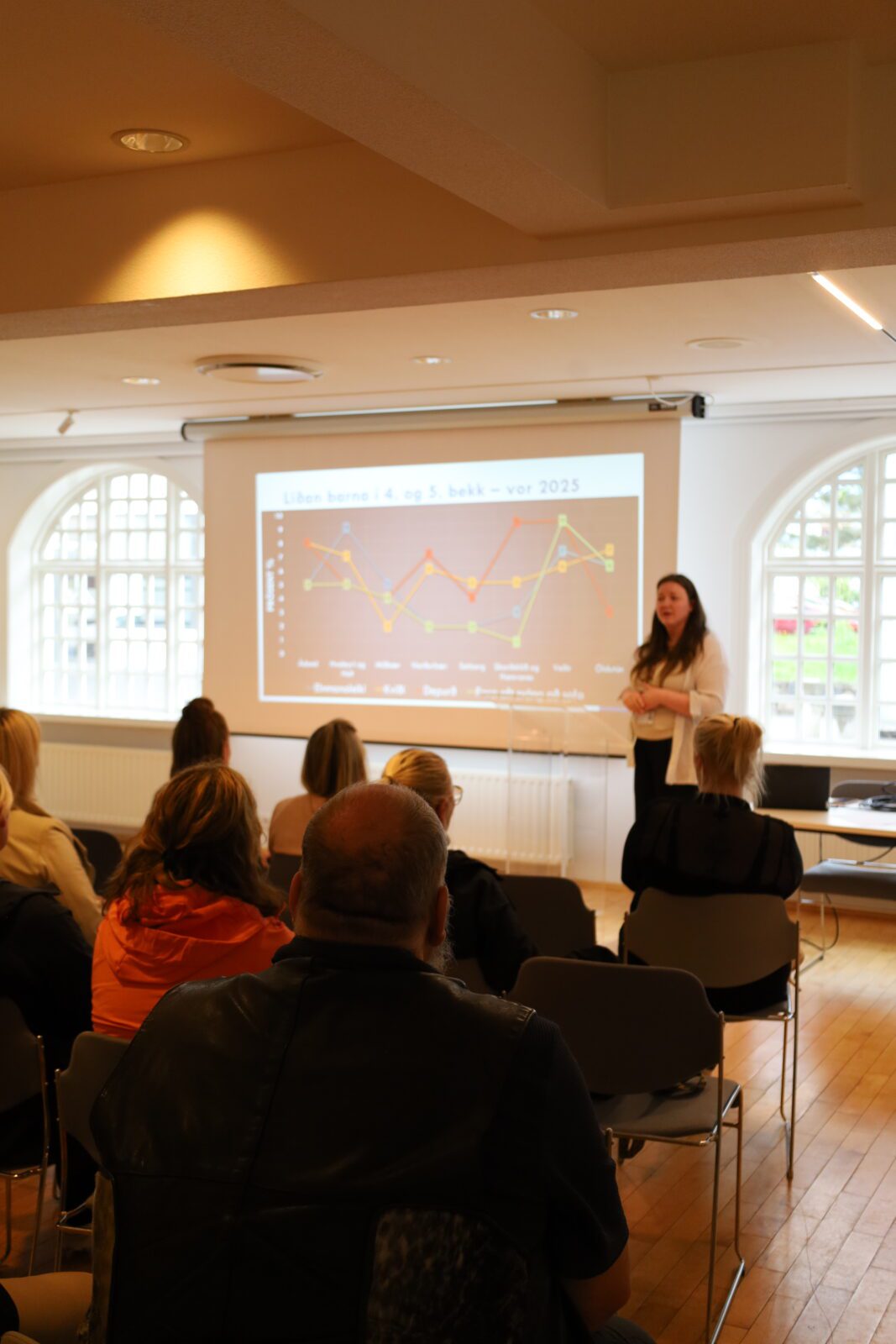
The situation of children in Hafnarfjörður was reviewed quickly and precisely at a briefing for parents held at Hafnarborg earlier this week. Five specialists from the City of Hafnarfjörður each spoke about their respective areas of responsibility concerning our children.
„Those who get physical exercise are also more likely to get help with their homework,“ said Jóna Rán Pétursdóttir, a prevention officer for the City of Hafnarfjörður, as she opened a briefing for parents on the situation of children in Hafnarfjörður. She examined the findings of the Icelandic Youth Survey. Short and concise presentations gave those who attended an overview of the situation in one hour.
Five experts spoke. In addition to Jóna, they were Hildur Ýr Jónsdóttir, project manager for multicultural affairs, and Tinna Rós Steinsdóttir, sports officer, Kristín Blöndal Ragnarsdóttir, Human Rights Education Officer, and Þórunn Þórarinsdóttir, Coordinator of the Hafnarfjörður Youth Council and Project Manager for the Child-Friendly Municipality.
The meeting was held at Hafnarborg on Tuesday. Jóna went over how the atmosphere in the classroom and the school's atmosphere had an effect on the groups.
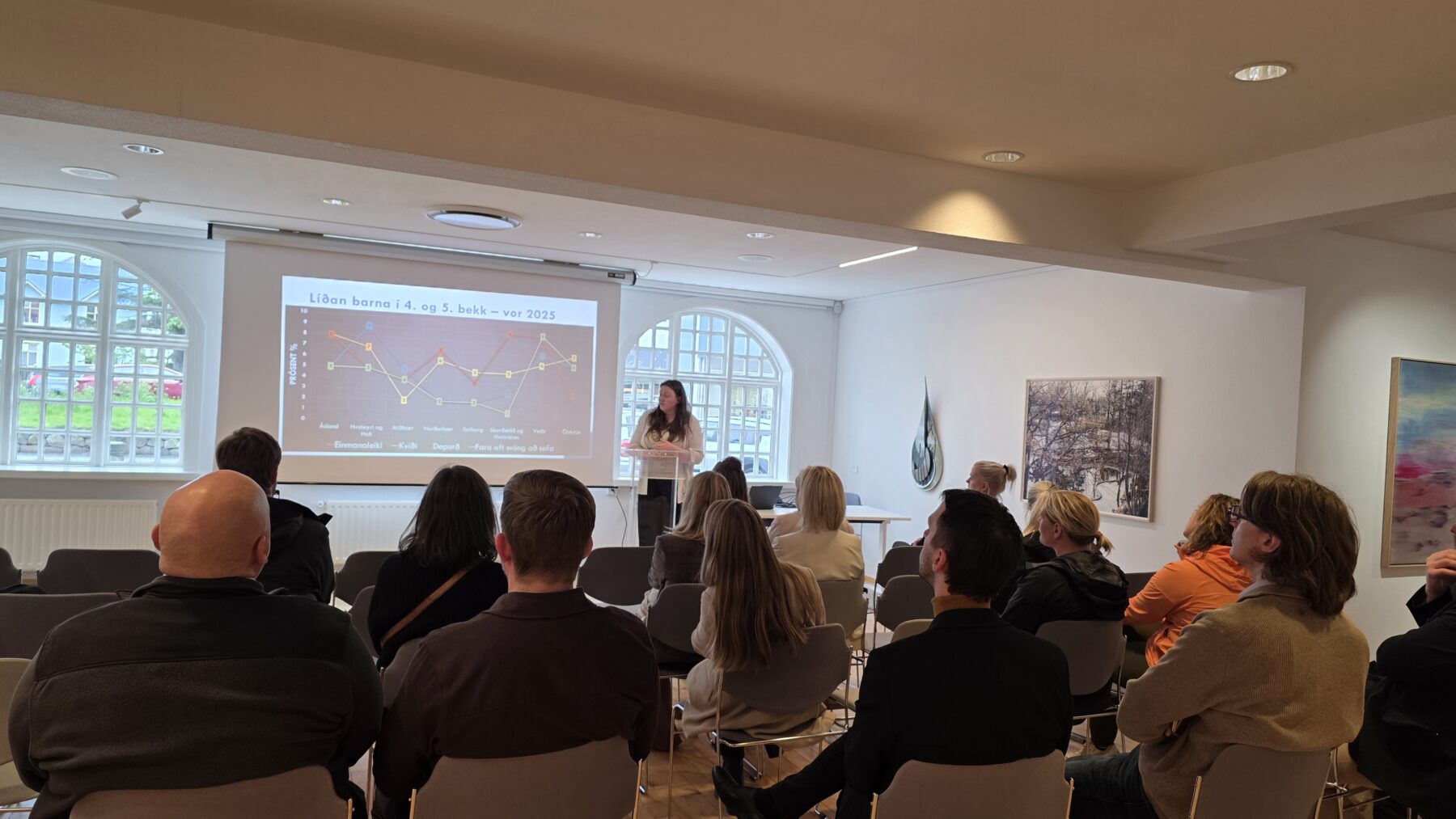
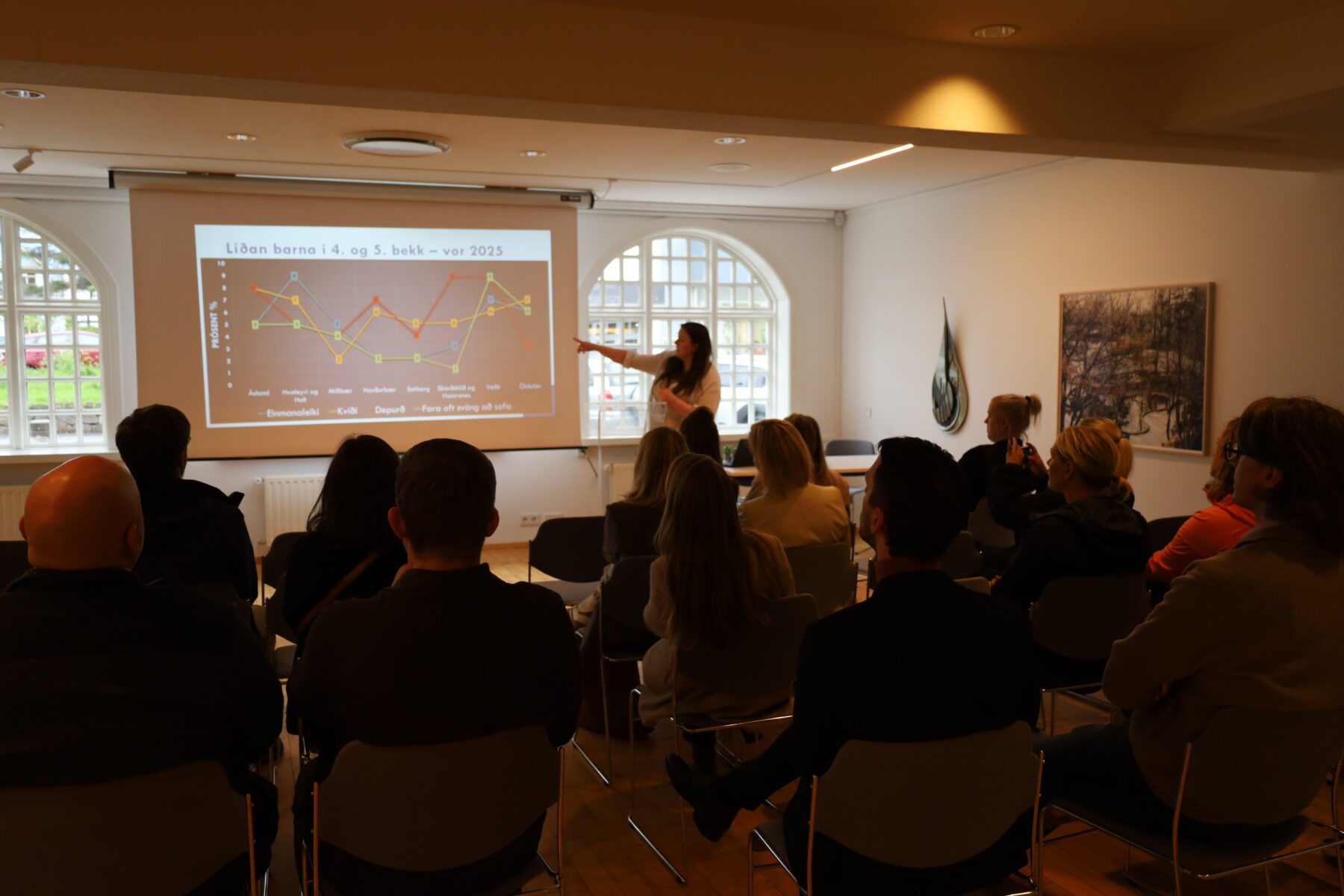
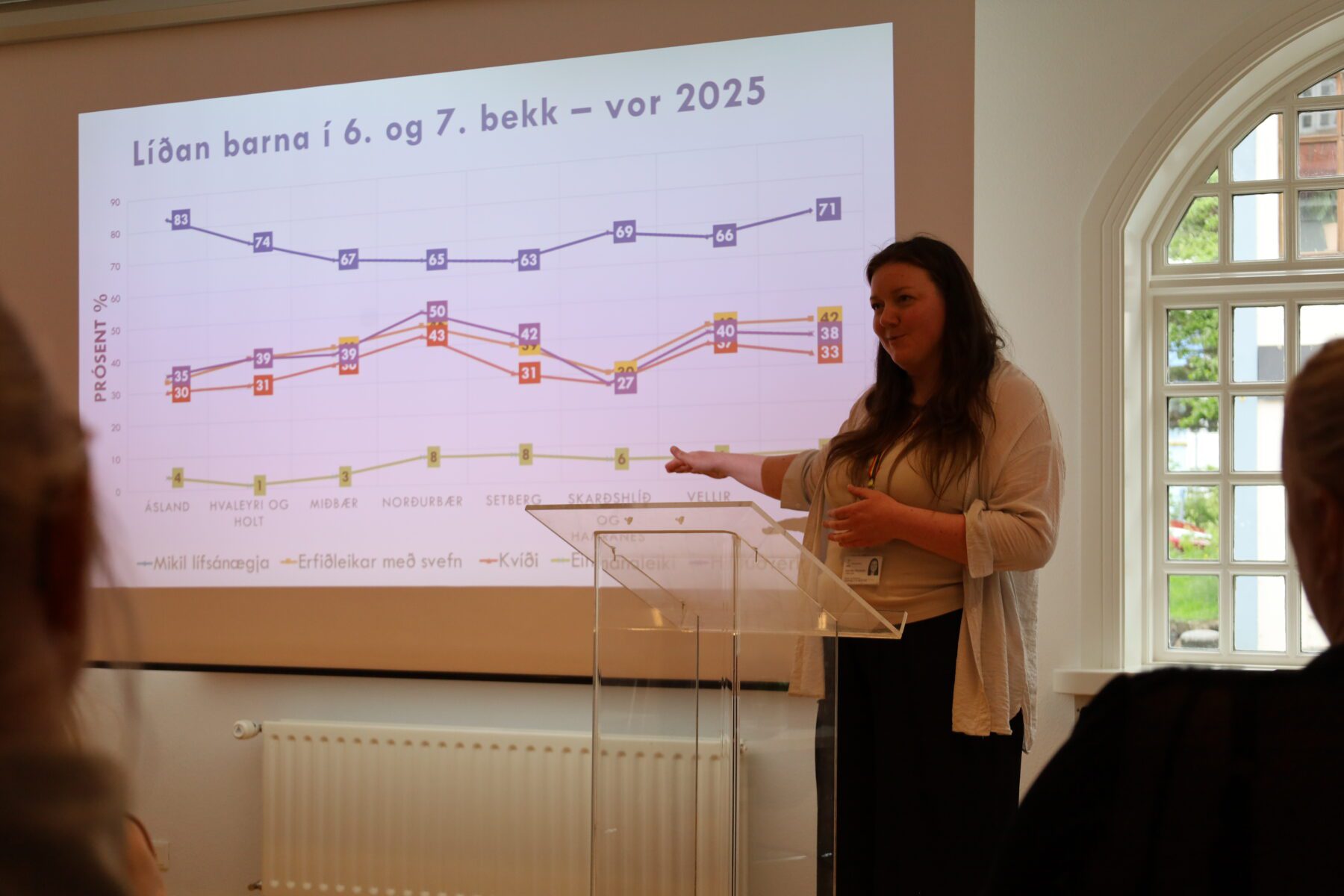
„Emotional support is strong and most households do well in showing support when something goes wrong,“ said Jóna. The Icelandic Youth Survey shows that children's participation in sport is highest in 6th and 7th grade.
„Then there's a certain peak, and then a certain trough.“ Experts from the City of Hafnarfjörður have had extensive discussions with schools about how they assess their own group.
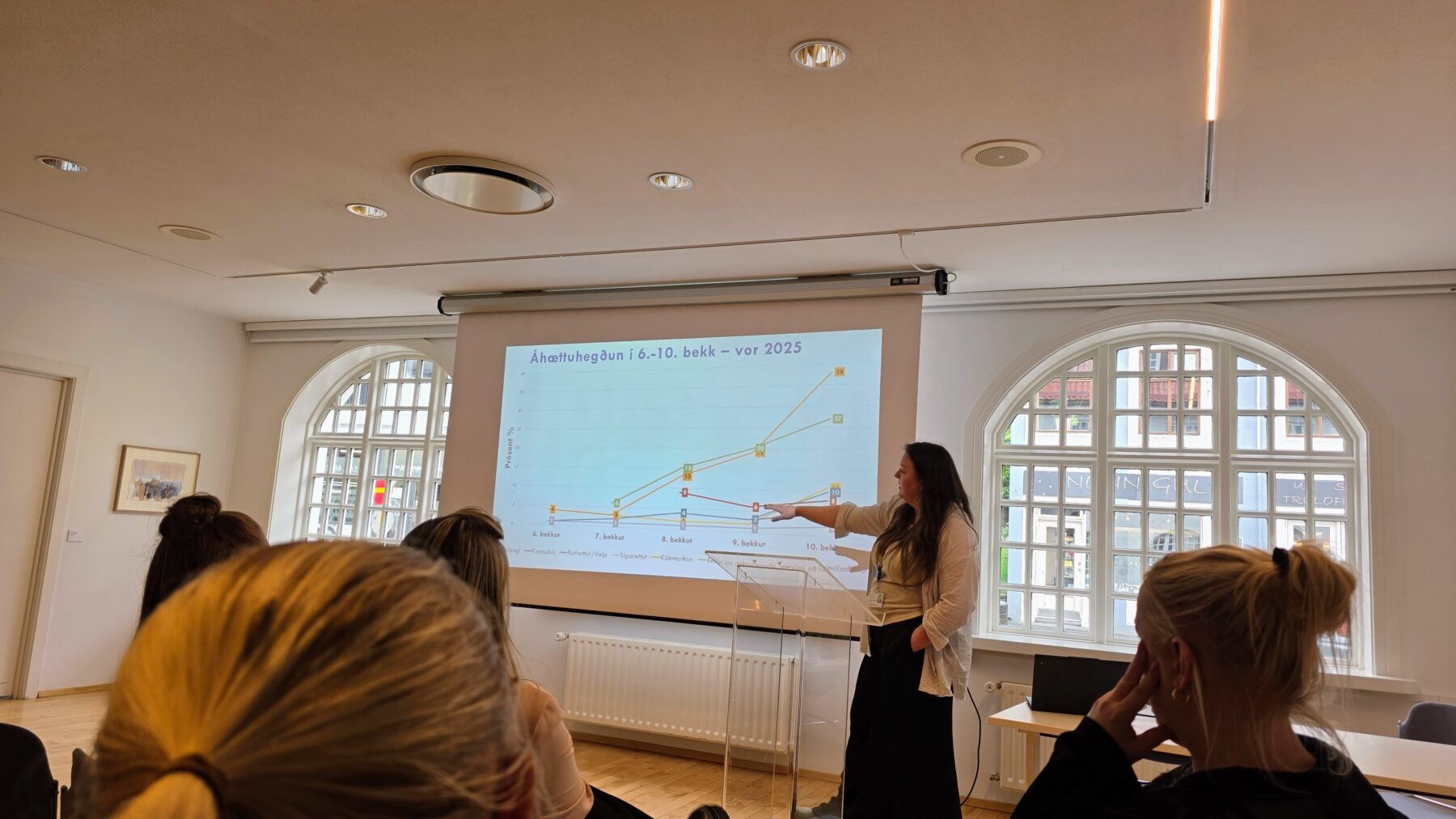
Much was revealed in Jónu's words as she went over how violence is generally at its highest in the 6th and 7th grades. The children's life satisfaction decreases with age. Difficulties with sleep also increase at this time, and children experience anxiety rather than depression. „The world changes when you have a teenager,“ said Jóna.
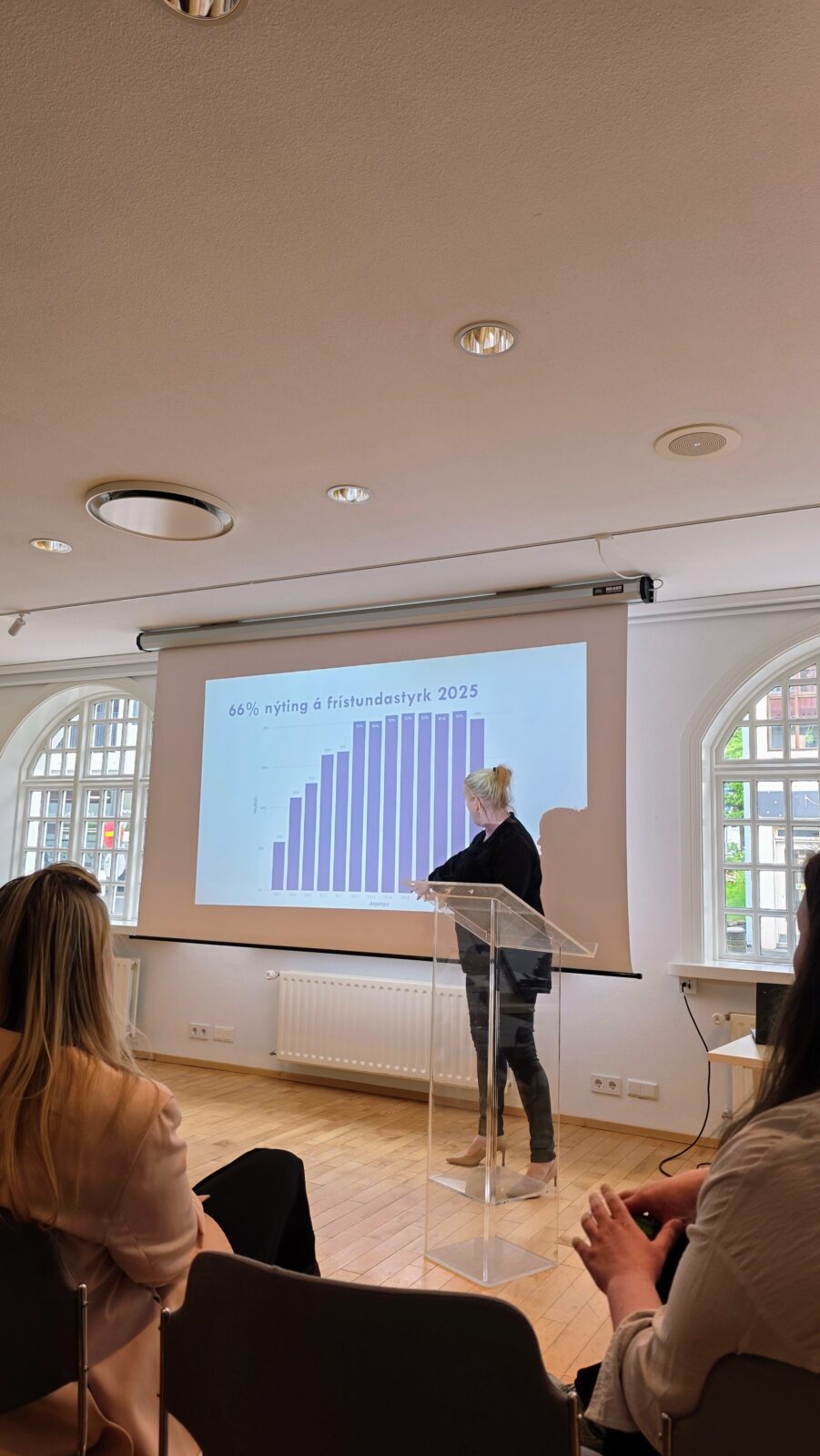
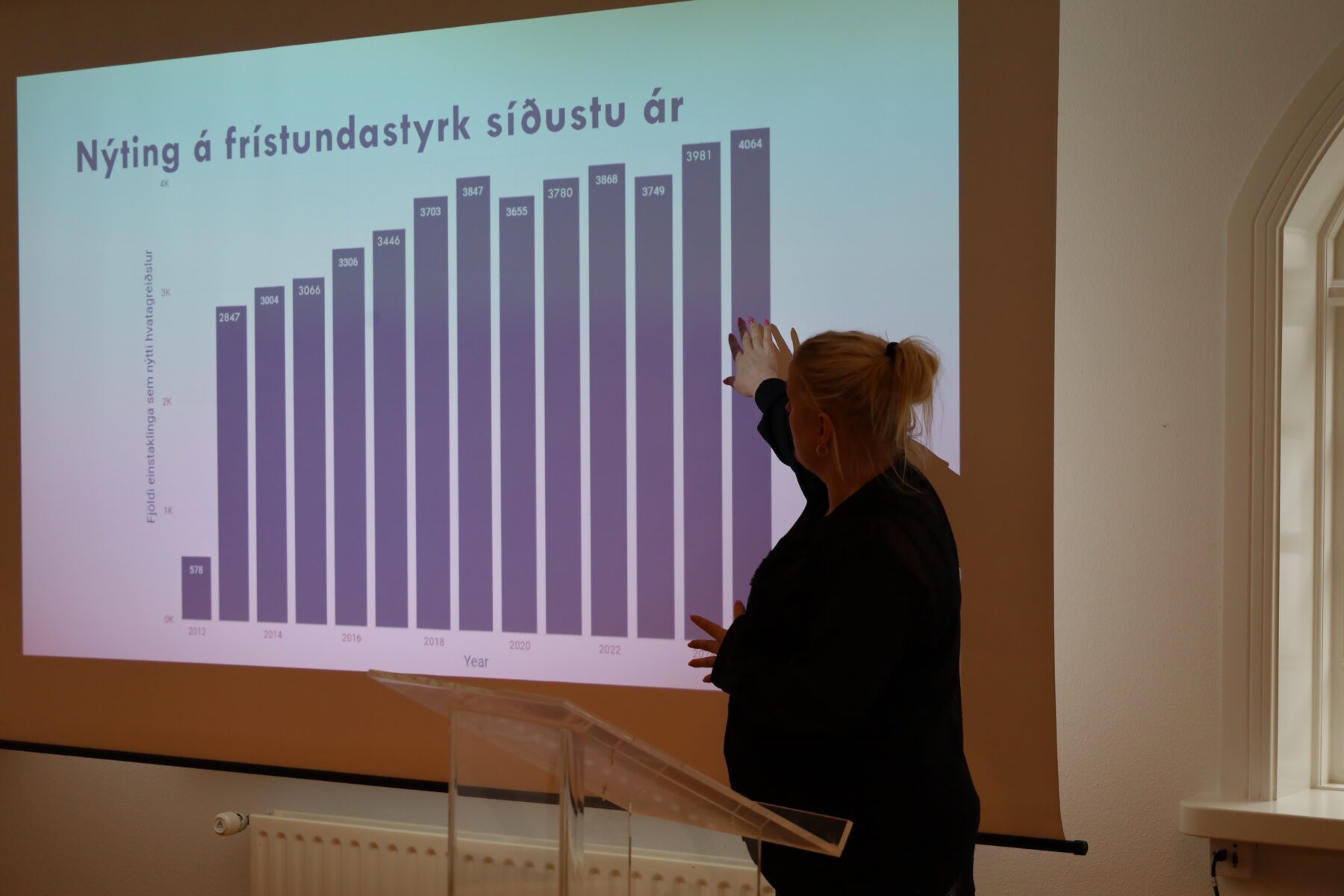
Tinna Rós Steinsdóttir, the sports officer, then went over the sports grant and said that 66% are using the grant in Hafnarfjörður. „It is interesting to see that 78-82% children of primary school age are doing so,“ she said, pointing out that five-year-olds have also been receiving a leisure allowance since September.
„We believe that more five-year-olds will benefit from the grant in the future. It is also interesting that only 23% of the children who turn 18 this year receive leisure support. That figure can be increased,“ she said.
Tinna said that 4064 had used the grant in 2025. „It will be exciting to see how 2026 turns out,“ she said, adding that it would be in everyone's interest for as many people as possible to use the grant. It would be pleasing to see an equal balance between the sexes. Just over 48% for girls and just over 51% for boys.
Tinna pointed out that the leisure allowance will increase to 75,000 krónur next year.
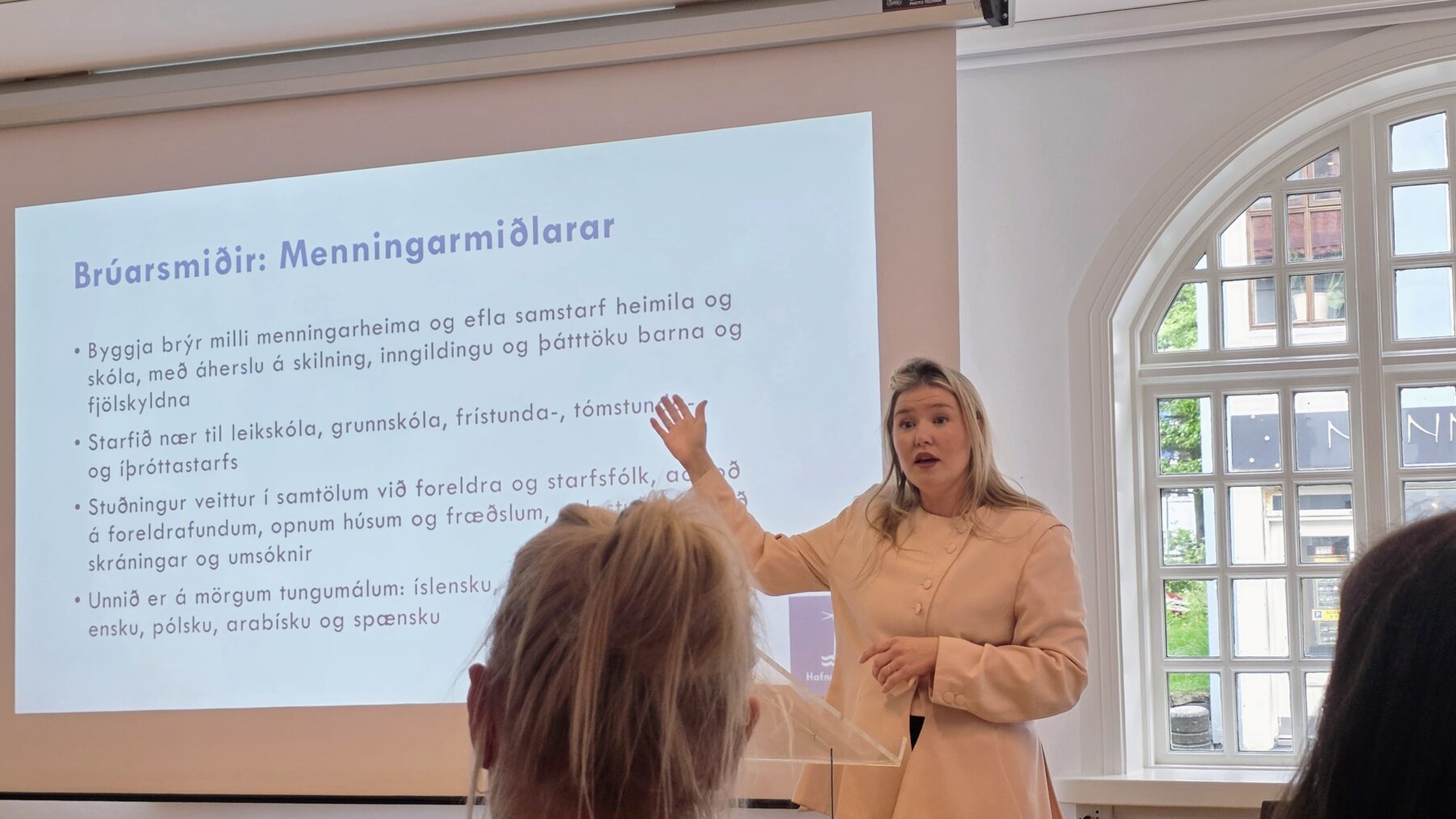
Hildur Ýr Jónsdóttir, project manager for multicultural affairs, spoke about Hafnarfjörður as a diverse community. „18.91% are foreign nationals, 19% of primary school pupils and 22% of nursery school children,“ she said.
„Schools are a key link for families,“ she said, pointing out that multilingual children need targeted support in their own mother tongue. She said that residents with foreign citizenship experienced information confusion, costs, and uncertainty about their right to receive grants. This had discouraged them from participating in school and after-school activities.
„A multicultural team was established recently. The aim is to make the service clearer, more seamless and more accessible,“ she said, adding that the town's bridge-builders, who are mediators between cultures, are key people there.
„Their role is to build bridges between families and systems,“ she said. „It's not just about the language, but about strengthening support, trust and, in turn, participation.“
Hildur spoke about various projects of the municipality. Among them Mummy, ...which is an open nursery for the youngest children and their parents, where they can come together; the children meet their peers and the parents get to know each other. The service is particularly useful for children on the run, as they do not necessarily have the right to a place in a conventional nursery.
Hildur also told of Lighten, a joint project by the City of Hafnarfjörður, Barnaheill and the City Theatre, which took place at Víðistaðaskóli and Hvaleyrarskóli in their reception classes.
„This was for the children who aren't entitled to after-school clubs, hobbies or anything else. That's where we stepped in, and they learnt expression, boosted their self-confidence and visited the City Theatre. It was amazing to see them flourish and take up a huge amount of space. They participated on their own terms.“
She told the story Hi! Let's meet up and have a chat.. „This is dedicated to 16-25 year-olds at Hreiðrið, the youth centre of Hafnarfjörður,“ she said, adding that the town also does its part to encourage children of foreign origin to take part in sports activities.
„We have the opportunity and the tools to do better and lots of projects that we are developing. Children's participation and belonging don't happen in one place. We look to schools, leisure activities, homes and the community as a whole. It is important that all children get the opportunity to be part of the community and to belong.“
Kristín Blöndal Ragnarsdóttir, a human rights teaching officer, reviewed the state of equality and sex education in the town of Hafnarfjörður, a role she has held here for ten years.
„And I'm worried,“ said Kristín. She is not alone in this; the young people themselves are worried too. This was clear at a youth conference held in the spring.
„There is far too much violence in relationships among young people,“ she said. „I was very concerned about sexual and physical violence, but they talk about emotional abuse in most relationships.“ She sees a regression in gender roles.
„We are starting to see signs of traditional wife, where the woman is to be submissive, at home, and serve the man. He is to be alpha, “to steer and control. They are completely out of their depth. They are the targets of social media," she said.
„The difference between their relationships and those of our parents is that we got breaks in between; we even went away for a while and said goodbye. They're on social media, they monitor each other's every move and have to answer questions about who they're with and even what they're wearing. They monitor each other 24/7 and are abusive.“ Being jealous is seen as a sign of being very much in love.
Kristín said the pornification is nothing new. Young boys watch too much. „Young people are given a script for sex that does no one any good. It gets rougher and rougher. It's not the same script for boys and girls. They therefore go in on different premises and violate each other without meaning to.“
Kristín emphasised that the role of parents is to be there for their children and guide them. It is very important to be a good role model and to listen. Young people are afraid of not being believed and therefore do not disclose it if they experience violence.
„They are afraid that the violence will increase.“ Many are afraid to speak out and are forbidden to see their partner. „We must not forget that it is possible to be attracted to a person who uses violence.“
Kristín also mentioned that young people talk a lot about their parents not always being good role models. The whole family are on their phones during the meal.
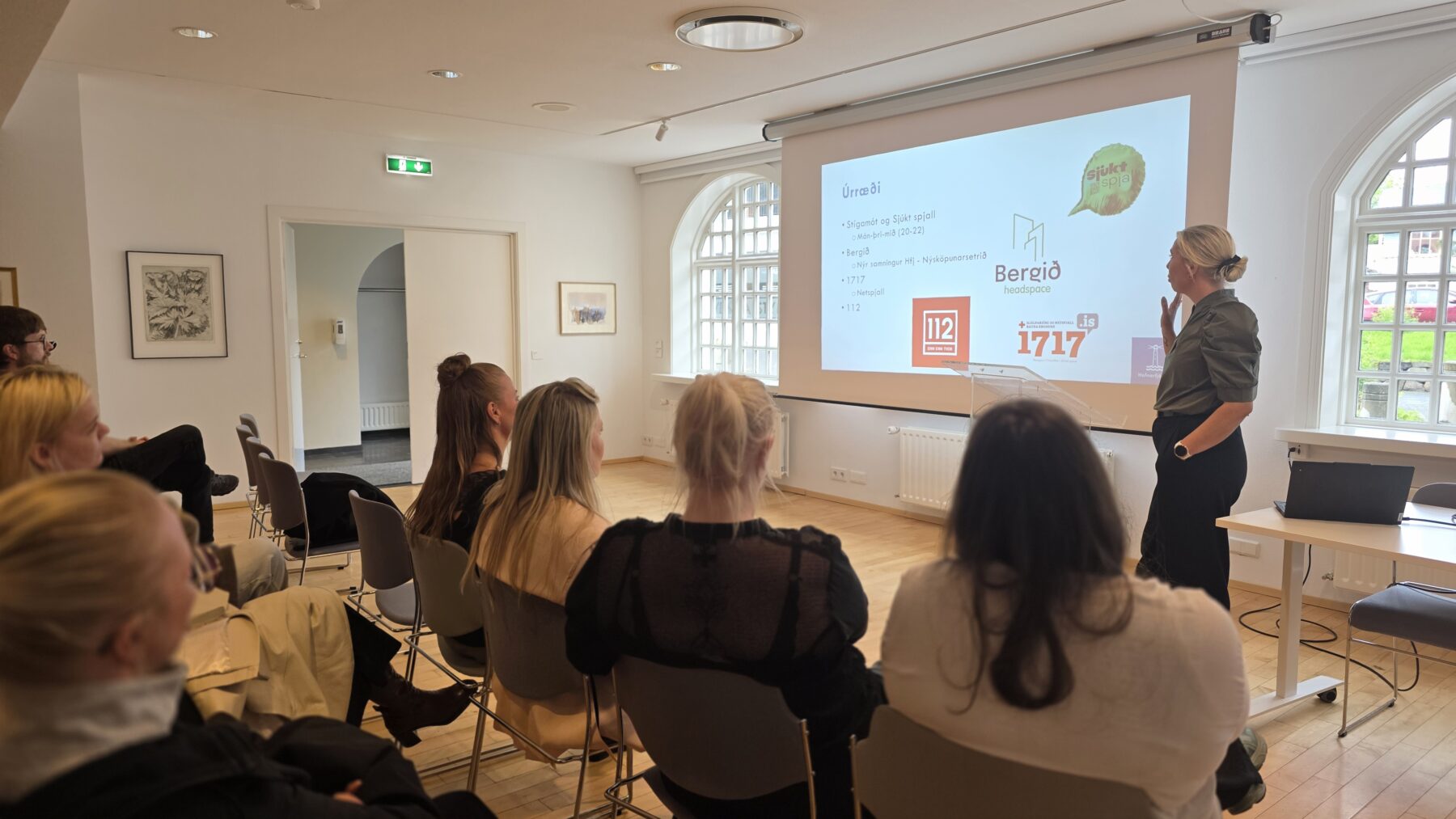
She finally reminded everyone that it is the parents„ responsibility to report anything that goes wrong. “There is a link on the Hafnarfjörður website for child protection," she pointed out, "and you can make an anonymous report there." It is the parents' role to look after all children.
„If we suspect that our child, or their friend, is experiencing violence, we must report it.“
She finally pointed to resources that children can access themselves:
„We should bear in mind that, according to figures from Stígamót, 70% of those who seek their help are doing so for assistance following abuse they suffered as children or before the age of 18.“
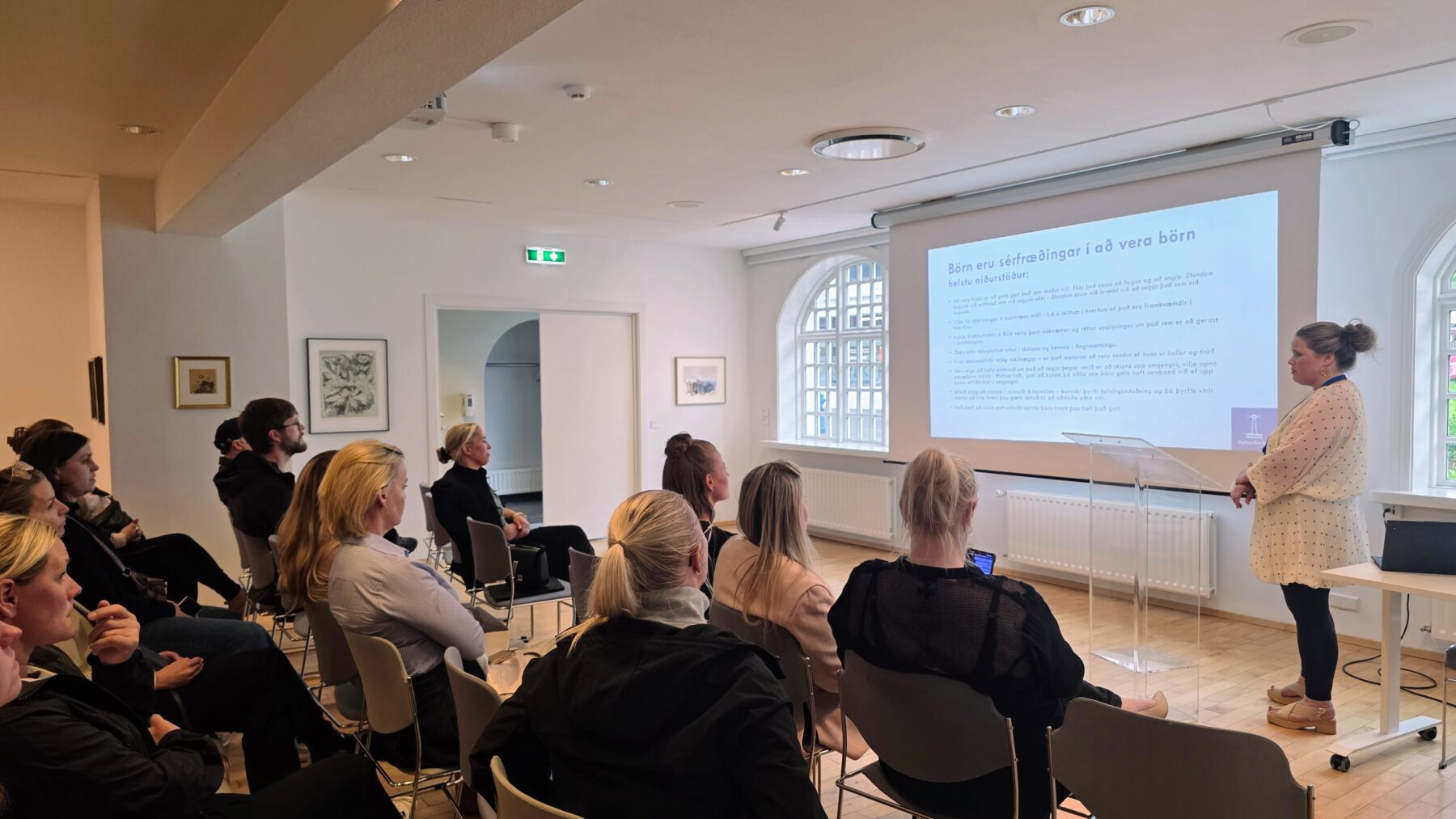
Þórunn Þórarinsdóttir, coordinator of the Hafnarfjörður Youth Council and project manager for the child-friendly municipality, reviewed the situation in Hafnarfjörður after it received the Child-Friendly Community award in August 2025.
It is a project that supports the implementation of the United Nations Convention on the Rights of the Child throughout the administration and activities of the municipality. She went over the fact that child-friendly municipalities are based on five core elements, all of which are related to children's rights.
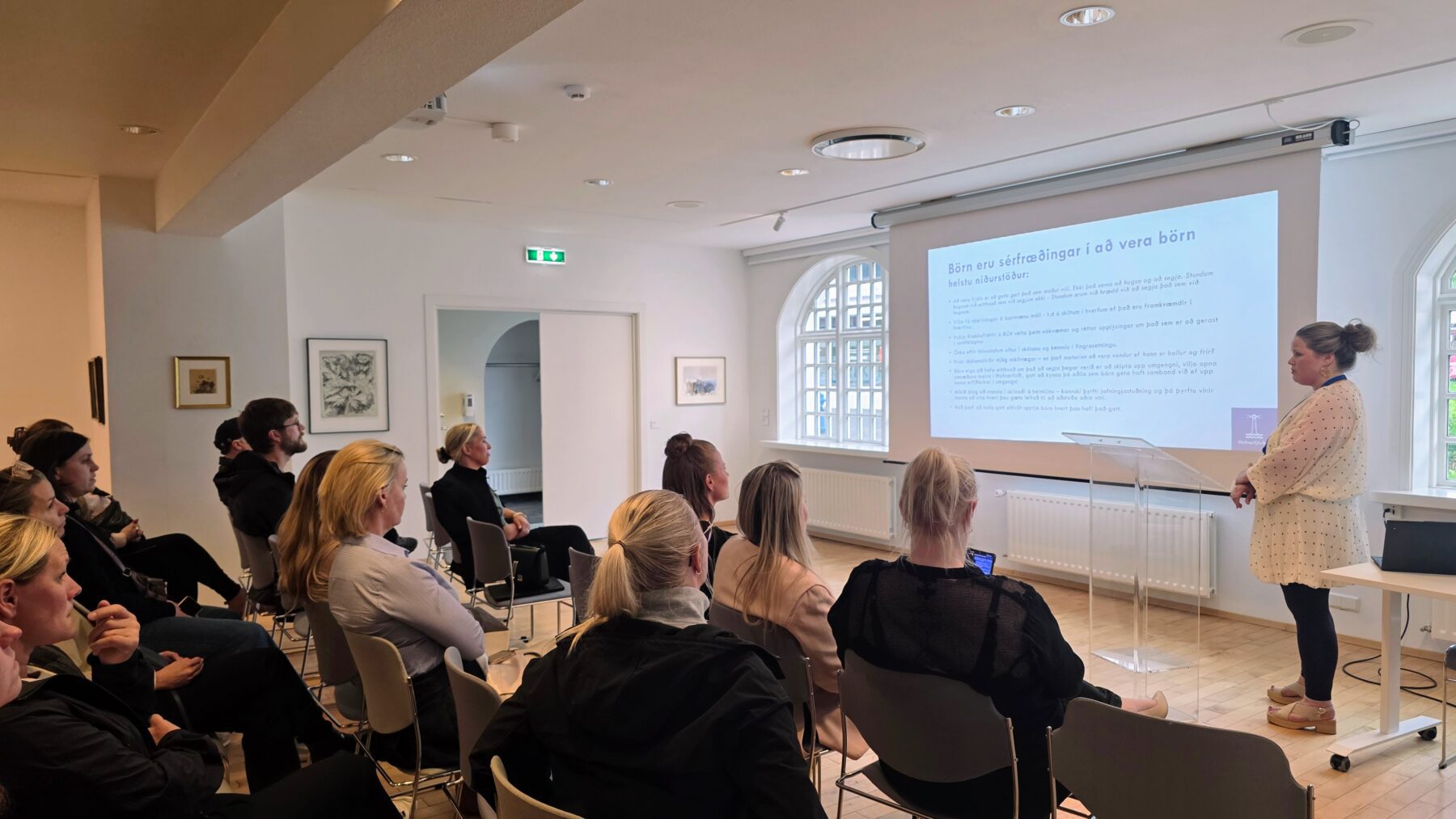
Thorunn went over how important it was to discuss children's matters with them directly. Children are experts at being children.