
A virtual visit to Hungary
The training centre in Bæjarhraun has been participating in an Erasmus+ project since 2018, concerning the ideology and approaches in the provision of services for people with disabilities. It is a collaborative project between three countries. The project's second year was due to conclude with a visit to Hungary, but the global pandemic prevented the trip. Instead, the project concluded with a virtual week of meetings between the three countries, with each nation participating from its own home town.
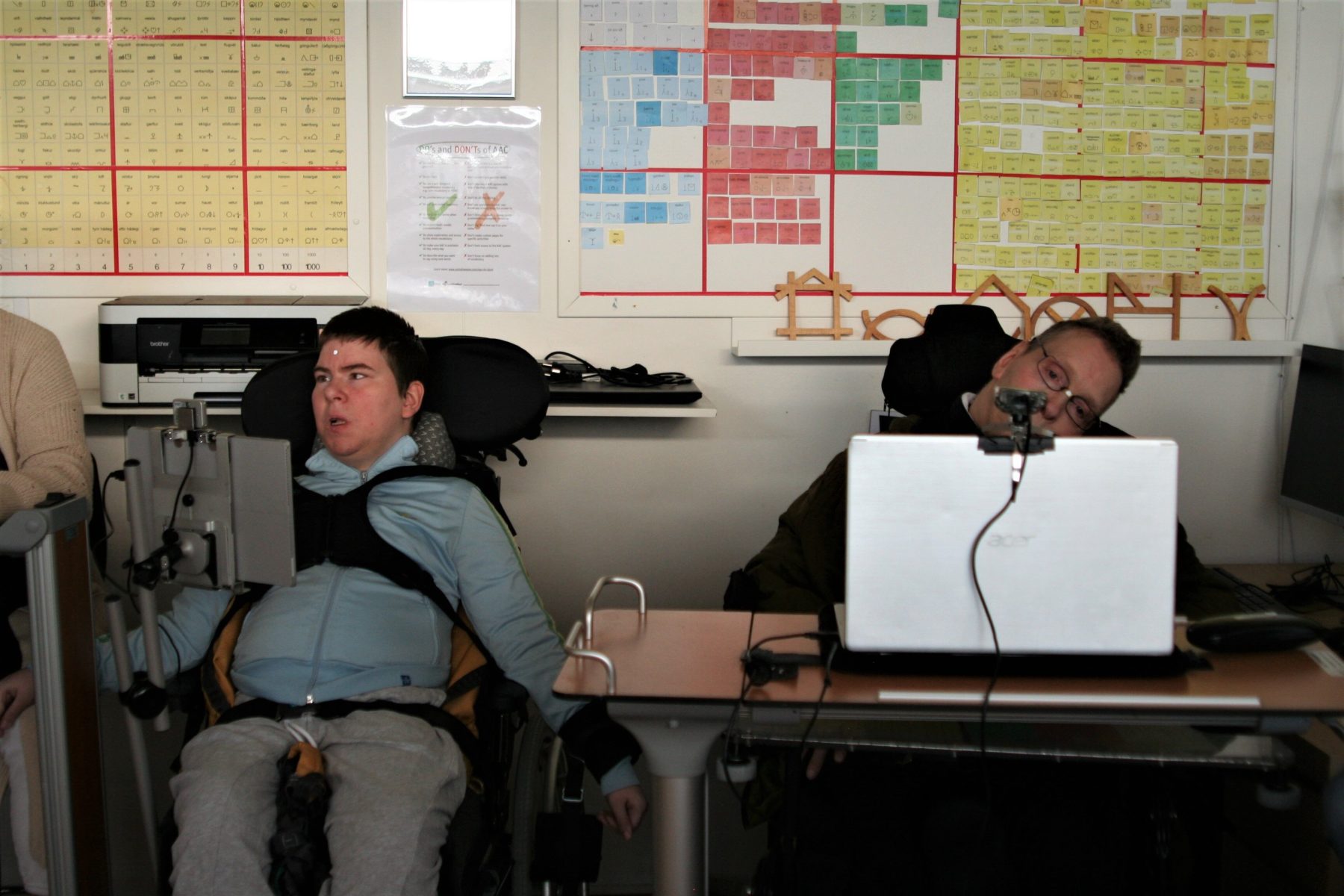
The formal cooperation project concluded with a virtual visit to Hungary.
Erasmus+ project on concepts and approaches in the provision of services for people with disabilities
A three-nation co-operation project
The training centre in Bæjarhraun has been a participant in the Erasmus+ project „Communication is the path to integration“ since 2018. (Contract No. 2018-1-LT01-KA204-046976) or „Communication is the Path to Integration“, which is about the ideology and approaches in the provision of services for people with disabilities. This is a partnership project between three countries: Iceland, Lithuania and Hungary. The collaboration has primarily focused on sharing experience and knowledge about new technologies and possibilities, and as such, various interesting service solutions for people with disabilities have been presented. Through this Erasmus+ partnership project, the group has been introduced to a diverse range of philosophies and communication training, as well as the latest and newest in communication technology.

Across the world, drama pedagogy plays an important role.
The group made visits to both Iceland and Lithuania during the project. The project was due to conclude with a visit to Hungary in 2020, but the pandemic hindered the trip. The project was instead concluded a year later than planned, with a three-country online week of meetings, with each country meeting from its own home town. Around the world, drama pedagogy plays an important role in creating an artistic profile. Drama workshops provide the framework for the performances. Drama is also a form of complex skill development; it develops communication, improvisation, coordination, concentration, and strengthens the body. Disabled people also have a desire to find their place in society. They want to express themselves and show their worth. The training centre in Bæjarhraun will use the grant that was intended for the trip to Hungary to purchase the latest technology for non-verbal communication.
The Bliss language plays a big part in Iceland
The training centre, which celebrates its 30th anniversary this year, has, since its inception in 1991, focused on supporting service users with long-term support needs in the use of alternative and augmentative communication (AAC). The Blissymbol system plays a major role in this, consisting of around 5,000 words/symbols used for communication. Bliss users either point to the words/symbols with their fingers or use a powerful communication programme, i.e. Communicator 5, depending on their mobility. It is often controlled, for example, by an eye-gaze device or a head-pointer. The presentation from Iceland at the e-week covered, among other things, Bliss and the latest technology, as several staff members from the Centre for Development are actively involved in the international development of the language.
See an older news story about the project: A collaborative project on services for people with disabilities
Further information for those interested in specific service options.
- Bliss = http://www.blissonline.se
- Bliss = http://www.blissymbolics.org/
- AAC = https://www.isaac-online.org/english/home/
- Snoezelen = https://snoezelen-professional.com/en/
- Intensive Interaction https://www.intensiveinteraction.org/
- Guided Tourism (GTI) = https://gentleteaching.com/