
We are the village: All children are unique
There was a good turnout at an information evening for parents and guardians of children and young people of preschool and primary school age at the Bæjarbíó last night. Psychologists from the Education and Public Health Department of Hafnarfjörður informed participants about different behavioural patterns in children, how parents can respond to challenging behaviour, what anxiety is, helpful responses to it and what resources are available for children who need further assistance to feel well.
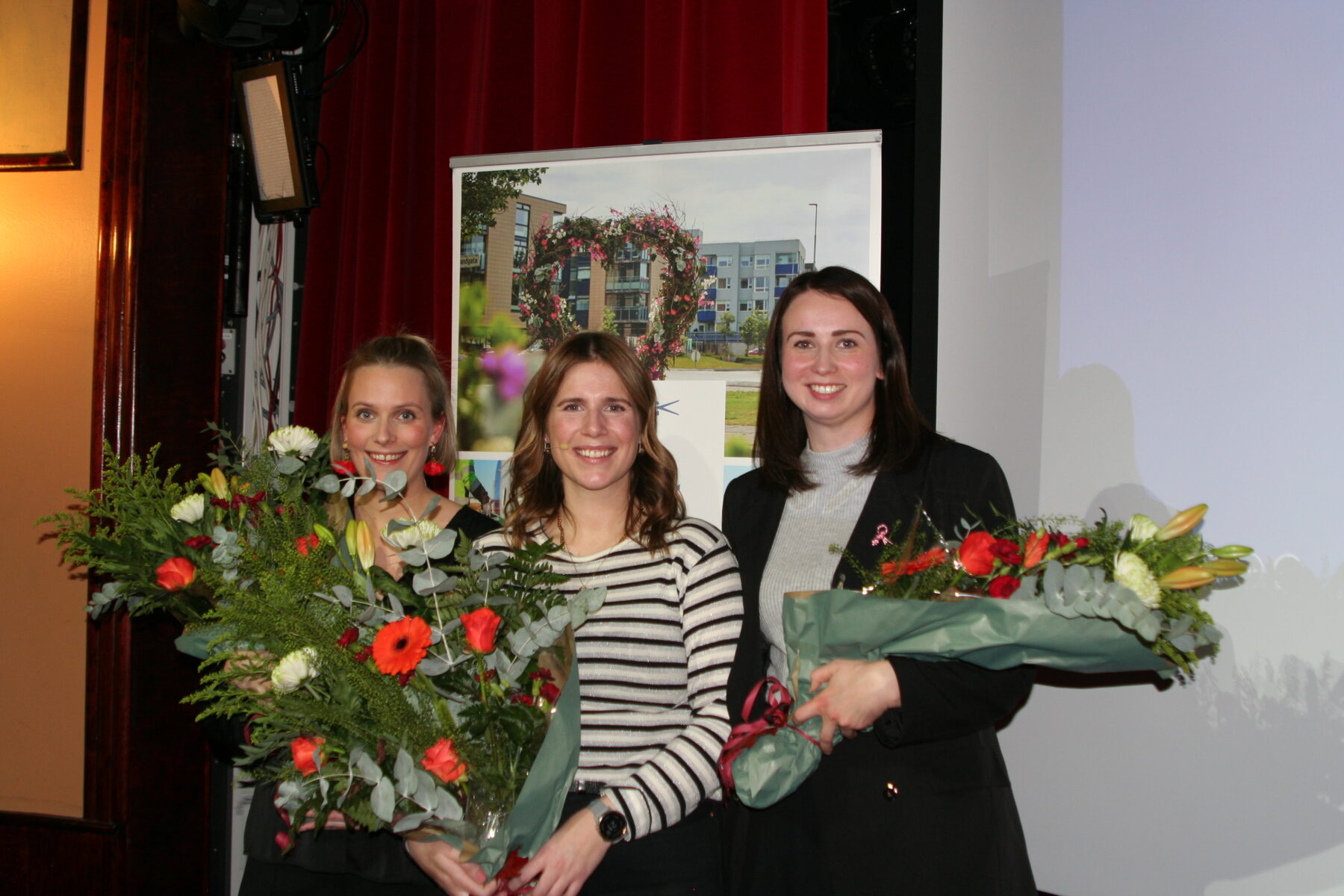
There was a good turnout at an information evening for parents and guardians of children and young people of preschool and primary school age at Bæjarbíó last night.; We are the village: The behaviour and well-being of young people. The psychologists at the Department of Education and Public Health of Hafnarfjörður municipality, Bára Fanney Hálfdanardóttir, Bergþóra Ragnarsdóttir and Svandís Gunnarsdóttir, organised the evening.
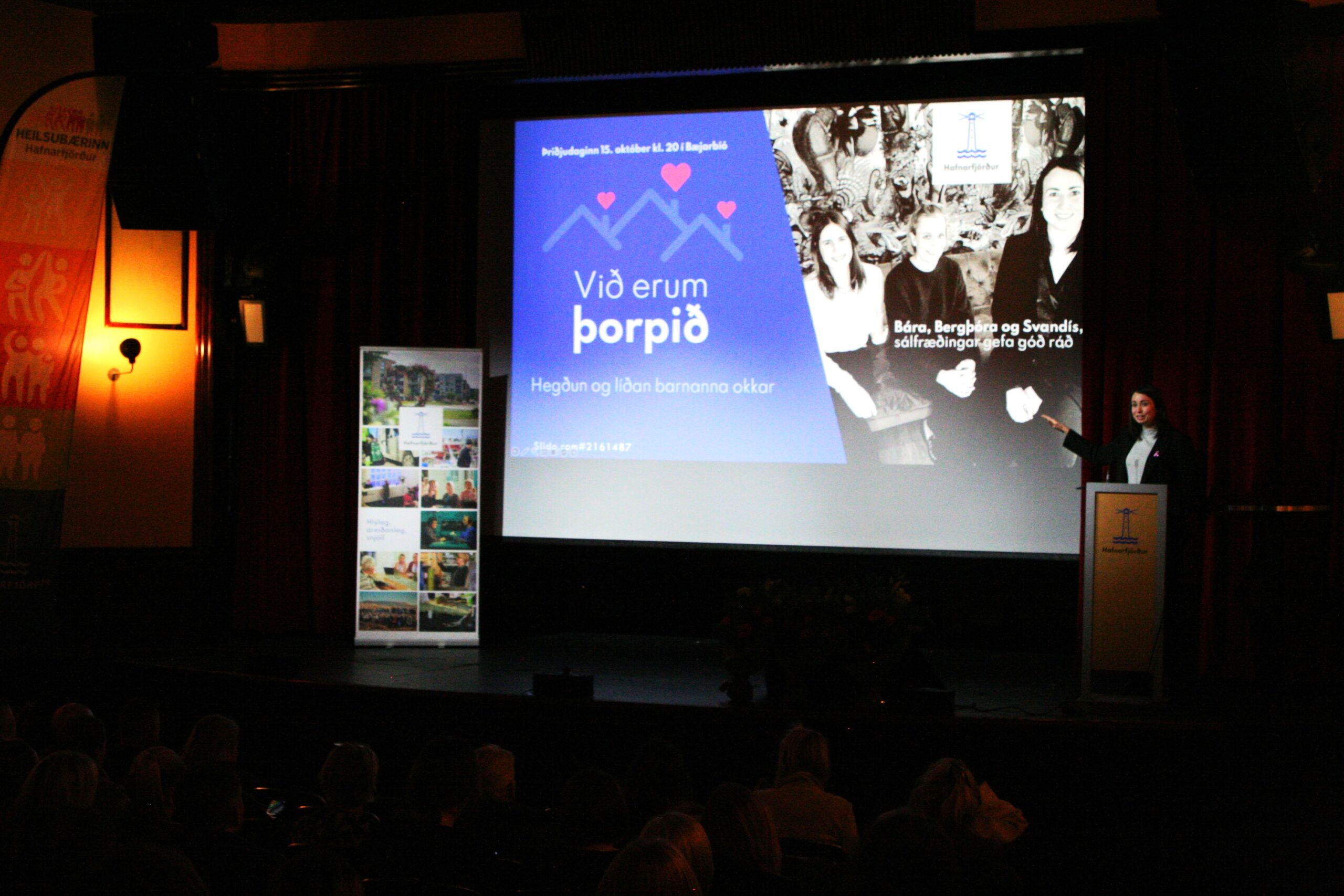
Practical advice and helpful responses to a variety of situations in parenting.
The town's psychologists educated participants about different behavioural patterns in children and the circumstances in which they arise, how parents can respond to challenging behaviour, what anxiety is, helpful responses to it, and what resources are available for children who need further support to feel well.
„As parents, we need to be well aware of our children's behaviour, how they react to certain situations and deal with them. It is also important to look at how we react to the behaviour, whether we might be encouraging the child's undesirable reactions.“
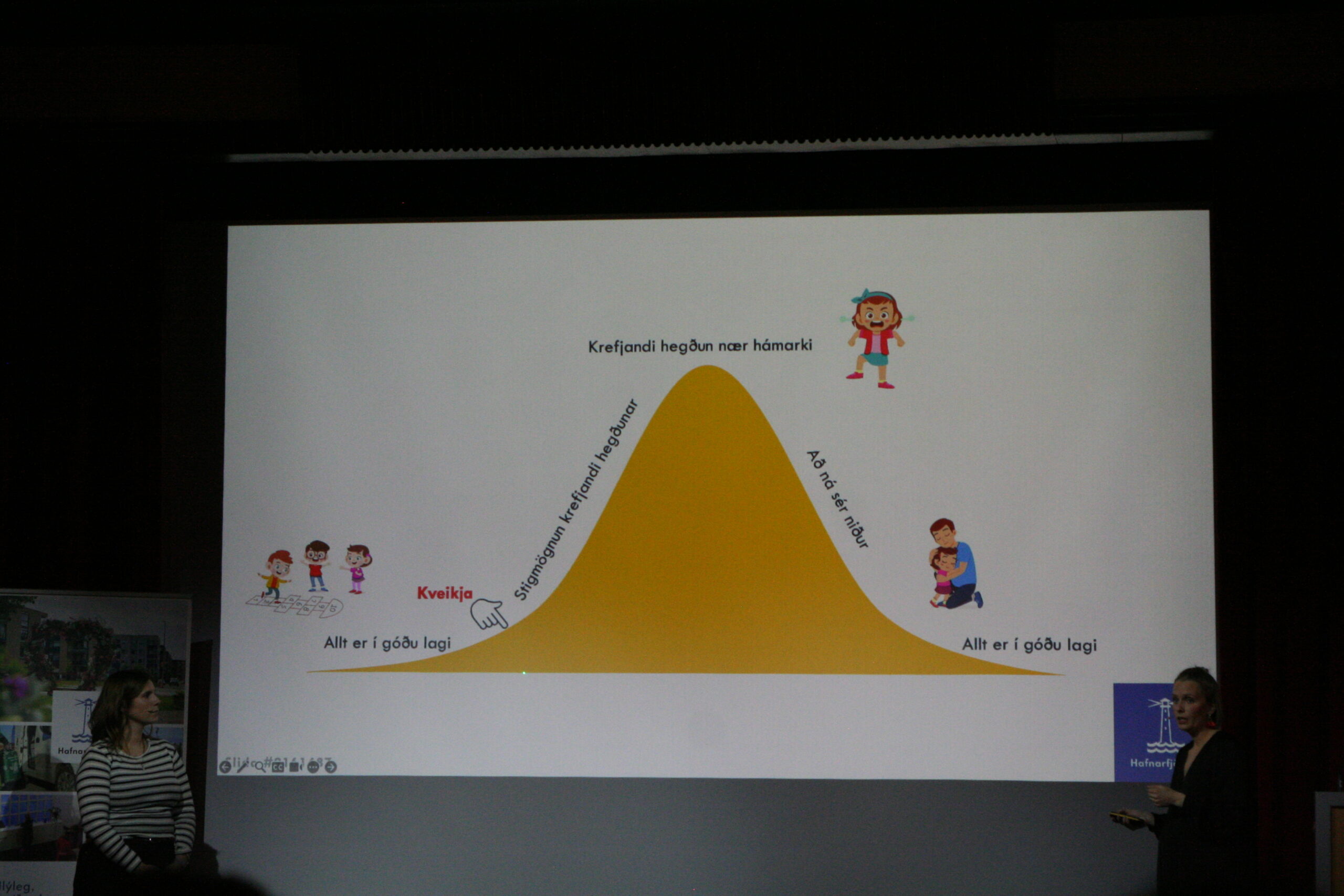
„When challenging behaviour from children reaches its peak, it is best not to try to control the situation; rather, be present and give the child space if needed. By doing this, we show we understand their feelings and maintain our own calm, instead of descending to the same level. When the emotional storm is at its peak, it is not possible to reason with the child. As the emotional brain has taken control, a good tip is to avoid arguments and simply be present when the storm subsides and the child is ready to come to you. Another tip would be that, rather than asking the child for a cuddle, the parent should say to the child, “I need a cuddle. Do you think you could give me one?'. This can often help the child to calm their own emotions and, in turn, the storm will subside. This is where attunement comes in strongly, which is the ability of children to calm down and regain control through the calmness of others. This is how they learn to calm themselves."
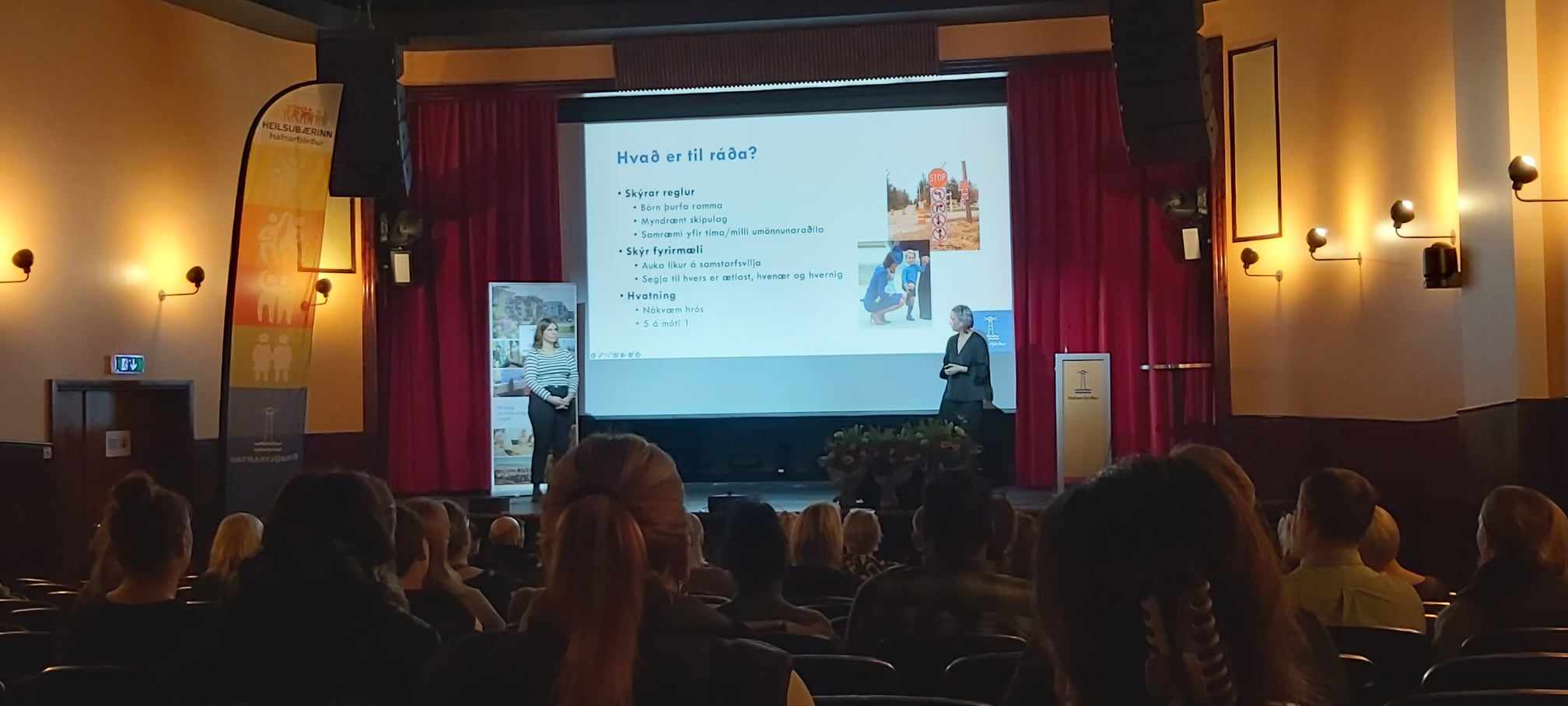
Children need clear instructions and encouragement.
Among the tips discussed at the meeting were clear rules, clear instructions and encouragement for children. This means that carers need to be consistent in their parenting to create a cohesive framework for the child to navigate. This framework could, for example, be a visual schedule, which makes it easier for the child to understand what is expected of them. But clear instructions are key in raising children; by clearly stating what is expected, when and how, we increase the likelihood of the child's cooperation. Giving the child specific praise as well as constructive feedback, five positive for every one piece of constructive feedback, encourages them to continue showing good behaviour and reinforces their strengths.
Overestimate danger and underestimate one's own ability.
There are many theories about what exactly causes anxiety in children, including genetics, anxiety susceptibility, learning through imitation/the environment they grow up in, or a difficult life experience that lingers. But it is crucial that parents are aware of anxiety responses and factors that can manifest in their child, such as their thoughts, physical symptoms, and behaviour/reactions in certain situations. But also to help them reduce the mountain of anxiety together and at their own pace.
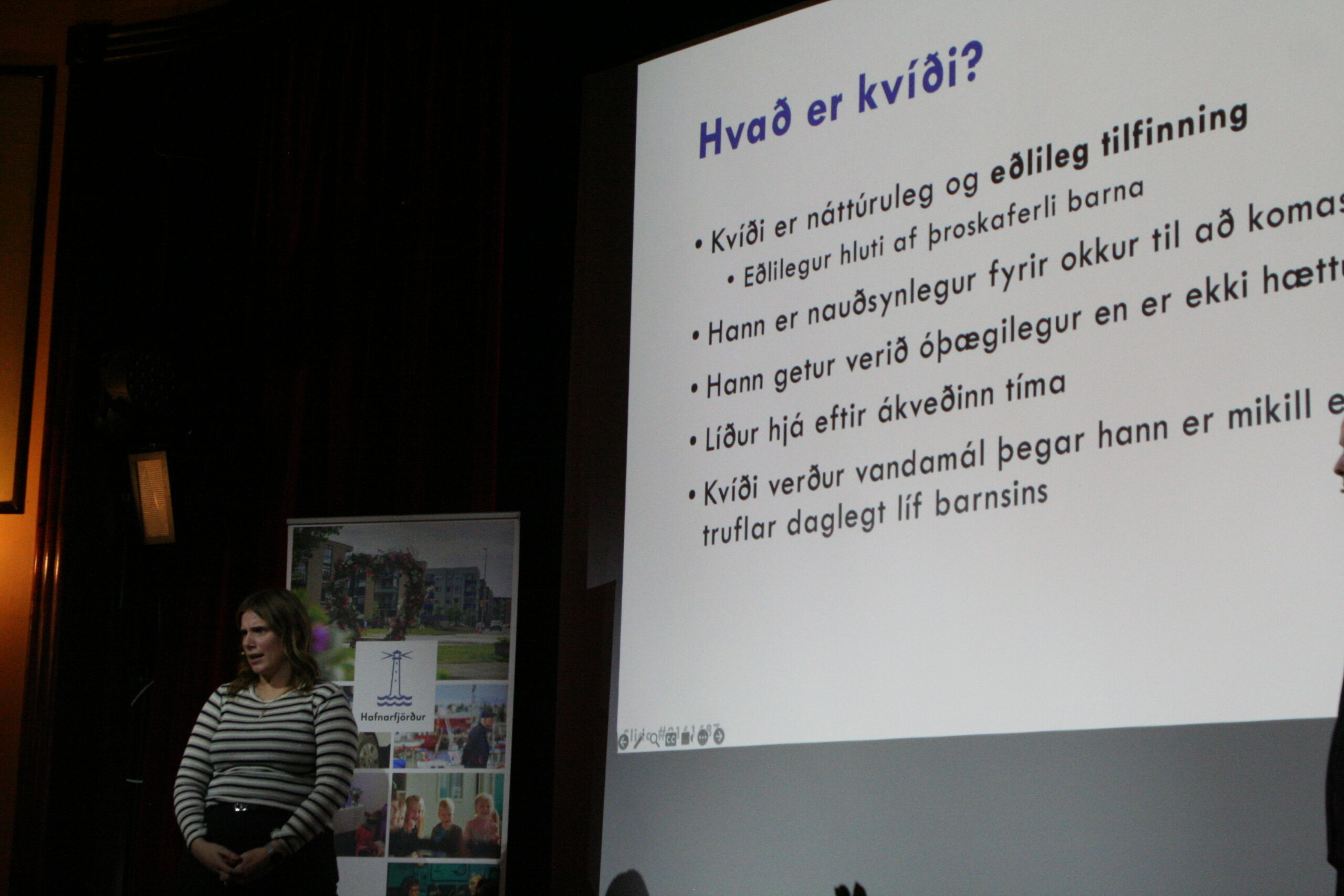
Factors that can maintain anxiety in children include avoidance, where the child does not get the opportunity to face the situations that cause the anxiety, and safety rituals, where the child does things in a certain way to feel safe. These behaviours can be subtle, but significantly disrupt the child's daily life.
There are many anxiety disorders, but these include separation anxiety, generalised anxiety disorder, specific phobias, panic disorder and social anxiety. Here are some common manifestations of anxiety in children:
- Often complains of physical symptoms
- They are in great need of encouragement.
- Mood swings
- Don't want to try anything new or different
- Vulnerable to teasing and mistakes
- Often have difficulty falling asleep
- Can affect children's development if the problem is severe.
What can parents and carers do to help a child with anxiety?
„Anxious children are very perceptive of their parents“ reactions and even their facial expressions. It is therefore important to consider how we ourselves are reacting to situations and how we can show the child that the situation is safe and does not need to cause any concern. The child may need further encouragement towards curiosity and independence, so they dare to face anxiety-provoking situations without resorting to avoidance and safety behaviours. Parents may also need to limit unnecessary reassurances and questions to the child and use more descriptive and constructive praise, such as, "I have faith in you that you can do this."
„You need to show the child understanding and patience, but also teach them to recognise their own feelings as well as those of others. Parents can also ask the child how they are feeling, we can talk about how we are feeling ourselves, or even cut out different facial expressions from magazines or watch films like the first Inside Out film and talk together about the emotions portrayed in them.“
Practical advice for children's anxiety
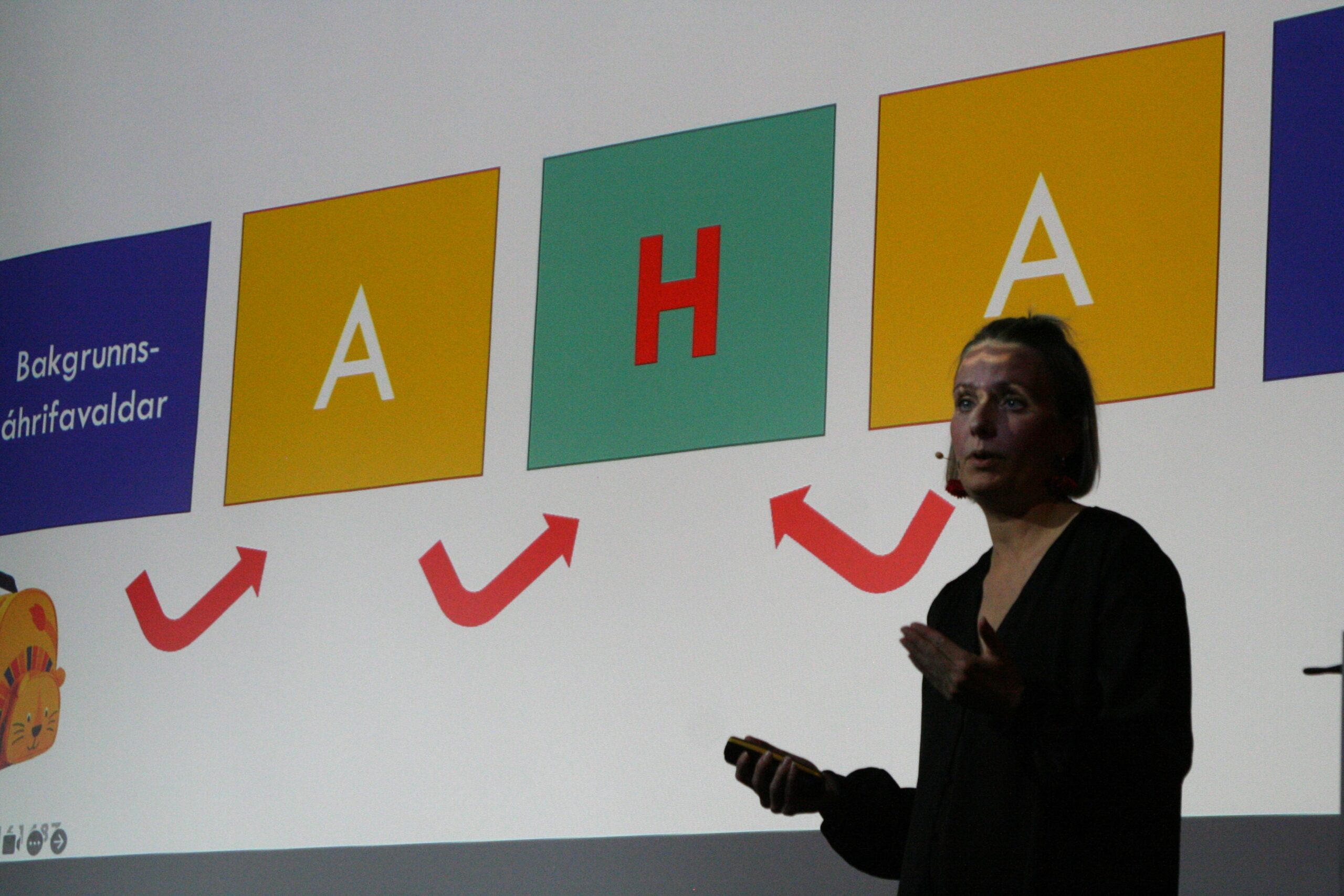
- Build courage, celebrate small victories and use descriptive words of encouragement, keep a courage diary
- Attention training, redirecting attention
- Finding solutions, training children in problem-solving and decision-making
- Personify the worries (the worry bug), draw a picture of it, map the thoughts that arise.
Course run by the Family and School Services of Hafnarfjörður
- PMTO: a course for parents of children who exhibit minor behavioural difficulties
- Clever Little Kids: a course for parents of children aged 3-7 who are at risk of developing anxiety.
- Parent-led CBT (Anxiety Course): a course for parents of children aged 8-12 with anxiety problems
- Referrals are made through the child's nursery or primary school.
It is also possible to seek help from general psychological services and other services such as the Bereavement Centre and One Life. But beyond that, there is a great deal of material intended for children with anxiety, various books and videos, for example. Orange and What can I do and podcasts such as the parenting chat and the anxiety attack.
Questions from the floor to psychologists
What other lectures are you offering for nursery and primary school teachers, and will they be available for parents?
„We have a primary school pack that we are taking into schools to talk about ADHD, autism and trauma, but we hope to be able to inform parents even better on these matters.“
Are there psychologists in all schools in Hafnarfjörður, and do all primary school children have access to a psychologist at their school?
„There are psychologists in all primary schools in Hafnarfjörður. We mainly carry out initial assessments; that is, we provide diagnosis and advice within the schools and directly to parents, not the children. But we are part of the Brúar team in the schools.“
If a parent gets frustrated in the middle of the storm, should they still hold and cuddle their child, or calm down first?
„If the parent manages to stay calm and is able to cuddle the child at the height of the storm, then that's perfectly fine, but if the parent finds it difficult to find calm in that situation, it's better to turn away, take a breath, find our own anchor and come back to the interaction with the child better equipped.“
Is it bad if a 3-4 year old child wants to be left alone during a tantrum? Should a parent always be with their child?
„Children often want to be left alone in the storm, but then it's on the way down from the swing that they're ready to receive. We just need to give them time, but they still need to know we're there. With children of this age, if we ask, “Do you want a cuddle?' They scream no.. it's better to say; you know… I'd really love a good cuddle, then they're more likely to say; alright, I'll give you a cuddle. But sometimes we also just need to ensure the child's safety, wait for the storm to pass and be there when it does."
How do you assess that a 3-7 year old child is at risk of developing anxiety disorders, is it due to parents with severe anxiety disorder, or through conversation with the child?
„If we look at a child, for example, who has shown signs of anxiety from a young age and is very cautious, possibly to the point of it starting to hinder them in their daily life. We often ask parents on our anxiety courses. What do you want your child to be able to do that they can't do today? For example, if the child has started avoiding situations, such as going to children's birthday parties, then of course we want the child to be able to take part in life on their own terms, without the anxiety taking control. If we as parents struggle with severe anxiety, it's also worth remembering that we need to put our own oxygen mask on first, so that we can help and be there for our child. We need to look after our own well-being and seek help first.“
Do you have any special courses for children/young people with anxiety?
„Not through us, as the children themselves take part, but there are various resources available through the Health Service or the Mental Health Centre, especially for teenagers; they offer individual counselling. There are also private psychology practices, such as the small anxiety therapy centre.“
Don't you need to advertise the courses you're offering better? I didn't know about them.
„Absolutely! It's quite a process these days, where I first have to speak to the teacher about the child's anxiety. But we're trying to simplify your way of accessing our courses, because it's a real concern for us that so few people are using the service and attending our courses, as we know there are many children out there with anxiety issues.“
If a parent is concerned that their child has ADHD, at what age should they consider getting a diagnosis?
„That's a good question. If parents have had concerns about their child from a young age, it's at primary school age that we start to look at these symptoms. We don't intervene directly at nursery school age; we meet them at that stage, but we tend to intervene at primary school age. If you have concerns about your child in these matters, it's a good idea to speak to the nursery or primary school straight away, as they can offer solutions or refer the matter to the Brúar-teymið. There is a psychologist in every Brúar-teymið in the primary schools. A process of problem-solving begins there; we need to be able to distinguish between ADHD and developmental difficulties, to identify where the problem lies and how best to address it.“
„It's important to remember that we as parents need to be better at showing ourselves kindness in the hustle and bustle of the day.“
Together, we are the village – join us!